 listicle
7 Best Non-Toxic Nail Salons in Orange County for 2026
Table of Contents
- What Makes a Nail Salon Non-Toxic?
- Sanitation and Sterilization: The Real Hygiene Standard
- Our Criteria: How We Selected Orange County’s Best Non-Toxic Salons
- The 7 Best Non-Toxic Nail Salons in Orange County
- 1. Coastal Polish & Beauty: A Wellness-Focused Escape in Newport Beach
- 2. The Natural Nail Studio: A Focus on Nail Health in Irvine
- 3. Eco-Luxe Nails: Sustainability Meets Service in Laguna Beach
- 4. The Breathable Polish Bar: Specialists in Flexible Formulas in Huntington Beach
- 5. The Sanitized Station: A Hygiene-First Approach in Costa Mesa
- 6. The Artisan Nail Loft: Nail Art Without the Compromise in Fullerton
- 7. The Quiet Retreat: A Meditative Manicure Experience in San Clemente
- Non-Toxic Gel Manicure Benefits: Why the Switch Matters
- What to Ask Your Nail Technician About Product Safety
- How to Maintain Healthy Nails Between Salon Visits
- Conclusion: Finding Your Perfect Non-Toxic Match
- Frequently Asked Questions
Last Updated: September 9, 2026
What Makes a Nail Salon Non-Toxic?
A truly non-toxic nail salon prioritizes your health through two distinct commitments: the chemical profile of the products it applies and the hygiene standards of the tools it uses. "Non-toxic" is not a regulated label; it is a promise built on specific, verifiable choices.
For most people, the search for non-toxic nail salons in Orange County starts with product safety, but that is only half of the equation. The other half involves the physical environment, sterilization, and technician expertise.
Decoding Polish Labels: 5-Free vs. 7-Free vs. 12-Free
The first thing you will notice when researching healthier nail care is the alphabet soup of labels like "5-free," "7-free," or "12-free." These numbers refer to the number of specific, potentially harmful chemicals that a polish formula has removed. A standard 5-free polish eliminates the most infamous offenders: formaldehyde, toluene, dibutyl phthalate (DBP), formaldehyde resin, and camphor.
As the numbers climb, the list of excluded ingredients grows to include other irritants and suspected endocrine disruptors. A 12-free formula strips out additional compounds like xylene and certain fragrances. Ask to see the actual bottles or product list; a salon using 12-free or higher polishes signals a serious investment in client wellness.
The Toxic Trio and Beyond: A Quick Ingredient Glossary
Understanding a few key terms gives you the language to evaluate any product line with confidence.
- Formaldehyde: A known carcinogen, historically used as a hardener in nail products. Its presence is a major red flag.
- Toluene: A solvent that creates a smooth finish but can cause respiratory irritation and headaches with prolonged exposure.
- Dibutyl Phthalate (DBP): A plasticizer that provides flexibility to polish but has been linked to reproductive health concerns.
- Camphor: Added for shine and durability; it can cause skin irritation and is a common allergen.
- Xylene: Used as a solvent, this is a respiratory irritant and is often the next chemical removed in "8-free" or higher formulas.
Sanitation and Sterilization: The Real Hygiene Standard
Product safety is meaningless if the tools used to apply them are not properly sterilized. True sterilization requires more than wiping a file with alcohol; it requires an autoclave, a machine that uses high-pressure steam to kill bacteria, fungi, and viruses on metal tools.
Look for a visible autoclave and ask how tools are processed between clients. Many premium salons use disposable, single-use files and buffers, eliminating cross-contamination risk. For pedicures, the standard includes disposable liners and a clean set of instruments for every client.
Our Criteria: How We Selected Orange County’s Best Non-Toxic Salons
We didn't just take salon websites at their word. We evaluated each candidate against a strict set of criteria that goes beyond a simple product label.
Our selection process weighed several key factors: verified use of high-free polishes, proper sterilization equipment like an autoclave, training and expertise of the nail technicians, attention to natural nail health and post-service care, and whether the space feels like a wellness-focused retreat rather than a rushed production line.
The 7 Best Non-Toxic Nail Salons in Orange County
Finding a salon that checks every box takes time, but the options in Orange County are growing. We prioritized salons that are transparent about their product lines and willing to show you the bottles.
Here are our top picks for a healthier, more relaxing manicure experience, each chosen for a specific strength.
1. Coastal Polish & Beauty: A Wellness-Focused Escape in Newport Beach
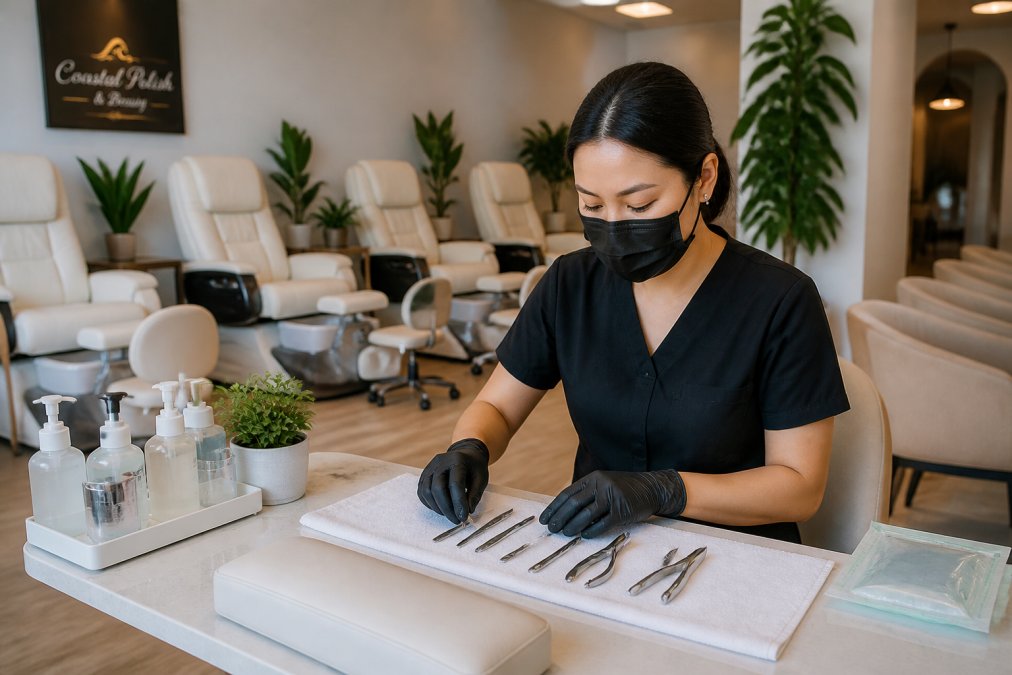
Coastal Polish & Beauty is a newly reimagined nail salon and wellness destination located in Newport Beach, offering an elevated escape for personalized care. Located inside the Birdhouse wellness collective, this newly reimagined salon operates under new ownership with a fully renovated space designed to feel like a peaceful pause.
What sets them apart is a commitment to a clean, safe environment that prioritizes your health and comfort. Whether you seek a classic manicure or their signature Head Spa treatments for stress relief, the experience is built around helping you feel refreshed and confident.
2. The Natural Nail Studio: A Focus on Nail Health in Irvine
This Irvine studio has built its reputation on nail rehabilitation and education. They use a 10-free polish line and are known for their thorough consultation process, where technicians examine your nail plate for signs of peeling, thinning, or fungal issues before recommending a service.
3. Eco-Luxe Nails: Sustainability Meets Service in Laguna Beach
Eco-Luxe Nails claims a unique angle: a documented sustainability policy that goes beyond product choice. They use a 12-free polish line, but their differentiator is waste management. They recycle all single-use paper products, use sterilized and reused glass files (a rare practice), and have installed low-flow faucets and footbath systems that reduce water consumption by roughly 30%. If you want non-toxic products paired with broader environmental responsibility, this is the one to visit.
4. The Breathable Polish Bar: Specialists in Flexible Formulas in Huntington Beach
This Huntington Beach spot has carved out a niche in breathable polish technology. They exclusively use soft-gel polishes permeable to water and oxygen, reducing the risk of nail plate dehydration and brittleness from traditional hard gels. Their removal process is notably gentle: a soak in an acetone-free remover, followed by a citrus-based oil massage to lift the polish without scraping. An excellent choice for clients with thin or damaged nails who still want long-wear color.
5. The Sanitized Station: A Hygiene-First Approach in Costa Mesa
This Costa Mesa salon is the one to visit if you want to see sterilization in action. They have a glass-walled autoclave room visible from the waiting area and publish their weekly sterilization cycle logs at the front desk. Every client receives a sealed kit with a fresh file, buffer, cuticle pusher, and toe separator.
6. The Artisan Nail Loft: Nail Art Without the Compromise in Fullerton
For clients who want intricate nail art without sacrificing health standards, this Fullerton loft is the answer. They use a 10-free gel polish system and employ a dedicated nail artist specializing in hand-painted designs, 3D elements, and chrome finishes. Their ventilation is a cut above: each station has a local exhaust vent that pulls fumes away from your face.
7. The Quiet Retreat: A Meditative Manicure Experience in San Clemente
This San Clemente salon is designed for clients who view their manicure as therapy. They offer a 'silent service' option where the technician works without conversation, allowing you to fully decompress. Their product line is 7-free, a solid baseline, but their true strength is atmosphere and post-service care.
Schedule and Appointment today for 10% Off your service →
Each of these salons offers a distinct strength, whether sustainability, hygiene transparency, or specialized nail health. We recommend calling ahead to confirm current product lines and sterilization protocols.
Non-Toxic Gel Manicure Benefits: Why the Switch Matters
For many clients, the biggest hesitation about switching to a non-toxic salon is losing the durability of traditional gel polish. The good news is that the industry has evolved, and you no longer have to choose between your health and a long-lasting manicure.
The primary benefit of a non-toxic gel manicure is the reduced exposure to harsh chemicals without sacrificing the glossy, chip-resistant finish you expect. Many premium lines now offer "soft gel" or breathable polish options that are free from the toxic trio and still provide weeks of wear.
What to Ask Your Nail Technician About Product Safety
Walking into a new salon can feel intimidating, but asking the right questions is the best way to protect yourself.
Start by asking, "What is the free-of count on your polishes?" and "Can I see the ingredient list?" Next, move to hygiene: "How are your metal tools sterilized?" The answer should include an autoclave, not just a UV light box or barbicide soak. Finally, ask about the removal process: "How do you remove gel polish without damaging my nail bed?"
- Ask to see the autoclave and its sterilization cycle log.
- Request a fresh file and buffer from a sealed package.
- Confirm that your technician washes their hands before starting.
- Ask about the brand of polish and its free-from status.
How to Maintain Healthy Nails Between Salon Visits
Your salon visit is just one part of the equation. Maintaining strong, healthy nails between appointments requires a small daily commitment, but the payoff is worth it.
The 72-Hour Rule: Protect Your Fresh Manicure
The first 72 hours after a gel or soft-gel application are the most critical, as the polish is still curing and bonding to the nail plate. During this window, avoid hot water immersion and do not use your nails as tools.
The Daily Hydration Protocol
Dry cuticles are the enemy of nail health. When they crack, they pull away from the nail plate, creating a pathway for bacteria and causing polish to lift at the base. The most effective routine is twice-daily application of a cuticle oil with jojoba oil as its primary ingredient. Apply it in the morning and before bed, massaging into the cuticle and the underside of the nail tip.
The Weekly Maintenance Check
Once a week, perform a quick self-assessment for any lifting at the free edge or corners of your polish. If you spot a chip or lift, do not pick at it; picking removes the top layers of your nail plate, causing permanent thinning and white spots. Instead, file the rough edge smooth and apply a thin layer of a non-toxic top coat to seal the area.
The Right Way to Remove Gel at Home (If You Must)
While we strongly recommend professional removal, we understand that emergencies happen. If you must remove gel polish at home, never pry, peel, or drill it off. The correct method is the soak-off technique: file the shiny top layer to break the seal, then soak cotton balls in acetone secured with foil wraps for 10-15 minutes. The polish should slide off with a gentle push from a wooden cuticle stick; if not, it needs more soak time. After removal, wash your hands thoroughly and apply a thick layer of cuticle oil.
The Supplement Question
Many clients ask about biotin supplements for nail strength. The research is mixed, but a common pattern in clinical practice is that biotin (at doses of 2.5 to 3 milligrams daily) can improve nail thickness and reduce splitting in deficient individuals. However, it takes three to six months of consistent use to see results because it affects the nail matrix.
When to Return for Your Next Appointment
Regular appointments every three to four weeks are ideal for maintaining a fresh look without over-processing your nails, allowing your natural nail to breathe and recover between gel applications. If your nails become thin, peeling, or sensitive, extend the gap to five weeks and request a nourishing treatment or a 'nail vacation' with no polish.
Conclusion: Finding Your Perfect Non-Toxic Match
Choosing a salon that truly prioritizes non-toxic products and rigorous sanitation takes effort, but it is an investment in your long-term health. The search for non-toxic nail salons in Orange County can feel overwhelming, but now you have the tools to evaluate your options with confidence.
At Coastal Polish & Beauty, we've made this commitment easy by combining premium, health-conscious products with a serene, hygienic environment in the heart of Newport Beach. We invite you to experience the difference that a wellness-focused approach makes. Book your appointment today and discover a peaceful escape where your health and relaxation come first.
Frequently Asked Questions
What makes a nail salon non-toxic?
A non-toxic salon goes beyond just using certain polish brands. It means the salon prioritizes products free from harmful chemicals like formaldehyde, toluene, and DBP (the toxic trio). It also involves proper ventilation to minimize fume inhalation, rigorous sanitation practices like autoclave sterilization for metal tools, and offering vegan or cruelty-free options. A truly non-toxic salon is transparent about the products they use and the processes they follow to protect your health.
What is the healthiest nail service to get?
Generally, a basic manicure or pedicure with a breathable, water-based polish is considered the healthiest option because it involves minimal filing and no harsh chemicals. Traditional gel manicures require UV light and stronger solvents for removal. If you prefer gel, look for a 12-free formula that excludes many common toxins. Always ensure your technician is gentle with your cuticles and doesn't over-file the nail plate, as this keeps your natural nails strongest.
Are non-toxic nail polishes actually better for your health?
Yes, choosing non-toxic polishes reduces your exposure to chemicals linked to respiratory issues, skin irritation, and other long-term health concerns. The benefits of a non-toxic gel manicure include a reduced risk of allergic reactions and less damage to the natural nail over time. While 'non-toxic' isn't a regulated term, selecting a 7-free, 10-free, or 12-free polish is a safer choice that still delivers long-lasting color.
What should I look for in a clean nail salon?
Look for visible proof of sanitation. Metal tools should come from an autoclave or sterile pouch, and files or buffers should be single-use. Check if the salon uses disposable liners for pedicure bowls. Also, observe the overall atmosphere; it should be well-ventilated without a strong chemical smell. Don't hesitate to ask how they sterilize their equipment. A reputable salon will be happy to explain their hygiene standards.
Is it worth paying more for organic nail services?
For many, yes. Paying more often covers the higher cost of premium, non-toxic products, rigorous staff training, and stricter sanitation protocols. You are paying for the expertise of a nail technician who understands nail health and for a cleaner, safer environment. This can lead to better, longer-lasting results and less damage to your natural nails, making it a worthwhile investment in your overall wellness.