 how-to
How Long Should Pedicure Aftercare Last?
Last Updated: November 1, 2026
Quick Summary
Pedicure aftercare matters most in the first 48 hours, when polish is still settling into the nail. Keep your feet still and avoid tight socks or shoes for the first two hours, then wear roomy footwear and keep your feet dry until the second day.
- Keep feet still and avoid pulling on socks or shoes during the first two hours.
- Skip hot water for the first two hours, since heat softens polish and can cause lifting.
- Wait at least two hours before wearing any shoes, and give closed-toe styles a full 24 hours.
- Moisturize feet once a day and apply cuticle oil to soften skin around each nail after 24 hours.
- For gel, dry the free edge and sidewalls after water exposure, since lifting usually starts there.
Table of Contents
- Pedicure Aftercare: The First 48 Hours, Step by Step
- How Long to Wait Before Wearing Shoes After a Pedicure
- Gel Pedicure Aftercare Tips That Extend the Wear
- How to Prevent Toenail Polish From Chipping
- Moisturizing and Cuticle Care Between Visits
- Booking Your Next Maintenance Visit at Coastal Polish & Beauty
- Frequently Asked Questions
Pedicure Aftercare: The First 48 Hours, Step by Step
Most people think a pedicure ends when they walk out the door. It doesn't. The first two days decide how long your polish stays fresh, whether your cuticles stay soft, and whether your toenails hold up to daily wear. The steps below show how to protect your results from the first hour through the second day. Pedicure aftercare tips for long lasting results start with knowing what the first 48 hours actually require.
Pedicure aftercare is the set of habits that keep fresh polish and skin looking good after you leave the salon. Most of the damage happens in the first two days, while the polish is still settling into the nail.
Here is the plan, broken into three windows.
Hours 0 to 2: Let the Polish Set
The first two hours matter most. Polish is still soft, and even light pressure can leave a mark.
- Keep your feet still. Sit with them up on a stool or pillow.
- Avoid pulling on socks or shoes. Friction can dent fresh color.
- Skip hot water. Heat softens polish and can cause it to lift.
- Hold off on lotion for the first hour. Wait until the polish is fully set before touching the surface.
Watch out: pulling on tight socks in the first hour is the fastest way to leave a dent in fresh polish.
Hours 2 to 24: Protect Against Smudges and Dents
By the second hour, the polish is firm enough to handle light activity. But it is not fully cured, so caution still applies.
- Wear open-toe sandals or roomy shoes that do not press on your toes.
- Choose soft, natural-fiber socks if you need to cover your feet.
- Keep your feet dry. Avoid long baths, swimming, and the hot tub.
- Do not pick at polish or peel it. Lifting an edge can pull up the whole nail.
A common mistake is wearing tight shoes to a work event on the same day. The pressure on your toes can leave dents that show up within hours.
Hours 24 to 48: Settle Into Your Routine
By the second day, most polish is hard enough for normal life. This is the time to build habits that keep nails and skin healthy.
- Moisturize your feet once a day with a rich foot cream.
- Apply cuticle oil to soften the skin around each nail.
- Keep avoiding chlorine and long soaks for the full 48 hours.
- Check for chips or lifting, and note any problem areas for your next visit.
The table below summarises the three aftercare windows, what to do in each, and why it matters.
| Window | What to do | Why it matters |
|---|---|---|
| Hours 0 to 2 | Keep feet still, avoid socks and shoes, skip hot water | Polish is still soft and dents easily |
| Hours 2 to 24 | Wear roomy shoes, choose soft socks, keep feet dry | Polish is firm but not fully cured |
| Hours 24 to 48 | Moisturize daily, apply cuticle oil, avoid chlorine | Builds habits that keep nails and skin healthy |
| Pedicure aftercare | Avoid picking or peeling polish | Lifting an edge can pull up the whole nail |
How Long to Wait Before Wearing Shoes After a Pedicure
Most people can wear open-toe sandals within a few hours, as long as the polish feels dry to the touch. Closed-toe shoes are the bigger risk, since they press on the nails all day.
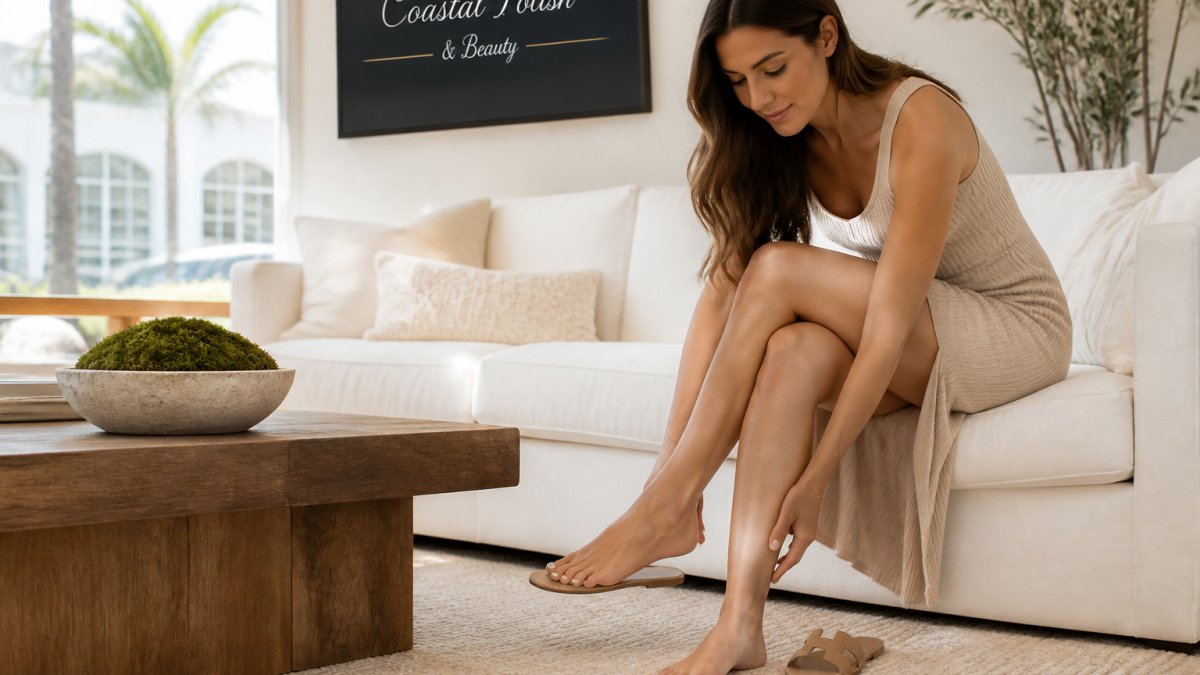
Wait at least two hours before any shoes, and give closed-toe styles a full 24 hours. Choose roomy options during the first two days so your toes have space to move without rubbing the fresh color.
Schedule and Appointment today for 10% Off your service →
Gel Pedicure Aftercare Tips That Extend the Wear
Gel is a different product with a different failure mode. Regular polish dries by evaporation and stays soft underneath for hours; gel cures under a UV or LED lamp and is hard the moment you leave the salon. That changes what aftercare should focus on. With gel, the surface is rarely the problem. The edges are.
Why Gel Lifts at the Edges
Gel adheres to the nail plate, but the seal at the sidewalls and free edge is thin. Water, oil, and friction work on that seal first. Once moisture gets under the edge, the gel can lift, and a lifted edge can catch on socks and shoes and peel back further. Most practitioners find that edge care, not surface care, is what determines whether a gel pedicure lasts two weeks or four.
Gel-Specific Aftercare
- Dry the edges first. After showers, swimming, or washing dishes, dry the free edge and sidewalls of each nail, not just the top.
- Keep cuticle oil on the skin, not the gel. Oil is good for the surrounding skin but can soften the gel edge if worked under it. Apply to the cuticle and sides, then wipe the nail surface.
- Skip the buffer and file. Do not file or buff gel at home. Thinning the edge invites lifting and makes salon removal harder.
- Avoid toenails as tools. Opening packages, scraping labels, or prying lids puts leverage directly on the gel edge.
- Watch heat and chlorine. Hot tubs, long baths, and pools soften the edge seal. Rinse and dry thoroughly after any exposure.
- Do not pick or peel. Peeling gel removes layers of the nail plate with it and can leave the nail thin and sensitive.
When to Fix at Home and When to Call a Professional
- Small chip at the free edge: Smooth it lightly with a fine emery board and keep the edge dry. Do not apply regular top coat over gel; it will not bond and can trap moisture.
- Lifting along the sidewall: Do not glue it down or trim it with clippers. Call the salon. A professional can seal or remove it before water gets underneath.
- Lifted edge with discoloration or odor: This can signal moisture trapped under the gel. Have it removed professionally and let the nail recover before reapplying.
- Persistent pain, swelling, or redness around the nail: Seek medical care. These are not normal gel wear signs.
Plan Removal Before You Need It
Gel is typically removed by a professional. Booking removal at the same time as your next appointment can help prevent the temptation to pick at a lifting edge.
How to Prevent Toenail Polish From Chipping
Chips usually start at the edges, where water and friction collect. Protecting those edges is the single most effective step you can take.
- Dry your feet completely after washing, especially between the toes.
- Wear shoes with enough room so the front of the nail does not rub the inside.
- Apply a thin layer of foot moisturizer to the skin, but keep it off the polish.
- Touch up small chips early rather than waiting for them to grow.
Moisturizing and Cuticle Care Between Visits
Dry skin and cuticles cause more problems than most people realize. Cracked skin can pull at the polish, and dry cuticles can peel and lift the color around the nail.
- Moisturize your feet every day, focusing on heels and the sides of the toes.
- Use cuticle oil two or three times a week to keep the skin soft.
- Avoid picking at cuticles, since this can cause small wounds that invite infection.
- Keep your toenails trimmed straight across to reduce pressure on the polish.
Booking Your Next Maintenance Visit at Coastal Polish & Beauty
Regular maintenance keeps your nails looking their best and gives you a chance to catch small problems early. To decide how often to book, read how often to get a pedicure. Many clients return for their next visit after a gel pedicure, depending on how well the polish has held up. You can view the finished manicures, pedicures, and nail designs before choosing your next appointment.
When you are ready to book, visit Coastal Polish & Beauty in Newport Beach, located inside the Birdhouse wellness collective.
Ready for a peaceful break from your day? Book Now and let our team care for your feet.
Frequently Asked Questions
How long should I wait to put on shoes after a pedicure?
Allow your polish to fully cure and harden before putting on shoes. Open-toe sandals or flip-flops are the safest first choice because they add no pressure on the nail surface. Closed shoes should wait a few hours, and socks should be loose and natural-fiber to avoid smearing wet polish. Following this timing reduces dents and smudges during the critical first day.
How can I make my pedicure last longer?
Keep your feet dry and avoid long soaks in hot water for the first 24 to 48 hours. Moisturize feet and cuticles daily with a light cream or cuticle oil, which keeps skin flexible and reduces lifting at the nail edges. Avoid picking at polish and wear roomy footwear to limit friction. Consistent aftercare routines are the most reliable way to extend how long your pedicure looks fresh.
How do I prevent my toenail polish from chipping?
Chipping usually starts at the tips, where friction and pressure are highest. Choose roomy shoes, avoid chlorinated pools and prolonged water exposure, and never use your nails as tools to open cans or scrape surfaces. Apply a fresh top coat every few days to refresh the seal, and wipe away any moisturizer before it gets on the polish. If a chip appears, file the edge smooth rather than peeling it, which can take more polish with it.
What should I do if my toenail polish smudges after a pedicure?
If polish smudges within the first hours, gently press the spot with a cool damp cloth only if it is fully set, or let it cure and then buff lightly and reapply a top coat. Avoid touching wet polish, and keep socks and shoes away until it hardens. Smudges caused by pressure usually mean the polish was not fully dry, so allowing extra drying time is the most effective prevention.