 how-to
7 Scalp Massage Benefits for Hair Growth and Thickness
Last Updated: October 27, 2026
Quick Summary
Scalp massage may support a healthy-looking scalp and possibly thicker-looking hair, but it is not a cure for hair loss. The research is preliminary and mixed, so it is best treated as a supportive habit within a broader routine.
- A 2016 Eplasty study used a hand-held device for about 4 minutes a day over 24 weeks.
- That study found increased hair thickness, but it was small and used a specific device.
- Hair grows roughly half an inch per month, so give any routine at least 12 weeks.
- Stop massaging and check with a doctor if you notice redness, burning, pain, or swelling.
- See a dermatologist for sudden hair loss, bald patches, or thinning that keeps getting worse.
Table of Contents
- What Scalp Massage Can and Cannot Do for Hair Growth
- How Scalp Massage May Affect Hair Follicles and Blood Flow
- Does Scalp Massage Help Hair Growth? What the Evidence Shows
- How to Massage Scalp for Hair Growth: A Step-by-Step Routine
- How Often to Massage Scalp for Hair Growth
- Safety, Oils and When to See a Professional About Hair Loss
- What to Expect From a Head Spa Treatment at Coastal Polish & Beauty
- Frequently Asked Questions
What Scalp Massage Can and Cannot Do for Hair Growth
If you have ever wondered whether scalp massage can grow hair, the honest answer is: it may help, but it is not a cure. Many people use it as part of a hair care routine, and some find it relaxing and worth the effort. The real question is what the evidence actually supports.
Scalp massage is a gentle way to work on the skin and tissue on top of your head. Done regularly, it can help you feel less tension and may support a healthy-looking scalp. Keep your expectations realistic, though. A massage alone will not reverse most types of hair loss.
- It may support a comfortable, healthy scalp
- It can ease tension that builds up from stress or long days
- It does not replace a diagnosis for hair loss
- It works best as one part of a broader routine
How Scalp Massage May Affect Hair Follicles and Blood Flow
Hair follicles are the small pockets in the skin where each strand grows. Many people believe that gentle pressure may stimulate these follicles, and that better blood flow may bring more oxygen and nutrients to the area. This idea is widely discussed, but the strength of the evidence varies.
Some researchers have studied how mechanical pressure affects blood vessels in the skin. Their findings suggest that light, steady pressure may encourage small blood vessels to widen. That is a plausible explanation for why people feel warmth during a massage.
Still, feeling warm does not prove that hair will grow faster. Think of blood flow as one possible benefit, not a guaranteed result.
Does Scalp Massage Help Hair Growth? What the Evidence Shows
This is the question most readers want answered, so here is a straightforward summary, and a careful one. The research on scalp massage for hair growth is real but limited. It is best described as preliminary and mixed, not proven.
The most frequently cited human study is a small 2016 trial published in Eplasty that used a standardized, hand-held scalp massage device for 24 weeks. Participants were asked to massage for about 4 minutes a day. The researchers reported that hair thickness, measured by what is called hair cross-sectional area, increased in the massage group compared with a control group. That is a meaningful signal, but it comes with important caveats: the study was small, it used a specific device rather than freehand massage, and the outcome measured was thickness, not new hair growth in people with diagnosed hair loss.
Other research is mostly mechanistic or animal-based. Laboratory work has suggested that mechanical stretch or pressure on scalp tissue may influence hair follicle cells and the hair growth cycle, and some studies have looked at blood flow changes in the skin. These findings are plausible and interesting, but they do not prove that massaging your scalp will regrow lost hair.
Here is how to read the evidence honestly:
- Thicker-looking hair is not the same as regrowing lost hair. A change in hair cross-sectional area can reflect less breakage, better conditioning, or natural variation, not necessarily new follicles.
- Small studies are prone to overstating effects. When a trial has few participants, a lucky result is more likely to look like a real one.
- Short studies cannot show long-term outcomes. Hair grows slowly, roughly half an inch per month, so a 12- or 24-week study captures only a few inches of growth at most.
- Massage is hard to isolate. If participants also used oils, shampoos, or other treatments, the study cannot tell you which one caused any change.
- Results differ from person to person. Age, genetics, hormones, and the cause of any hair loss all affect what you might see.
What the research does not show: that scalp massage reliably regrows hair in people with androgenetic alopecia (pattern hair loss), alopecia areata, or hair loss from medical causes. No major dermatology organization lists scalp massage as a standalone treatment for hair loss. If you read a dramatic claim online, check how many people were studied, how long the study lasted, and whether it was controlled.
How to Massage Scalp for Hair Growth: A Step-by-Step Routine
A simple routine is easy to follow and easy to stick with. You do not need special tools, though some people prefer a silicone scalp brush or a hand-held massager. Here is a practical approach you can try at home, with timing and pressure guidance so you are not guessing.
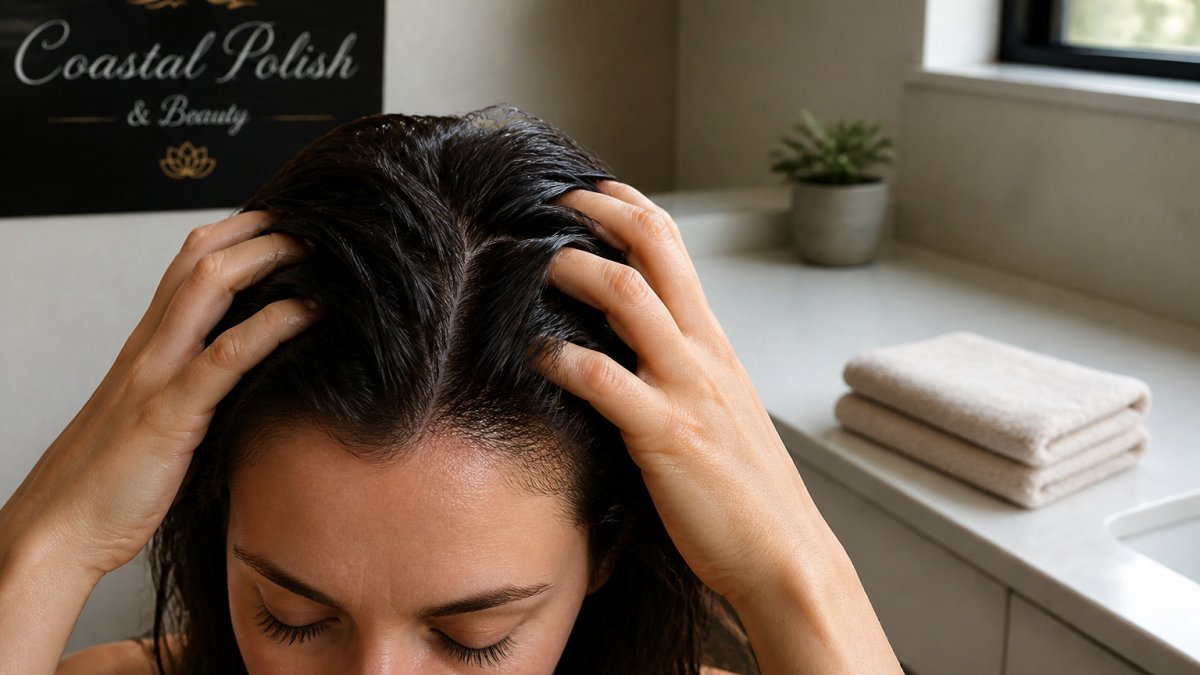
Before you start:
- Wash your hands. Keep nails short and smooth, scratches are the most common cause of irritation from scalp massage.
- Start with dry hair, or apply a light carrier oil (such as jojoba or fractionated coconut oil) if you prefer slip. Avoid essential oils directly on the scalp unless diluted, and patch-test first.
- Sit or stand comfortably. You do not need to press hard; the goal is moving the skin, not grinding it.
The routine (about 5-10 minutes total):
- Front hairline (1-2 minutes). Place your fingertips, not nails, at the hairline. Use small circles, about the size of a coin, moving the skin rather than sliding over the hair.
- Temples and sides (1-2 minutes). Work along the sides of the head with gentle kneading. Keep pressure light here; the skin is thinner.
- Crown and top (2-3 minutes). Move to the top of the head. Use slow, steady circles and light front-to-back strokes.
- Back of the head and nape (1-2 minutes). Work down toward the neck. Many people carry tension here, so this is often the most relaxing part.
- Finish with light stroking (30-60 seconds). Use flat fingers to stroke gently from front to back across the whole scalp.
Pressure: aim for a firm but comfortable pressure, think of the pressure you would use to massage your temples during a headache. If it hurts, leaves red marks, or feels tender afterward, ease up. A common mistake is pressing too hard, which can irritate the scalp and, over time, contribute to breakage if you are rough with the hair.
Schedule and Appointment today for 10% Off your service →
Fingers versus a tool: your fingertips give you the most control over pressure and are the safest starting point. A silicone scalp brush or hand-held massager can help with consistency and reach, but use it gently and follow the manufacturer's instructions. Avoid tools with stiff, sharp, or metal bristles.
Duration and frequency: 5-10 minutes per session, three to four times per week, is a practical starting point. Some people prefer a short daily session. Consistency matters more than intensity, gentle, regular sessions are better than rare, hard ones. Longer sessions are not necessarily better and can leave the scalp sore.
Tracking outcomes realistically: hair grows slowly, so give any routine at least 12 weeks before judging results. Take photos in the same lighting and at the same angle every few weeks, and note any changes in shedding, scalp comfort, and how your hair feels. Keep a simple log of what you do, and if you use oils or other products, change one thing at a time so you can tell what is actually helping.
The routine below breaks scalp massage into steps, each with its timing or pressure guidance, so you can follow it at home.
| Step | What to do | Time |
|---|---|---|
| Front hairline | Small circles with fingertips, not nails | 1-2 minutes |
| Temples and sides | Gentle kneading; keep pressure light | 1-2 minutes |
| Crown and top | Slow, steady circles and light front-to-back strokes | 2-3 minutes |
| Back of head and nape | Work down toward the neck | 1-2 minutes |
| Light stroking | Flat fingers, front to back across the scalp | 30-60 seconds |
How Often to Massage Scalp for Hair Growth
Most people find three to four sessions per week a manageable schedule. Some prefer a short daily massage in the shower or before bed. Choose a rhythm you can keep up for several months.
Give any routine time before judging results. Hair grows slowly, usually about half an inch per month, so changes take weeks or months to show.
Safety, Oils and When to See a Professional About Hair Loss
Scalp massage is generally gentle, but a few precautions are worth knowing. Stop if you notice redness, burning, or pain. If you have a scalp condition, such as psoriasis, eczema, or an active infection, check with a doctor before starting a new routine.
Oils can be a useful addition, but they can also make the massage look like it works better than it does. If you use oil alongside other treatments, it becomes hard to tell which one is responsible for any change. Keep notes if you want to track progress honestly.
See a dermatologist if you notice sudden hair loss, bald patches, or thinning that keeps getting worse. Hair loss has many causes, including hormones, nutrition, medications, and medical conditions. Some of these need treatment that a massage cannot provide.
Watch out: do not use scalp massage as a reason to delay seeing a doctor about noticeable hair loss. Early evaluation often leads to better options.
What to Expect From a Head Spa Treatment at Coastal Polish & Beauty
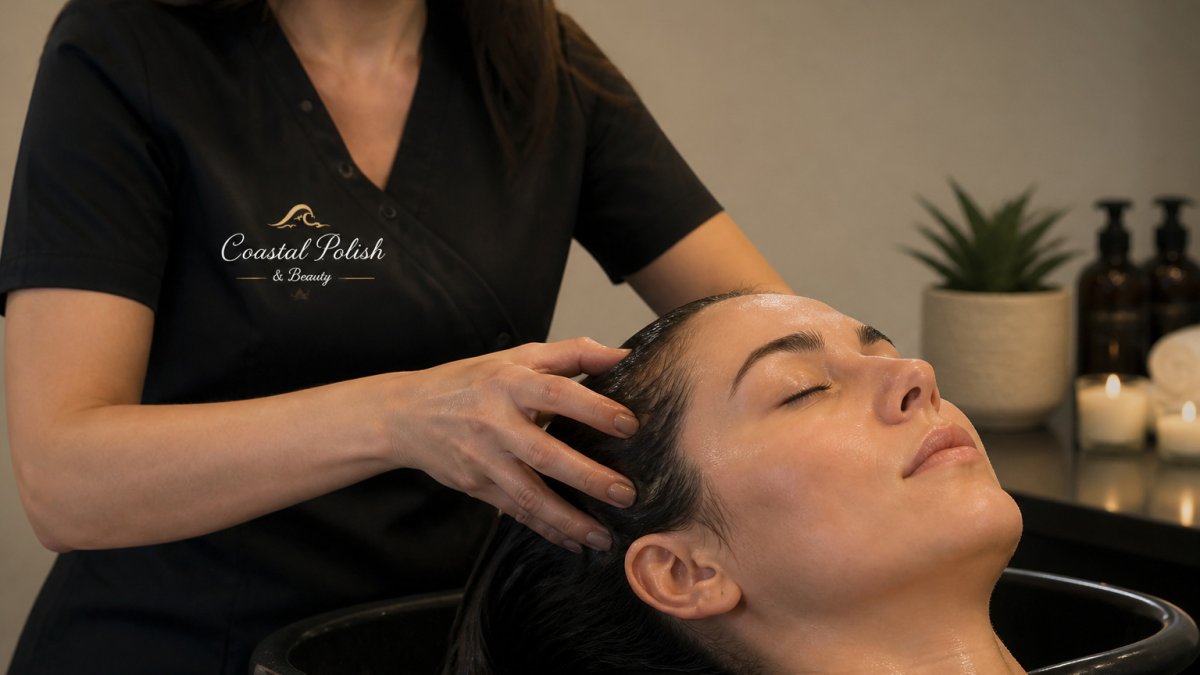
At Coastal Polish & Beauty, we offer a Head Spa experience that focuses on relaxation and a peaceful break from a busy day. Our treatment is designed to help you feel refreshed and cared for.
Each visit is personalized to your needs. Our expert technicians use premium products. We are committed to a clean, safe environment.
We will be honest about what a Head Spa can do. You can book a Head Spa appointment online at Coastal Polish & Beauty in Newport Beach. It is designed to help you feel refreshed. If you are concerned about thinning or scalp health, consult a qualified professional. Book Now.
Frequently Asked Questions
Does scalp massage help hair growth?
Current evidence is limited. Small studies suggest scalp massage may be associated with improved hair thickness, but large, high-quality trials are lacking. If you are concerned about hair loss, consult a qualified professional.
How often should you massage your scalp for hair growth?
Most people can massage their scalp several times a week, with 5 to 10 minutes per session being a common starting point. Consistency matters more than intensity. Massaging daily is generally safe if the scalp is not irritated, but a few sessions per week is enough for most people to build a habit. If you notice redness, soreness or increased shedding, reduce frequency and pressure and check with a dermatologist.
What should you expect from a head spa treatment?
Coastal Polish & Beauty offers Head Spa treatments designed to help you feel refreshed. Ask about the steps included in your session before you book.