 blog
blog
Pedicure and Manicure: The Complete 2026 Guide
Table of Contents
- Pedicure and Manicure: What's the Real Difference?
- Pedicure and Manicure Cost Guide: What to Expect
- How Long Does a Manicure Last?
- The Manicure and Pedicure Process: Step by Step
- Best Practices for Nail Health and Hygiene
- How Often Should You Get a Manicure and Pedicure?
- Conclusion
- Frequently Asked Questions
Last Updated: September 15, 2026
Pedicure and Manicure: What's the Real Difference?
A pedicure and manicure are two distinct grooming services: a manicure treats the hands, nails, and cuticles, while a pedicure focuses on the feet, toenails, and lower legs. Many people book both together for a full grooming session.
This guide breaks down exactly what each service includes, how long results last, what drives pricing, and how to keep your nails healthy between visits. The two treatments share tools and techniques, but they target different concerns and follow different steps.
If you have ever wondered whether you actually need both, the answer depends on your goals and lifestyle, not just habit.
Pedicure and Manicure Cost Guide: What to Expect
Pricing for a pedicure and manicure varies widely by market, service type, and salon tier. Use the information below as a benchmark, not a quote, your local market may run higher in dense metro areas and lower in smaller towns.
| Service | Typical Price Range | Typical Time |
|---|---|---|
| Classic manicure (regular polish) | $20-$35 | 30-45 min |
| Gel manicure | $35-$60 | 45-60 min |
| Acrylic full set | $50-$90 | 60-90 min |
| Dip powder manicure | $40-$65 | 45-60 min |
| Classic pedicure | $30-$50 | 45-60 min |
| Spa pedicure (exfoliation, massage, mask) | $50-$85 | 60-75 min |
| Gel pedicure | $45-$70 | 60-75 min |
| Mani-pedi combo | $55-$110 | 90-120 min |
Most salons price manicures and pedicures separately, then may offer a combo package at a slight discount. Factors that move the price up or down include:
- Service type: Regular polish is the cheapest finish; gel, acrylic, and dip powder each add cost because of product and time.
- Add-ons: Paraffin wax, callus removal, extended massage, nail art, and French tips are usually priced per add-on, typically $5-$20 each.
- Removal fees: Gel and acrylic removal is often a separate charge of $5-$15 if you did not get the original set at that salon.
- Technician experience: Senior technicians and salon owners often charge $10-$25 more than junior staff.
- Location and salon tier: Walk-in strip-mall salons sit at the low end; boutique or hotel spas sit at the high end.
- Service duration: Longer, more detailed services cost more, and a rushed appointment usually means a rushed result.
- Gratuity: Tip 15-20% on the service total, the same as you would for other personal-care services.
Because Coastal Polish & Beauty has not published rates, we recommend checking the salon's website or calling ahead for current pricing and combo package details.
How to Budget for Regular Nail Care
If you keep up a standing appointment, the annual math matters. Booking a combo package instead of two separate services can offer savings over time. If cost is the constraint, prioritize the pedicure, it lasts longer between visits and can deliver more visible skin benefits per dollar.
How Long Does a Manicure Last?
A standard manicure with regular polish lasts about three to five days before chips appear. Gel polish typically holds for two to three weeks, and acrylic enhancements can last three to four weeks with proper care.
The finish you choose matters more than the salon's reputation when it comes to longevity. Regular polish is the most affordable but the least durable. Gel polish cures under a UV or LED lamp, creating a harder surface that resists chipping. Acrylics and dip powder build a stronger overlay that stands up to daily wear.
| Finish | Typical Wear Time | Removal Method | Best For |
|---|---|---|---|
| Regular polish | 3-5 days | Acetone soak | Short-term wear, frequent color changes |
| Gel polish | 2-3 weeks | Acetone soak or filing | Chip-resistant everyday wear |
| Acrylic | 3-4 weeks | Filing and soak-off | Length and strength |
| Dip powder | 2-3 weeks | Filing and soak-off | Durable color without UV curing |
Nail health plays a role too. Dry, brittle nails and cuticle damage shorten wear time regardless of the product. A base coat and top coat add a protective layer that extends any finish.
Schedule and Appointment today for 10% Off your service →
The Manicure and Pedicure Process: Step by Step
Both services follow a similar rhythm: soak, shape, treat, and finish. The difference lies in the tools, the timing, and the areas of focus. Knowing the sequence helps you spot a rushed or sloppy service before it becomes a problem.
What Happens During a Manicure
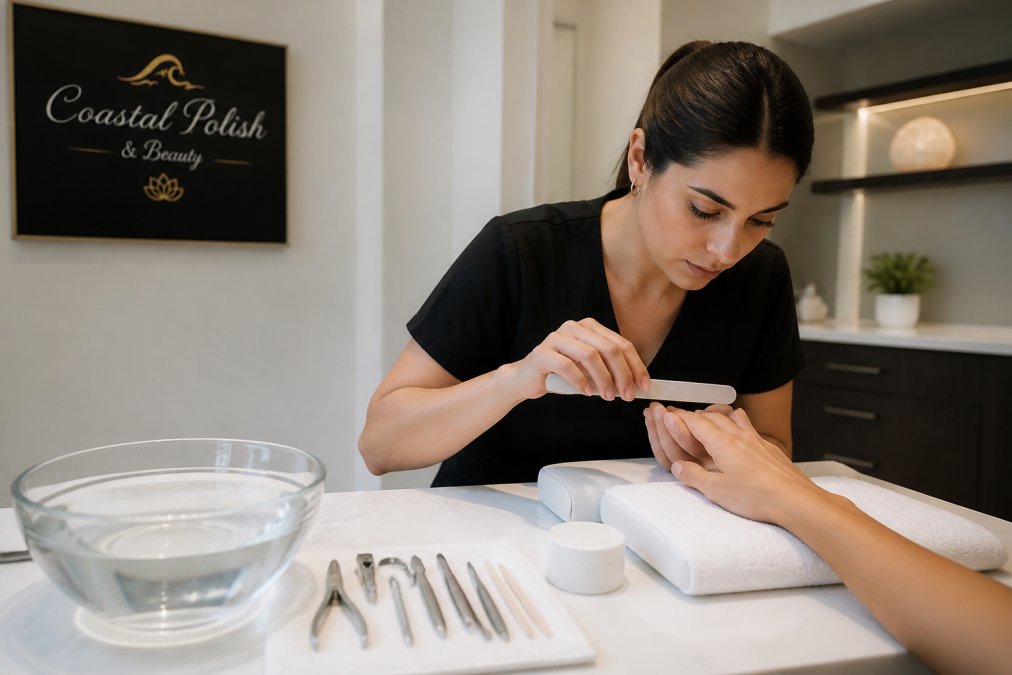
A classic manicure runs 30-45 minutes and follows this sequence:
- Consultation and shaping (5-10 min). The technician asks about length and shape, square, round, oval, almond, or coffin, then files the free edge in one direction to prevent splitting.
- Soak and cuticle care (5-10 min). Hands soak in warm water to soften the cuticle. The technician applies a cuticle softener, then gently pushes the cuticle back with a wooden or rubber-tipped pusher. Nipper trimming is limited to hangnails and dead skin, not the live cuticle.
- Buffing and exfoliation (5 min). A fine-grit buffer smooths the nail plate to help polish adhere. A scrub removes dead skin from the hands and wrists.
- Massage (5-10 min). Lotion or cuticle oil is worked into the hands, fingers, and wrists. This is the step most often cut short when a salon is busy.
- Polish application (10-15 min). Base coat, two thin color coats, and a top coat. Gel polish adds a UV or LED cure of 30-60 seconds per coat. A paraffin wax treatment can be added for extra hydration.
What Happens During a Pedicure
A classic pedicure runs 45-60 minutes and follows this sequence:
- Soak (5-10 min). Feet rest in warm water, often with a softening soak, to loosen dead skin and soften toenails.
- Nail trimming and shaping (5-10 min). Toenails are cut straight across, not rounded into the corners, to reduce the risk of ingrown toenails. Edges are smoothed with a file.
- Callus and dead-skin removal (10-15 min). A pumice stone, foot file, or callus shaver addresses the heels and the balls of the feet. Aggressive shaving with a blade is a red flag; gentle filing is safer.
- Exfoliation and massage (10-15 min). A scrub is worked into the feet and lower legs, followed by a massage with lotion or oil.
- Cuticle care and polish (10-15 min). Cuticles are pushed back gently, then base coat, color, and top coat are applied. Toenails take longer to dry than fingernails, so allow extra time before putting on socks or shoes.
When You Should Skip the Service
This is where most guides stop, and it is the most important part. A manicure or pedicure is a cosmetic service, not a medical one, and there are times when the right answer is to see a doctor instead of a nail technician.
- Fungal nail infection. Thick, yellow, crumbling, or lifting nails are usually a fungal infection. Polish traps moisture and can worsen it, and shared tools can spread it to other clients. Treat the infection first.
- Diabetes or poor circulation. Reduced sensation in the feet means you may not feel a nick or a burn from hot water. A minor cut can become a serious wound. If you have diabetes, look for a salon with a technician trained in diabetic foot care, and tell them about your condition before the service starts.
- Ingrown toenails, open cuts, or sores. Working over broken skin invites infection.
Best Practices for Nail Health and Hygiene
Sanitization and Sterilization Standards
Between visits, keep nails healthy with these habits:
The single biggest factor in nail health is tool hygiene. A beautiful finish means nothing if the tools were not properly sterilized. Ask questions before your first appointment.
How Often Should You Get a Manicure and Pedicure?
Conclusion
Frequently Asked Questions
What is the average price for a manicure and pedicure?
Pricing for a pedicure and manicure depends on the salon's location, the products used, and the complexity of the service. Basic services cost less, while gel, acrylic, or spa-style treatments cost more. We recommend checking our website or contacting us directly for current pricing and package options that fit your needs.
How often should you get a manicure and pedicure to maintain healthy nails?
Most people benefit from a manicure every two to three weeks and a pedicure every four to six weeks. Regular appointments help prevent cuticle overgrowth, keep nails shaped, and allow technicians to spot early signs of nail health issues. If you have specific concerns like brittle nails or sensitive skin, adjust the frequency based on your technician's advice.
How much should you tip for a professional manicure and pedicure?
Tipping is customary in the United States, with a percentage of the service total being standard for good service. For exceptional care or complex services like nail art or spa pedicures, a higher percentage is appreciated. Some salons include gratuity for package deals, so check your receipt to avoid double-tipping.
What are the primary health benefits of regular nail care?
Regular pedicure and manicure services support nail health by preventing ingrown toenails, reducing callus buildup, and keeping cuticles moisturized. Professional exfoliation and massage improve circulation and skin hydration. Consistent care also allows technicians to notice changes in nail color or texture that may warrant a medical checkup.