 blog
Best Cuticle Oil for Long Lasting Manicures
Table of Contents
- Why Cuticle Oil Matters for Manicure Longevity
- Best Cuticle Oil for Gel Nails
- Key Cuticle Oil Ingredients That Protect Your Manicure
- How Often to Use Cuticle Oil for Best Results
- How to Make a Manicure Last Longer with Cuticle Oil
- Cuticle Oil Application and Routine Best Practices
- Frequently Asked Questions
Last Updated: October 21, 2026
Why Cuticle Oil Matters for Manicure Longevity
A quality best cuticle oil for long lasting manicures does far more than moisturize. It creates a protective barrier around the nail bed and cuticles, strengthening the foundation that keeps polish adhered. Dry, brittle cuticles lift away from the nail plate, compromising the seal and causing peeling and chipping within days.
Hydrated cuticles give polish a stable base; dry ones create micro-gaps where moisture seeps in and polish breaks down.
Timing matters too: oil before a manicure prepares the nail bed, oil after seals the polish edges, and oil between appointments maintains results.
Best Cuticle Oil for Gel Nails
Gel manicures fail at the edges first. The cured gel forms a tight seal around the cuticle line, and when that seal lifts, moisture gets under the coating and the manicure peels. Cuticle oil protects that seal, but only with the right formula at the right time.
What "gel-safe" actually means
A gel-safe cuticle oil absorbs quickly, leaves no occlusive film on the cured surface, and contains no solvents or exfoliating acids that could dull the top coat. Jojoba, squalane, and lightweight sunflower blends fit this profile. Avoid heavy balms, petrolatum salves, and oils cut with fragrance or citrus extracts around a fresh gel set, since residue attracts lint and dulls the manicure within a week.
Timing around a gel appointment
- Night before: Apply oil to the cuticle line and sidewalls. This softens the cuticle so your technician can push it back cleanly without creating micro-tears that later become lift points.
- Day of appointment: Wipe the nail plate with the technician's prep solution as usual. Do not apply oil to the bare nail immediately before gel application, because residual oil is a common cause of premature lifting.
- First 24 hours after curing: Leave the gel alone. The coating is still finishing its cure and the cuticle area is often slightly tender from prep.
- Day 2 onward: Apply oil once or twice daily to the cuticle line, sidewalls, and the free edge on the underside of the nail tip. These are the three places gel lifts first.
How oil extends gel wear
Gel does not need oil to stay glossy, but the nail and cuticle underneath it do. Dry cuticles retract and crack, and each crack creates a tiny gap at the seal. Oil keeps the cuticle supple so it stays flush against the nail plate.
Formula and applicator trade-offs for gel wearers
- Brush bottle: Best for a full cuticle-line pass at home in the evening. More oil per application, so better for very dry cuticles, but easier to over-apply.
- Precision pen: Best for touch-ups during the day and for targeting the sidewalls without flooding the nail. Ideal for anyone who tends to get oil on the gel surface.
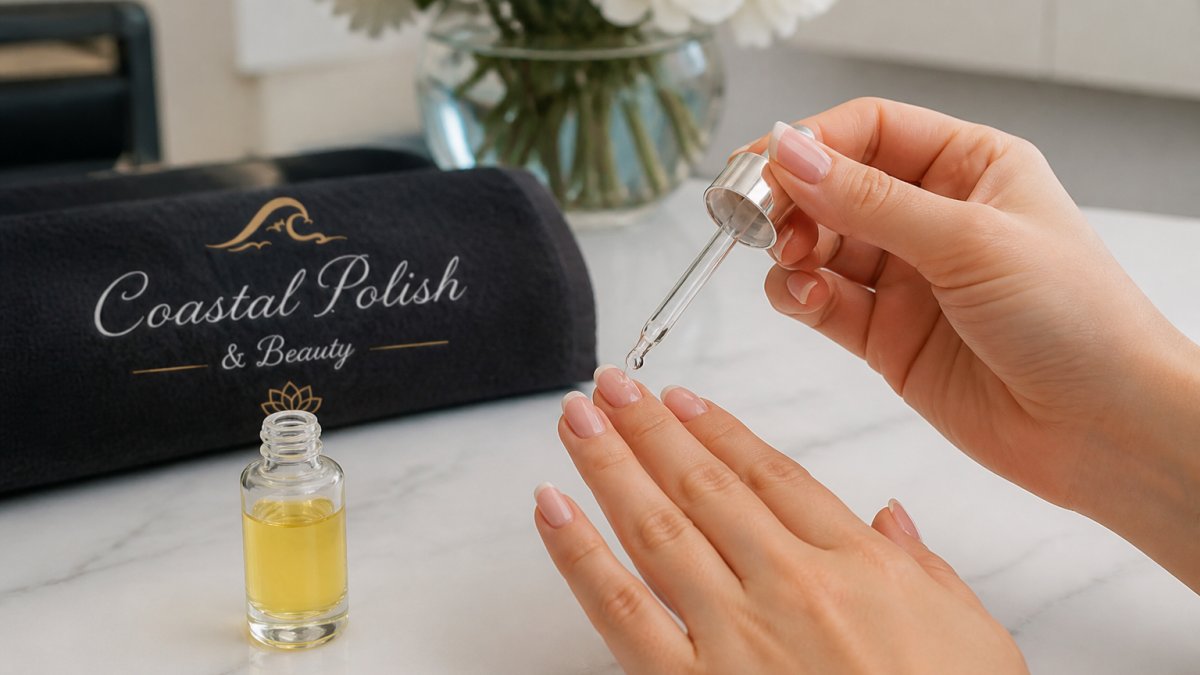
- Dropper: Best for blending your own jojoba-and-vitamin-E mix, but the least portable option.
- Balm stick: Convenient, but the waxes can leave a film that dulls gel, so reserve balms for between appointments rather than the first week.
Key Cuticle Oil Ingredients That Protect Your Manicure
Not all oils perform the same way. Ingredients determine how quickly the oil absorbs, how long hydration lasts, and whether it leaves a greasy residue that dulls polish.
Jojoba Oil and Lightweight Hydration
Jojoba oil is the gold standard for nail care because its molecular structure closely matches human skin oil. It absorbs rapidly without a thick, greasy film, which matters because excess oil on the nail surface can make new polish slide or bubble.
Jojoba penetrates the cuticle and nail bed within minutes, is lightweight enough for daily use without buildup, and won't interfere with gel or acrylic applications. For anyone seeking the best cuticle oil for long lasting manicures, jojoba is the foundation ingredient to look for.
Vitamin E and Antioxidant Defense
Vitamin E protects cuticles from environmental damage and oxidative stress. This antioxidant slows moisture loss and helps cuticles retain elasticity, so they don't crack or peel and create weak points where polish breaks down.
Vitamin E also supports nail strength by nourishing the keratin structure, and stronger nails resist breaking and peeling. Look for cuticle oils that list vitamin E as a primary ingredient, not a trace additive.
Natural Oil Blends for Nourishment
The best formulas combine multiple nourishing oils. Sunflower oil adds linoleic acid to strengthen the skin barrier, almond oil provides protein and fatty acids that condition cuticles deeply, and rice oil offers antioxidants with a silky, residue-free texture.
A well-balanced blend hydrates more effectively than any single oil, with each ingredient contributing nutrients that soften, protect, and restore dry, brittle cuticles.
How Often to Use Cuticle Oil for Best Results
Frequency is the variable most people get wrong, and it separates a manicure that lasts two weeks from one that lasts four. The right schedule depends on your manicure type, hand-washing habits, and how dry your cuticles run, not a single universal rule.
The baseline schedule
For most people, once daily in the evening is the minimum effective dose. Apply to the cuticle line, sidewalls, and underside of the free edge, then massage for 30 to 60 seconds. Evening application lets the oil absorb instead of rinsing away. If cuticles are very dry or you wash hands frequently, aim for twice daily.
How the schedule changes by manicure type
- Regular polish: Oil freely before and after. Once the polish is fully dry (typically 6 to 8 hours), daily oil is safe and helps the edges stay sealed. No special waiting window is needed beyond that.
- Gel: Oil the night before the appointment, skip the first 24 hours after curing, then go to once or twice daily. The first week is when lifting starts, so do not skip days during that window.
- Acrylic: Oil the night before, wait 12 to 24 hours after the set, then daily. Acrylics are more porous at the cuticle line, so consistent oiling is what keeps the natural nail from drying out underneath.
- Press-ons and wraps: Oil the cuticle line only, and avoid flooding the adhesive edge for the first day. After that, daily oil helps the adhesive stay flexible instead of cracking.
What changes the schedule
- Hand washing and sanitizer: Each wash strips surface oil. If you wash your hands more than eight to ten times a day, add a mid-day application.
- Season: Winter air and indoor heating pull moisture from the cuticle faster, so most people need to move from once to twice daily between late fall and early spring.
- Cuticle recovery after a appointment: Cuticles are pushed, trimmed, or treated during a manicure and can be slightly irritated for a few days. Bump to twice daily for three to four days after the appointment, then return to your baseline.
- Nail growth: As the manicure grows out, the cuticle line moves up the nail and the seal weakens. Increasing oil frequency in the final week before your next appointment helps the grow-out stay intact.
A realistic frequency guide
| Application Frequency | Best For | Typical Manicure Lifespan |
|---|---|---|
| Twice daily (morning and evening) | Very dry cuticles, winter, frequent hand washing, gel or acrylic in the first week | 3.5 to 4 weeks or longer |
| Daily (evening) | Most people, most manicure types, most of the year | 3 to 4 weeks |
| 4 to 5 times weekly | Oily skin, humid climates, or anyone who prefers a lighter routine | 2.5 to 3 weeks |
| 1 to 2 times weekly | Minimal maintenance, short-wear polish | 2 to 2.5 weeks |
| As-needed only | Damage control after a chip or lift has already started | 1 to 2 weeks |
Why consistency beats intensity
A single heavy weekly application does less than a light daily one. Cuticles lose moisture continuously, so keep the barrier topped up rather than flooding it and letting it dry out. A pen applicator makes daily use easy to sustain, and a small bottle typically lasts several weeks. The payoff is fewer chips, less lifting at the sidewalls, and healthier-looking nails between appointments.
How to Make a Manicure Last Longer with Cuticle Oil
Applying cuticle oil correctly amplifies its benefits. Technique and timing transform a good product into a manicure-extending essential.
Schedule and Appointment today for 10% Off your service →
Application Timing Around Your Manicure
The pre-manicure window is critical.
After your manicure, wait at least 24 hours before applying oil if you received gel or acrylic, since these finishes need time to fully cure.
After the first 24 hours, cuticle oil becomes your best defense against chipping.
Compatibility with Gel, Acrylic, and Polish
Different manicure types require slightly different oil strategies. Regular polish is most forgiving: use cuticle oil freely before and after without affecting the finish or causing lifting.
Gel manicures are more sensitive to oil timing. Pre-manicure oil is beneficial, but post-manicure oil must wait 24 hours.
Acrylic nails fall in between. Pre-manicure oil is fine; post-manicure, wait 12-24 hours for the acrylic to harden, then oil is safe and recommended.
The common thread: cuticle oil strengthens the foundation that polish, gel, or acrylic adheres to. Timing matters, but the principle is the same across all manicure types.
Cuticle Oil Application and Routine Best Practices
A consistent routine transforms cuticle oil from an occasional treatment into a manicure-extending habit.
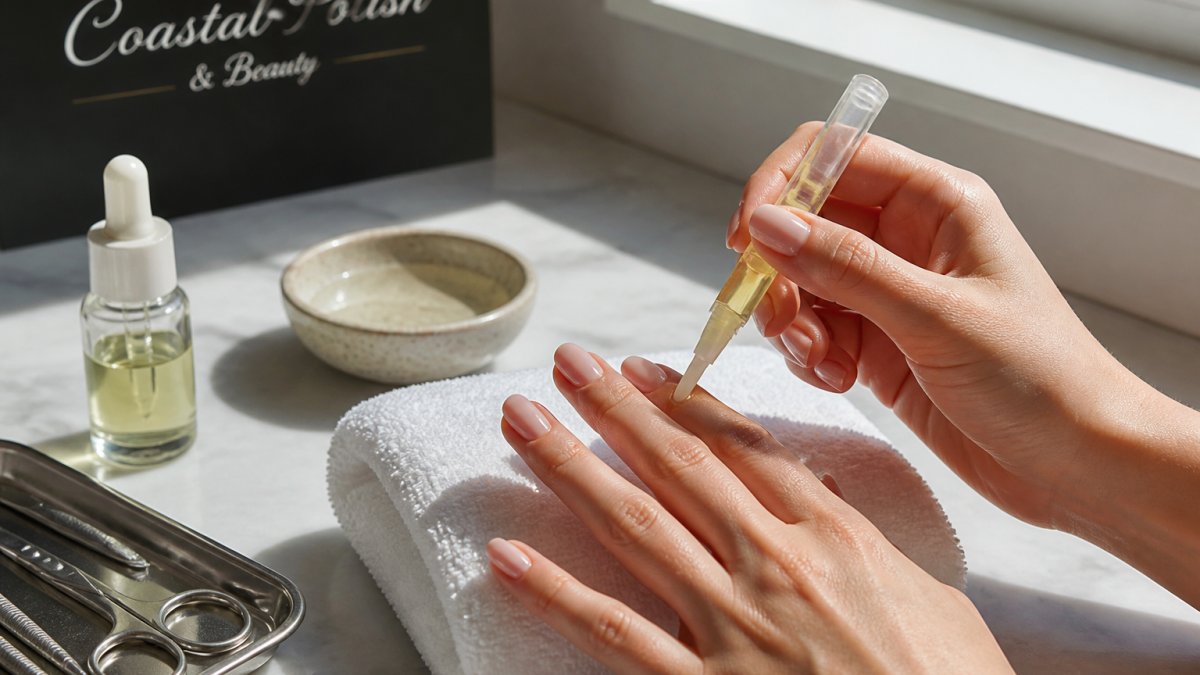
Use a pen applicator for precision, targeting the cuticle line and nail edges without over-applying.
Apply oil in the evening when you're winding down, so it absorbs fully before you wash your hands the next morning.
Store your cuticle oil in a cool, dark place, since direct sunlight and heat degrade the oils.
For the best cuticle oil for long lasting manicures, consistency beats perfection.
The difference between a manicure that lasts two weeks and one that lasts four comes down to cuticle health.
Frequently Asked Questions
Does cuticle oil help gel manicures last longer?
Yes. Cuticle oil hydrates the skin around nails and strengthens the nail bed, reducing peeling and brittleness that can cause polish to lift prematurely. Applied regularly, cuticle oil maintains the foundation your gel manicure sits on, helping it adhere longer and resist chipping. The key is consistent application every few days, starting the day after your manicure.
How often should you apply cuticle oil after a manicure?
Apply cuticle oil every 2-3 days for optimal results. Start the day after your manicure to avoid interfering with polish cure time. Daily application is safe but not necessary for most people; 2-3 times per week maintains hydration without oversaturation. If your nails feel dry or your cuticles are peeling, increase to daily use until they recover.
Which ingredients should you look for in cuticle oil?
Prioritize jojoba oil for lightweight, fast-absorbing hydration, and vitamin E for antioxidant protection and conditioning. Almond oil adds nourishment. Avoid heavy blends with silicones or mineral oil if you want the oil to absorb quickly without leaving greasy residue on your manicure. Rice oil and sunflower oil are also effective moisturizers.
Can you use cuticle oil over nail polish?
Yes, cuticle oil works best over polish and is designed for that purpose. Apply it around the cuticle area and nail edges after your manicure has fully cured (typically 24 hours for gel). Avoid pooling oil directly on the polish surface; focus on the skin and cuticle zone. This approach hydrates where it matters most without compromising your manicure finish.