 how-to
7 Habits That Make Your Gel Manicure Last Longer
Last Updated: October 27, 2026
Quick Summary
To extend the life of your gel manicure, control three things: prep your nails properly, apply the polish in thin coats with a capped free edge, and follow a daily aftercare routine. Most gel manicures last two to three weeks with good application and care, and oil, gloves, and gentle use matter most.
- Push back cuticles gently and wipe the nail plate with a dehydrator before application.
- Cap the free edge on every layer to prevent tip chips.
- Keep hands out of hot water for at least 4-6 hours after your appointment.
- Oil cuticles morning and night, and wear gloves for dishes and cleaning.
- Never pick or peel gel off; soak in acetone for 10-15 minutes instead.
Table of Contents
- Why Some Gel Manicures Last and Others Chip in a Week
- Nail Preparation: The Step That Decides Wear Time
- Thin Coats, Capping the Free Edge, and Clean Curing
- How Long Do Gel Nails Last, Realistically?
- A Gel Manicure Aftercare Routine, Day by Day
- Cuticle Oil for Gel Nails: What It Does and How to Use It
- Troubleshooting Chips, Lifting, and Peeling by Failure Type
- How to Remove Gel Polish Safely (and When to Stop Wearing It)
- Frequently Asked Questions
Why Some Gel Manicures Last and Others Chip in a Week
A gel manicure is a UV- or LED-cured polish service that bonds to your nail plate and can hold its shine for weeks.
Here's the part most guides skip: your wear time starts before polish ever touches your nail.
So how do you extend the life of your gel manicure?
If your sets keep failing early, it may be worth letting a professional handle the application. You can book an appointment online.
Nail Preparation: The Step That Decides Wear Time
Prep is where most wear time is won or lost. A clean, dry, properly shaped nail plate gives gel something to grip.
A common mistake is painting over cuticle or skin. Gel can't bond to skin, so any polish that touches it will peel and take the rest with it.
- Shape and smooth the edges first
- Push back cuticles without cutting them
- Buff the surface lightly for grip
- Wipe with a nail dehydrator
A primer can help on nails that lift easily, but it isn't a fix for poor prep. In practice, the dehydrator does most of the work.
Thin Coats, Capping the Free Edge, and Clean Curing
Application technique decides how well the gel holds. Thin coats cure evenly. Thick coats stay soft underneath and peel from the edges.
Capping the free edge is the step clients notice least and need most.
Curing matters just as much.
- Apply base, color, and top coat in thin layers
- Cap the free edge on each layer
- Cure for the full recommended time
- Keep the hand flat and still inside the lamp
Watch out: skipping the free-edge cap is the single most common cause of tip chips. It takes seconds and adds days of wear.
How Long Do Gel Nails Last, Realistically?
Most gel manicures last two to three weeks with good application and care. Some sets reach four weeks, but that depends on nail growth, lifestyle, and how well you look after them.
How long do gel nails last is one of the questions we hear most. The honest answer is a range, not a promise.
Signs of a good application:
- Smooth, even surface with no bubbles
- No polish on the cuticle or sidewalls
- A sealed, capped free edge
- A glossy top coat with no dull patches
If your set fails in the first week, the cause is usually application or prep, not your nails. That's worth raising with your technician.
A Gel Manicure Aftercare Routine, Day by Day
Good gel manicure aftercare is simple, but it works best as a daily habit with a clear schedule. Most guides give scattered tips; a time-stamped routine is easier to follow and easier to keep.
Schedule and Appointment today for 10% Off your service →
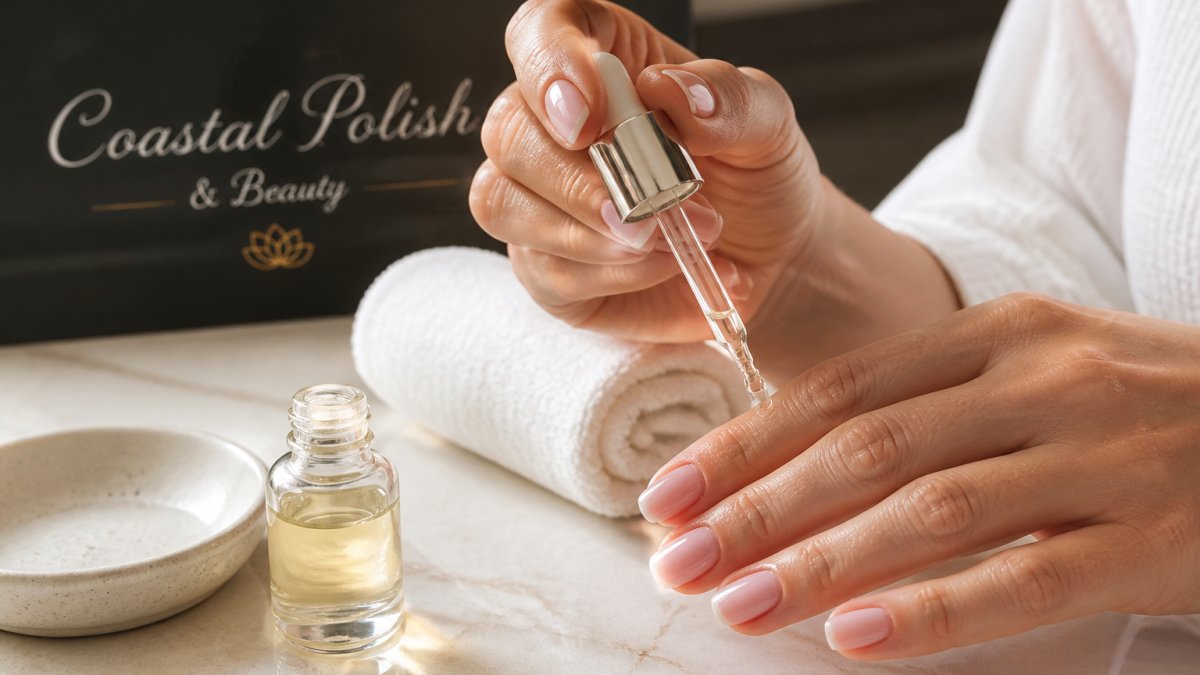
First 24 hours: protect the bond
Gel is fully cured when it leaves the lamp, but the bond at the free edge and sidewalls is still settling. For the first day:
- Keep hands out of hot water for at least 4-6 hours. Hot water softens the nail plate and can lift a fresh edge.
- Skip long dishwashing, hot tubs, and saunas on day one. If you must wash dishes, wear gloves.
- Apply cuticle oil before bed. Oil keeps the natural nail flexible so it bends with the gel instead of separating from it.
- Do not pick at the free edge or test the seal with your thumbnail. Picking is how most early lifts start.
Days 2-7: build the habit
This is the week that decides whether the set reaches week three.
- Moisturize hands after every wash. Water strips oils from the nail plate and skin; hand cream and cuticle oil put them back.
- Wear gloves for dishes, cleaning, and any task with hot water or harsh chemicals. A common pattern is that sets fail fastest on the hand that does the scrubbing.
- Oil cuticles morning and night. A drop per nail, massaged into the cuticle and sidewalls, is enough.
- Keep nails out of your mouth and away from hard surfaces. Using your nails as tools, opening cans, scraping labels, is a leading cause of tip chips.
Week 2: check and reinforce
- Inspect the free edges. If the cap has worn thin, a thin layer of top coat at the tip can re-seal it. Do not add top coat over lifting gel; that traps moisture and makes the lift worse.
- Oil twice a day if your hands are in water often. Frequent handwashing, swimming, and manual work all speed up wear.
- Watch the base of the nail. Growth shows there first, and a visible gap is normal, but lifting at the base is not. If the edge lifts, book a removal rather than picking.
Week 3: plan the exit
- Expect visible growth at the base by week three. That is normal, not a failure.
- Book your removal or refresh before the set starts lifting on its own. Removing gel that is still intact is gentler on the nail plate than peeling a lifted edge.
- If your nails feel thin, sore, or sensitive, take a break between sets instead of booking back-to-back appointments.
Adjust for your lifestyle
The same routine needs small changes depending on your week:
- Frequent handwashing or healthcare work: oil more often and keep a hand cream at your station.
- Swimming: wear gloves if you can, and oil after every session. Chlorine and long water exposure soften the nail plate.
- Manual work or gardening: gloves are non-negotiable. Impact and grit cause chips that no top coat can prevent.
- Brittle nails: daily oil and a shorter length reduce cracking and peeling.
The habits that matter most are oil, gloves, and gentle use. Skip them and even a great set will wear early.
Cuticle Oil for Gel Nails: What It Does and How to Use It
Cuticle oil for gel nails keeps the natural nail and surrounding skin flexible. Flexible nails bend instead of cracking, and that helps the polish stay put.
Oil doesn't weaken gel. It hydrates the nail plate and skin around it, which supports nail flexibility and reduces peeling at the edges. For specific product picks, see our guide to the best cuticle oil for long lasting manicures.
- Choose a light oil that absorbs quickly
- Apply after washing hands, when nails are dry
- Massage into the cuticle and sidewalls
- Avoid soaking the nail in water before oiling
Troubleshooting Chips, Lifting, and Peeling by Failure Type
Most failures fall into a few clear types, and each has a likely cause. If lifting is your issue, read why gel nails lift early for deeper causes and prevention steps. Match the symptom to the fix. If a chip has already happened, learn how to repair a chipped gel nail at home.
| Problem | Likely Cause | Fix |
|---|---|---|
| Chips at the tip | Free edge not capped | Seal the tip on every layer |
| Lifting at the base | Polish on cuticle or skin | Clean prep, keep polish off skin |
| Peeling in sheets | Under-cured or thick coats | Thin coats, full cure time |
| Cracking | Dry, inflexible nails | Daily cuticle oil, gloves |
| Dull top coat | Harsh chemicals, no top seal | Avoid harsh cleaners, reapply top coat |
How to Remove Gel Polish Safely (and When to Stop Wearing It)
How to remove gel polish safely comes down to patience and knowing when to stop. Never pick, peel, or bite gel off. Gel bonds to the nail plate, so peeling it takes layers of keratin with it and leaves nails thin, weak, and prone to splitting.
The safe method:
- File the top coat to break the seal. A coarse file on the surface is enough; do not file into the gel itself.
- Soak cotton in acetone and place it on each nail.
- Wrap in foil and wait 10-15 minutes. Acetone dissolves the gel; heat speeds it up, so keep hands warm.
- Gently push off softened gel with a wooden or silicone pusher. If it resists, re-wrap and wait longer rather than forcing it.
- Moisturize and oil afterward. Acetone dries the nail plate and skin, so replace that moisture immediately.
Why picking is the worst habit
Picking feels harmless when an edge has already lifted, but it is the habit that does the most damage. Each peel removes keratin layers from the nail plate, and repeated peeling leads to thin, flexible nails that hold gel poorly, which starts a cycle of early lifting and more picking. If an edge lifts, wrap that nail in acetone or book a removal; do not pry it.
Signs you should stop wearing a set early
Most sets can stay on two to three weeks, but some should come off sooner:
- Lifting at the base or sidewalls. Water gets under lifted gel and can trap moisture against the nail plate.
- A crack or chip that exposes the natural nail. Once the seal is broken, the set is no longer protecting the nail.
- Green or dark discoloration under the gel. This can signal moisture trapped against the nail plate and should be checked rather than covered.
- Pain, throbbing, or sensitivity. Discomfort is a signal to remove the set and let the nail recover.
- Thin, sore, or sensitive nails between sets. Take a break instead of booking another appointment.
When to take a break between sets
Back-to-back gel appointments are common, but the nail plate needs recovery time. If your nails feel thin, bend easily, or sting when polish is applied, a break of a few weeks with oil and moisturizer helps. As the FDA's consumer guidance on cosmetic safety notes, paying attention to how products affect your skin and nails matters.
Know which service you have
Removal advice depends on what is on your nails. Gel polish soaks off with acetone. Hard gel and gel extensions usually need filing or professional removal and should not be soaked or picked at home. If you are unsure which you have, ask your technician before attempting removal, forcing off a hard gel set can damage the nail plate.
Frequently Asked Questions
Will cuticle oil ruin gel nails?
No. Cuticle oil is one of the best things you can put on a gel manicure. Apply a drop to each cuticle and massage it in once or twice a day, then wipe away any excess sitting on the polish surface.
How long do gel nails last on natural nails?
Most gel manicures on natural nails hold up for about two to three weeks before regrowth at the cuticle becomes visible or the first chips appear. How long they last depends heavily on nail preparation, how thin the coats were applied, whether the free edge was sealed, and how much water and cleaning product your hands meet. Clients who follow a steady aftercare routine often get closer to the three-week end of that range.
Can water or cleaning products make a gel manicure peel?
Yes, water exposure is one of the most common causes of premature peeling. Gel polish is cured hard, but repeated soaking softens the natural nail underneath and weakens the bond at the edges. Wear protective gloves for dishes, cleaning chores, and long baths. Skip harsh chemicals on bare hands and use a gentle moisturizer after washing. Small habits like these add days to every set.
When should I remove or refresh a gel manicure?
Remove or refresh a set when you see lifting at the cuticle line, a chip you cannot smooth, or visible regrowth of more than a couple of millimeters. Do not pick or peel it off, since that strips layers of the nail plate. Book a professional removal so the polish is broken down properly, then give your nails a short breather if they feel thin or sensitive before your next gel manicure.