 blog
7 Best Nail Strengthening Treatments for Weak Brittle Nails
Table of Contents
- Why Nails Turn Weak and Brittle: Causes You Can Fix
- What to Look for in Nail Strengthening Treatments
- 1. Keratin-Based Strengtheners: Protein for the Nail Plate
- 2. Biotin for Nail Growth: Supplements vs. Topicals
- 3. Hydrolyzed Wheat Protein and Calcium Treatments
- 4. Jojoba Oil and Vitamin E: Natural Moisture Barriers
- 5. Nail Hardeners: When They Help and When They Harm
- 6. Collagen and Systemic Nutrition for Nail Flexibility
- How to Fix Brittle Nails Naturally at Home
- Frequently Asked Questions
Last Updated: September 25, 2026
Why Nails Turn Weak and Brittle: Causes You Can Fix
Weak, brittle nails are rarely a mystery. They are usually the result of repeated stress, dryness, or a gap in nutrition, and most of the causes are within your control. At Coastal Polish & Beauty, we see the same pattern in clients who come to us with splitting, peeling nails: the damage started long before the nail looked bad.
External Causes: Manicures, Water, and Harsh Products
The most common culprit is water. Nails absorb and release moisture constantly, and when they cycle between wet and dry, the layers of the nail plate separate. That is what peeling and splitting actually are.
Internal Causes: Nutrition, Health, and Aging
Nails are built from protein, so a diet low in protein, iron, or biotin can show up as brittle nails before any other symptom appears. Aging slows nail growth and reduces natural oil production, which makes the nail matrix less resilient.
What to Look for in Nail Strengthening Treatments
The best nail strengthening treatments do two things: they reinforce the nail plate and they help it hold moisture. Products that only coat the surface give temporary results. The ones that work support the nail as it grows out.
Ingredients That Actually Strengthen the Nail Plate
- Keratin and hydrolyzed wheat protein: these are small enough to slip between the nail plate's layers and fill gaps, which improves flexibility rather than just adding a hard coat on top
- Biotin: supports keratin production, but it works systemically, most practitioners find topical biotin in polish has limited penetration because the molecule is too large to cross the nail plate
- Jojoba oil: its molecular structure is close to the skin's own sebum, so it penetrates the nail plate and cuticle instead of sitting on the surface
- Vitamin E and collagen: support moisture retention and nail flexibility; vitamin E in particular slows water loss from the nail plate
- Calcium: contributes to nail hardness when paired with protein, though it needs a protein carrier to bind effectively
- Humectants like glycerin and hyaluronic acid: pull water into the nail plate and help it stay flexible between oil applications
Ingredients to Avoid If You Have Sensitive Skin
This is where most guides stop short. If you have contact dermatitis, eczema, or a known formaldehyde allergy, the standard hardener aisle is a minefield. Formaldehyde and toluene are common in traditional hardeners but are frequent triggers for irritation around the cuticle and nail bed. Toluene is a solvent that can cause dryness and redness in sensitive users, and formaldehyde, even at low levels, is a recognized allergen for people with contact dermatitis.
The Nail Cycling Method: Why You Shouldn't Use One Treatment Forever
A hardening treatment used indefinitely makes the nail too rigid. A nail that cannot flex will snap instead of bending, which is the opposite of what brittle nails need. The fix is cycling: alternate a strengthening phase (two to four weeks of a protein or hardener treatment) with a hydrating phase (two to four weeks of jojoba oil and vitamin E only).
| Treatment Type | Best For | How It Works | Watch Out For |
|---|---|---|---|
| Keratin-based | Splitting, peeling nails | Fills gaps in nail plate | Needs consistent use |
| Biotin supplements | Slow growth | Supports keratin production | Takes 3-6 months |
| Wheat protein + calcium | Thin, soft nails | Adds structure and hardness | Rare wheat allergies |
| Jojoba + vitamin E | Dry, flaky nails | Restores moisture barrier | Reapply daily |
| Nail hardeners | Weak free edges | Seals and stiffens | Overuse causes brittleness; cycle on and off |
| Collagen + nutrition | Overall nail health | Systemic support | Results take time |
| Hypoallergenic formulas | Sensitive skin, contact dermatitis | Avoids formaldehyde and toluene | Verify "free" claims on label |
1. Keratin-Based Strengtheners: Protein for the Nail Plate
Keratin treatments are the closest thing to rebuilding the nail from the outside. The protein bonds to the nail plate and fills in the tiny gaps that cause splitting and peeling.
2. Biotin for Nail Growth: Supplements vs. Topicals
Biotin is the most talked-about nutrient for nail growth, and it does have a role in keratin production. The catch is that it works from the inside. Topical biotin in a polish has limited evidence behind it because the molecule does not penetrate the nail plate well.
3. Hydrolyzed Wheat Protein and Calcium Treatments
Hydrolyzed wheat protein is a smaller version of the protein molecule, which lets it penetrate the nail plate instead of sitting on top. Combined with calcium, it adds both flexibility and hardness, which is the balance brittle nails are missing.
4. Jojoba Oil and Vitamin E: Natural Moisture Barriers
Jojoba oil is the standout for anyone learning how to fix brittle nails naturally. Its molecular structure is close enough to the skin's own oils that it absorbs into the nail plate and cuticle instead of sitting on the surface.
5. Nail Hardeners: When They Help and When They Harm
Nail hardeners work by sealing the nail plate and stiffening it. For a nail with a weak free edge, that can prevent a split from starting.
6. Collagen and Systemic Nutrition for Nail Flexibility
Topical treatments only reach the nail you can see. The nail matrix, where growth actually happens, depends on what you eat. This is the difference between external treatments and systemic nutrition: one repairs the surface, the other supports the source.
How to Fix Brittle Nails Naturally at Home
A simple weekly routine beats a shelf full of products. But the routine only works if you understand the two tracks running at the same time: what you do to the nail on the outside, and what you feed the nail matrix on the inside. Topical treatments repair the visible nail; nutrition supports the new nail growing out of the matrix. Skip either track and progress stalls.
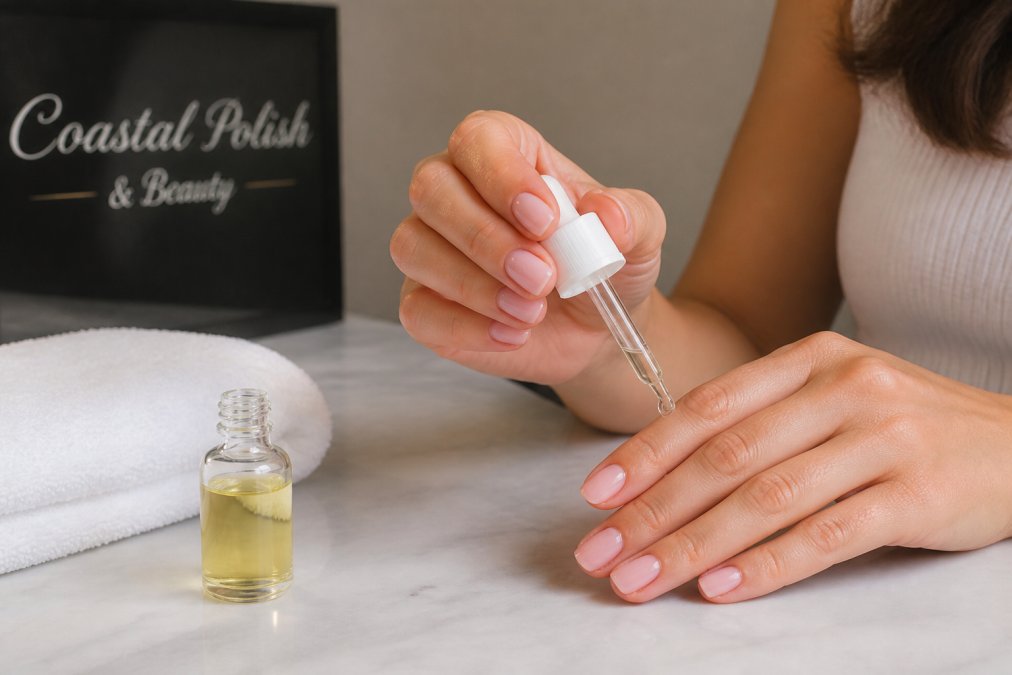
- Apply jojoba oil or a vitamin E cuticle oil every night before bed, massaging it into the cuticle and nail plate for at least 30 seconds
- Wear gloves for dishes and cleaning to limit water exposure, repeated wet-dry cycling is the single biggest cause of peeling
- File in one direction with a fine-grit file (240 grit or higher), never saw back and forth
- Take a break from gel and acrylics for a few weeks each quarter, and use that window for a hydrating phase
- Keep nails trimmed short while the damaged section grows out
- Drink enough water and include protein at every meal, nails are built from protein, and a low-protein diet shows up in the nail plate first
- Cycle your treatments: two to four weeks of a strengthener, then two to four weeks of oil-only hydration
The Hydration vs. Systemic Nutrition Split
Most guides treat topical oils and supplements as interchangeable. They are not. Jojoba oil and vitamin E work on the nail you can see, they restore the moisture barrier and slow water loss from the plate. Biotin, collagen, protein, and iron work on the nail matrix, the root under the cuticle where new nail cells form. A topical treatment cannot reach the matrix, and a supplement cannot repair a nail plate that has already split.
What to Expect and When
New growth starts at the matrix and takes months to reach the free edge. Most people see improvement in new growth within a few weeks, but the damaged nail itself has to grow out completely, typically three to six months for a full replacement. Consistency matters more than any single product. If your nails are still brittle after several months of good care, that is worth a conversation with a doctor, because thyroid issues, iron deficiency, and certain medications can all show up as brittle nails.
Frequently Asked Questions
What is the best nail treatment for weak and brittle nails?
The most effective approach combines a topical nail strengthening treatment with internal nutrition. Look for products containing keratin, hydrolyzed wheat protein, or jojoba oil to rebuild the nail plate and seal in moisture. Pair that with a diet rich in biotin, vitamin E, and calcium. A professional salon treatment can also help if your nails are severely damaged from gel manicures or acrylic removal.
Which nail strengthener is best for weak and brittle nails?
There is no single best option for everyone. Keratin-based strengtheners work well for nails that split and peel, while oil-based treatments with jojoba and vitamin E suit dry, brittle nails that snap easily. If you have sensitive skin, choose fragrance-free, hypoallergenic formulas. A professional can assess your nail plate and recommend the right type during your next manicure maintenance appointment.
What vitamin is lacking if your nails are brittle?
Biotin deficiency is the most common nutritional cause of brittle nails, though low levels of vitamin E, calcium, and protein also contribute. A protein deficiency can slow nail matrix production, leading to thin, weak nails. Before adding supplements, ask your doctor to check your levels. For many people, a balanced diet with adequate protein and a daily biotin supplement improves nail strength within three to six months.
Can nail strengtheners cause more damage if overused?
Yes. Nail hardeners that contain formaldehyde or formalin can make nails rigid and prone to snapping if used continuously. Overuse can also dry out the nail plate and damage the moisture barrier. The Nail Cycling method gives your nails time to recover. If you notice increased brittleness, stop the product and focus on hydration instead.
Brittle nails are frustrating, but they respond well to a consistent routine of moisture, protein, and patience. Coastal Polish & Beauty pairs that routine with professional manicure and pedicure care in a clean, calm setting, so your nails get both the treatment and the break they need. Our expert technicians use premium products and personalized care to help you feel refreshed and confident. Book now with Coastal Polish & Beauty and give your nails the reset they deserve.