 blog
Signs of Poor Nail Salon Hygiene: A Safety Guide
Table of Contents
- Why Nail Salon Hygiene Matters for Your Health
- How to Tell If a Nail Salon Is Sanitary: Workstation and Cleanliness Inspection
- Nail Salon Tool Disinfection: What You Should Verify
- Foot Bath and Whirlpool Tub Sanitation Red Flags
- Nail Salon Sanitation Checklist: Technician Practices and Hand Hygiene
- Signs of a Nail Infection After a Manicure: Symptoms to Watch
- What to Do If You Notice Poor Hygiene or Develop an Infection
- Frequently Asked Questions
Last Updated: October 17, 2026
Why Nail Salon Hygiene Matters for Your Health
Poor nail salon hygiene poses real health risks: infections, fungal problems, and skin reactions can develop after a single visit where poor nail salon hygiene is present.
When tools aren't properly disinfected, bacteria and fungi transfer directly to your nails and skin, and a cut during a manicure becomes a gateway for infection.
You can spot warning signs before they become problems. This guide covers what to inspect, what questions to ask, and when to walk out.
How to Tell If a Nail Salon Is Sanitary: Workstation and Cleanliness Inspection
What to Look for in the Reception and Waiting Area
Start your inspection the moment you walk in. Look for dirt, dust, or debris on floors and surfaces, check whether the restroom is clean and well-stocked, and note odors, strong chemical fumes indicate poor ventilation. Neglected public areas usually mean neglected workstations.
Evaluating Workstations and Tool Storage
This is where most problems hide.
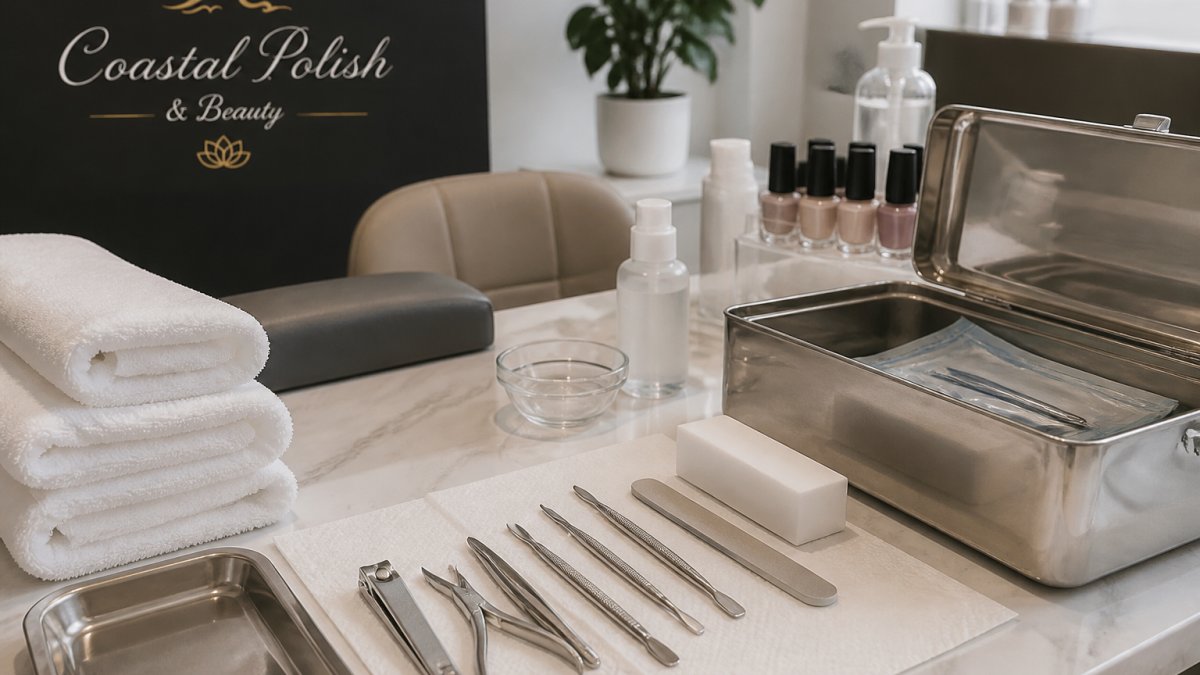
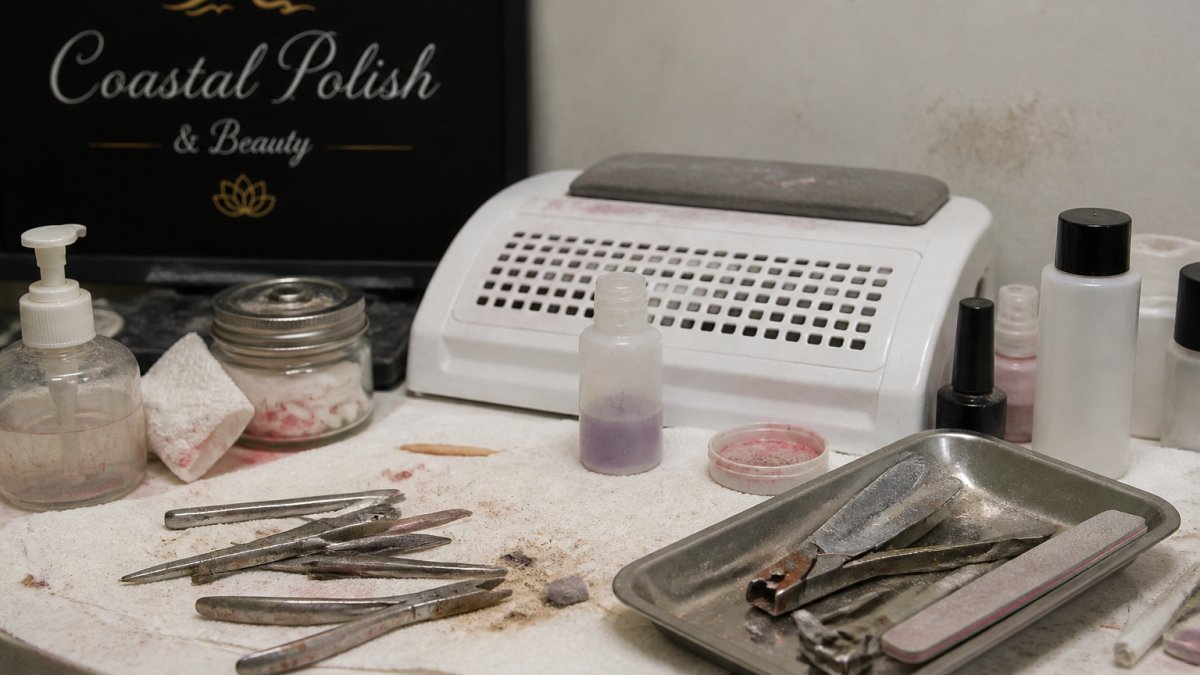
Examine the technician's station before your service begins. Tools should be stored in sealed containers, not sitting openly on the desk, and reusable instruments must be visibly clean, no dried polish, debris, or discoloration.
Red flags at the workstation:
- Tools sitting openly on surfaces
- Visible polish or debris on metal instruments
- Worn or damaged nail files being reused
Nail Salon Tool Disinfection: What You Should Verify
Cleaning, Disinfection, and Sterilization Are Not the Same Thing
Salons and clients often use "sanitized," "disinfected," and "sterilized" interchangeably, but they describe three different levels of germ reduction.
- Cleaning removes visible debris, polish, and oils with soap, water, and scrubbing. Cleaning does not kill germs. A tool can look spotless and still be contaminated.
- Disinfection uses an EPA-registered hospital-grade disinfectant to kill most bacteria, fungi, and viruses on non-porous surfaces. This is the minimum standard for reusable metal implements between clients.
- Sterilization uses an autoclave (pressurized steam heat) or a chemical sterilant to destroy all microorganisms, including bacterial spores. Sterilization is the highest level and is what you want for tools that contact broken skin or blood.
A salon that only cleans its tools is not meeting the standard of care; disinfecting is the minimum, and autoclave sterilization goes beyond it.
The Contact Time Detail Most Clients Never Hear
Every EPA-registered disinfectant has a label contact time, the minutes a tool must stay fully submerged to work. Common hospital-grade disinfectants require 10 to 20 minutes of wet contact. If a technician pulls nippers out after 30 seconds, the disinfectant has not done its job, even if the liquid is fresh. Ask about time, not just the product.
How to Verify Disinfection Instead of Judging by Appearance
You cannot see germs, so appearance alone will not tell you whether a tool is safe. Use these verification steps instead:
- Ask to see the disinfectant label. EPA-registered hospital-grade disinfectants list their contact time and kill claims on the label.
- Watch the soak, not just the dip. Tools that were soaking when you arrived were likely processed between clients.
- Look for a log or schedule. Many compliant salons track solution changes and autoclave cycles.
- Ask about autoclave use for metal implements. Autoclave pouches are usually dated and sealed; ask when the pouch was sealed and whether the cycle was run that day.
- Confirm single-use items are opened in front of you. Files, buffers, and pumice stones cannot be reliably disinfected once used.
Single-Use Items and Disposable Tools
Single-use tools eliminate the risk of spreading infections between clients. Nail files should be new for each client, once used, they cannot be properly sterilized and should be thrown away. Buffers, pumice stones, and disposable toe separators fall into this category. Watch your technician open these from sealed packages; if they're pulling items from a drawer, that's a problem. Ask directly: "Are these tools brand new?" If the answer is vague or defensive, leave.
Reusable Metal Instruments and Disinfectant Solutions
Metal tools like cuticle nippers, pushers, and scissors can be reused if properly disinfected, rinsing under water isn't enough. Proper disinfection means soaking them in an EPA-registered hospital-grade disinfectant for the label's contact time, usually 10-20 minutes, and changing the solution regularly. A cloudy solution is not effective.
Watch for these warning signs:
- Tools used immediately after a quick rinse
- Disinfectant solution that looks murky or cloudy
- No visible disinfectant container at the workstation
Foot Bath and Whirlpool Tub Sanitation Red Flags
Foot baths and whirlpool tubs are infection hotspots, warm water is the perfect environment for bacteria and fungus.
Red flags with foot baths:
- Water that looks cloudy, discolored, or dirty
- Visible debris or polish particles floating in the water
- Tub that smells strongly of chemicals or has an off odor
Ask your technician: "Will you drain and clean the tub before my service?" Watch them do it, if they just add more water without draining, that's not sanitary. For whirlpool tubs, ask when the internal pipes were last cleaned; a responsible salon tracks this.
Nail Salon Sanitation Checklist: Technician Practices and Hand Hygiene
Technician Hand Washing and Glove Use
Your technician's hands touch your skin directly, so clean hands prevent bacterial transfer. Technicians should wash with soap and warm water for at least 20 seconds before each client; sanitizer alone isn't sufficient. Gloves aren't always necessary for manicures if hands are properly washed, but for pedicures and any service involving cuts or open skin they provide an extra barrier.
Signs of good technician hygiene:
- Visible hand washing before your appointment
- Fresh gloves for each client (if used)
- No touching face, phone, or other surfaces during your service
Using the same gloves for multiple clients or skipping hand washing is a serious red flag.
Schedule and Appointment today for 10% Off your service →
Clean Towels, Linens, and Cuticle Practices
Towels and linens should be fresh for each client and come from a sealed or covered storage area, used towels harbor bacteria and fungi. Cuticle practices matter too: aggressive removal causes cuts and irritation that become entry points for infection. Safe cuticle care means gentle pushing back, not cutting away healthy skin.
Signs of poor cuticle practices:
- Technician cutting into living skin, not just dead cuticle
- Bleeding or significant redness after cuticle work
- Using old or dull tools that require force
Signs of a Nail Infection After a Manicure: Symptoms to Watch
Immediate Reactions and Early Warning Signs
Some reactions appear within hours of your appointment. Redness and swelling around the nail bed or cuticle area suggests irritation or early infection, minor redness might fade, but spreading redness indicates a problem. Itching, burning, or painful bumps and blisters suggest an allergic reaction or infection beginning.
If you notice these symptoms within 24 hours, call your doctor:
- Redness spreading from the nail area
- Swelling that worsens over several hours
- Itching or burning that doesn't improve
Don't wait to see if symptoms improve; early treatment prevents serious infections.
Delayed Infections and When to Seek Medical Care
Some infections develop over days or weeks, and fungal infections are the most common delayed problem. They start with discoloration, yellowing, browning, or white spots, and the nail may become thickened, brittle, or crumbly, typically 1-4 weeks after exposure. Fungal infections are stubborn and require prescription or topical treatment; the longer you wait, the deeper the infection penetrates.
Seek medical care if you develop:
- Nail discoloration that doesn't match your normal nails
- Thickened or brittle nails
- Crumbly texture or debris under the nail
What to Do If You Notice Poor Hygiene or Develop an Infection
Before the Service: How to Screen a Salon
The best time to act on a hygiene concern is before you sit down.
- Check the license. Most states require nail salons to post their license and the license of individual technicians. You can also look up a salon's license status through your state's cosmetology or barbering board.
- Ask about inspection records. Many local health departments publish inspection results online; a recent inspection with no critical violations is a good sign, while repeated violations are a reason to look elsewhere.
- Ask two questions when you book. "Do you use single-use files and buffers?" and "How do you disinfect metal tools between clients?"
During the Service: How to Stop a Service Politely
If you notice a problem mid-appointment, reused files, a dirty foot bath, a technician who skipped hand washing, you are allowed to stop. Use a calm, direct script:
- "I'm not comfortable continuing. Can we stop here?"
- "I'd like to reschedule. I'm not comfortable with how the tools were handled."
- "I'm going to end the appointment. Please don't charge me for the unfinished portion."
Most salons will accommodate a stop request without argument. If a salon pressures you to continue, that itself is a red flag. Pay only for the portion completed, and ask for a receipt.
After the Service: Document What Happened
If you notice a hygiene problem after you leave, document it while the details are fresh: take photos of the salon, your nails, and any reaction; save your receipt and note the date, time, technician's name, and service; write a short timeline; and keep the salon's name and address. This record matters if you later need medical care or want to report the salon.
How to Report a Salon
Reporting is one of the most effective things a client can do, because health departments prioritize complaints about unsanitary conditions.
- Contact your local health department. Most jurisdictions accept complaints by phone or online form. Search "[your city or county] health department nail salon complaint" to find the right office.
- Contact your state cosmetology or barbering board. These boards license salons and technicians and can investigate sanitation violations.
- Describe specifics. Give the salon name, address, date, technician name if known, and exactly what you observed.
- Ask whether the complaint is public. Either way, filing creates a record.
You do not need proof of infection to report a hygiene violation, visible unsanitary conditions are enough to trigger an inspection in many jurisdictions.
When to Seek Medical Care
See a doctor or dermatologist if you develop any of the following after a salon visit:
- Redness, swelling, or warmth that spreads from the nail area
- Pus, discharge, or a foul odor
- Pain that worsens over 24 to 48 hours
Bring your photos and timeline, and tell the provider you had a manicure or pedicure and when. Ask whether the infection should be reported to public health authorities, some infections may be reportable in your jurisdiction.
For future appointments, choose salons that prioritize cleanliness. We maintain rigorous sanitation standards because your health comes first, fresh tools, proper disinfection protocols, and clean linens for every client, so you can relax knowing you're protected.
Frequently Asked Questions
How can I verify that a nail salon is actually disinfecting tools properly?
Ask the technician directly how they disinfect reusable metal tools and request to see the disinfectant solution. The solution should be clear or lightly colored, not cloudy or dark, cloudiness signals that the solution is contaminated and ineffective. Ask about contact time: tools should soak in the disinfectant for the manufacturer's recommended duration (typically 10-15 minutes). A reputable salon will be transparent about their process and may show you their autoclave or ultrasonic cleaner if they use one. Single-use files, buffers, and nail nippers should come from sealed packages opened in front of you.
What are the most common signs of a nail infection after a manicure?
Early signs include redness, swelling, or warmth around the nail or cuticle area within 24-48 hours. Painful bumps, pus-filled blisters, or itching and burning sensations are red flags for bacterial or fungal infection. Delayed infections may appear as discolored, thickened, or brittle nails weeks or months later. If you notice any of these symptoms, stop using the salon immediately and contact your doctor or dermatologist. Do not attempt to treat a suspected nail infection with over-the-counter products alone, professional diagnosis is essential to prevent the infection from spreading.
What should I do if I notice poor hygiene during my appointment?
Stop the appointment and speak to the salon manager or owner directly. Explain your specific concerns, for example, if you see a technician reusing a file without sterilizing it or if the foot bath looks cloudy or dirty. If the salon is unresponsive or dismissive, leave and request a refund. Report serious hygiene violations to your state's health department or cosmetology board; most states maintain a public database of inspection records and complaints. Do not return to that salon, and consider leaving an honest review to protect other clients. Your health and safety are not negotiable.
Why do some nail salons have strong chemical odors, and is that a hygiene concern?
Strong odors often indicate poor ventilation and chemical fumes from nail polish, acrylics, and disinfectants accumulating in the air. While not directly a sanitation issue, poor ventilation is a health hazard that can cause headaches, dizziness, and respiratory irritation. A well-maintained salon should have visible air circulation, ceiling fans, open windows, or dedicated ventilation systems, and the air should smell fresh, not overpowering. Chronic exposure to high levels of nail dust and chemical fumes has been linked to occupational health problems for technicians. If a salon feels stuffy or the smell is overwhelming, it's a sign that the facility is not prioritizing air quality and overall wellness standards.