 blog
7 Ways to Make Regular Nail Polish Last Longer
Table of Contents
- How to Prep Nails for Polish: The Foundation of Long Wear
- The Best Long-Lasting Top Coat: What to Look For
- Preventing Nail Polish Chips: Application Technique That Works
- Sealing the Free Edge and Capping the Tip
- Drying Time, Curing, and Patience
- Lifestyle Modifications for Longer Wear
- Troubleshooting: Peeling vs. Chipping and Chemical Compatibility
- Frequently Asked Questions
Last Updated: September 27, 2026
How to Prep Nails for Polish: The Foundation of Long Wear
Prep is where manicures are won or lost. Prep is where manicures are won or lost. How you prep your nails for polish decides whether your nail polish lasts three days or ten.
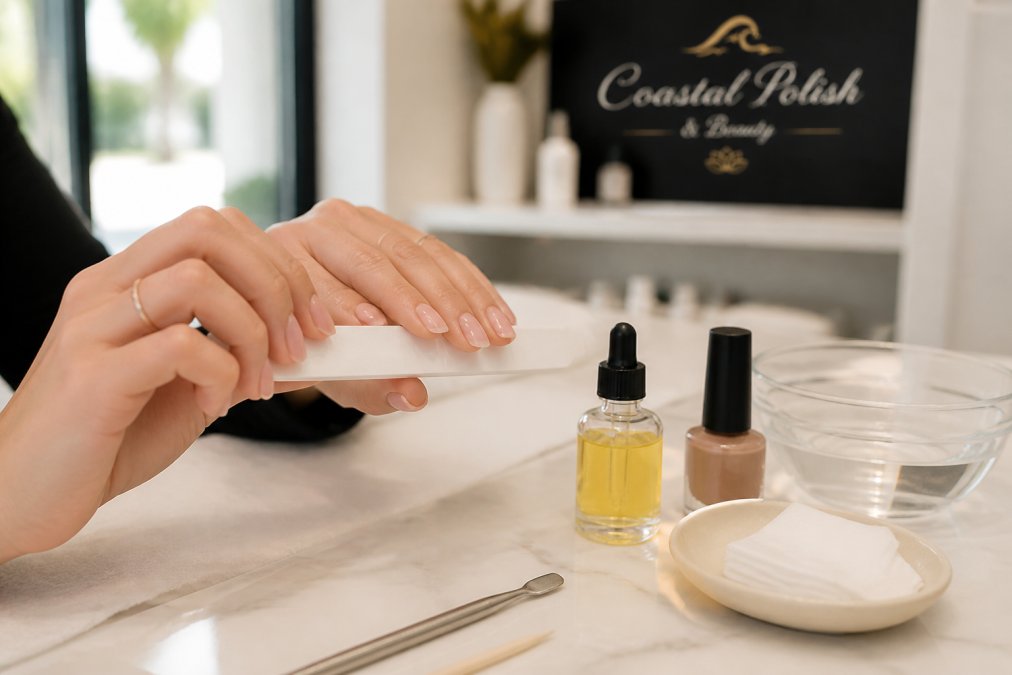
Start by removing old polish with an acetone-based remover.
Why Nail Plate pH and Dehydrating Matter
Nail polish bonds best to a dry, slightly acidic nail plate. Oils and moisture sit between the polish and the nail, and that's what causes early lifting.
The Best Long-Lasting Top Coat: What to Look For
A top coat is not a finishing shine, it is the wear layer. It takes the abuse so the color coat underneath does not have to. That is why the top coat you choose can add three to five days of wear on its own, and why the wrong one can shorten a manicure you applied perfectly.
The Three Formula Families
Most top coats on the market fall into one of three categories, and each behaves differently:
- Nitrocellulose-based (traditional) top coats. These are the classic clear coats. They dry by solvent evaporation, level well, and give a hard, glassy film. The trade-off is that the film is brittle, it resists scratches but can crack under flexing, which is why chips appear at the tip first.
- Toluene-free / plasticizer-heavy top coats. These add flexibility so the film bends with the nail instead of cracking. They tend to feel slightly softer and can dull faster, but they hold up better on nails that flex constantly (typing, gripping, opening jars).
- Quick-dry top coats. These use a high solvent load plus a drying accelerator so the film sets in a minute or two. The speed comes from a thinner film, and a thinner film has less material to absorb impact. They are excellent for a mid-week refresh and weaker as a primary wear layer.
Why Solvent Resistance Is the Real Test
The single most useful trait in a top coat is resistance to the solvents in everyday life, hand soap, dish detergent, alcohol-based hand sanitizer, and acetone-free polish remover. A top coat that dissolves slightly under each handwash loses gloss and thins out over the week, and a thinned top coat stops protecting the color layer.
Brush, Viscosity, and the Wrap
- Wide, flat brush. A wide brush covers the nail in one or two strokes, which means fewer overlaps and a more even film. Thin round brushes force multiple passes and leave ridges.
- Self-leveling viscosity. The coat should flow out and erase brush marks within about thirty seconds. If it stays streaky, it is too thick; if it runs into the sidewalls, it is too thin.
- Wrap the free edge on the top coat too. The top coat is the layer that actually seals the tip. Skipping the wrap on the top coat undoes the wrap you did on the base coat.
Reapplication Cadence
Top coat is a consumable, not a one-time step. Add a fresh thin layer every two to three days, and always wrap the tip when you do. This is the cheapest way to extend a manicure, because you are renewing the wear layer without touching the color.
FDA guidance on cosmetic product labeling and ingredient disclosure
Preventing Nail Polish Chips: Application Technique That Works
Preventing nail polish chips comes down to how you apply each layer. Three thin coats outlast one thick one, every time.
Thin Layers vs. Thick Coats
Thick coats feel faster. They aren't. A thick layer dries on top while staying wet underneath, so it smears, dents, and peels within a day or two.
Schedule and Appointment today for 10% Off your service →
- One thin base coat
- Two thin color coats
- One thin top coat
- A second top coat the next day
Sealing the Free Edge and Capping the Tip
Capping the tip is the single most skipped step, and it's the one that matters most. The free edge is where chips start.
- Do it on the base coat, both color coats, and the top coat
- Use a light touch; a heavy swipe floods the fingertip
- Re-cap every two to three days with a fresh top coat
Drying Time, Curing, and Patience
Regular polish does not cure the way gel does. There is no photoinitiator and no UV lamp, the film sets by solvent evaporation, and that process is governed by the environment around your hands, not by a timer.
Dry-to-Touch vs. Fully Set
These are two different states, and confusing them is the most common reason a manicure gets dented on day one.
- Dry-to-touch happens in roughly five to ten minutes. The surface solvent has flashed off and the film feels hard.
- Fully set takes several hours. The solvent trapped in the lower layers is still working its way out, and the film is soft and impressionable the whole time.
The Variables That Change Your Timing
- Humidity. High humidity slows solvent evaporation and can cause a phenomenon called blushing, a milky haze on the surface caused by moisture condensing into the film as it cools. On a humid day, add two to three minutes between coats and keep hands out of the bathroom while you finish.
- Temperature. Cold slows evaporation; warmth speeds it but also softens the film. A fan on low, pointed at the hands from a distance, moves solvent vapor away from the surface without heating the film.
- Coat thickness. A thick coat can look dry on top while remaining wet underneath for hours. This is why thin layers are not just a technique preference, they are a drying strategy.
- Airflow. Still air traps solvent vapor directly above the nail, which slows the next layer of evaporation. Gentle airflow is more effective than any quick-dry spray.
A Realistic Timeline
- Base coat: wait two to three minutes.
- First color coat: wait two to three minutes.
- Second color coat: wait three to four minutes.
- Top coat: wait five minutes before touching anything.
- Then leave hands idle for a full hour, no keys, no zippers, no dishes.
- Avoid hot water and long soaks for the first four to six hours, because heat softens the film while the lower layers are still releasing solvent.
What Quick-Dry Products Actually Do
CDC handwashing guidance and how frequent washing affects cosmetic wear
Lifestyle Modifications for Longer Wear
Your daily routine shapes how long a manicure survives. A few small changes add days of wear.
- Wear gloves for dishes, cleaning, and gardening
- Use the sides of your fingers to open cans and peel labels
- Keep a cuticle oil pen at your desk and use it daily
- Switch to a keychain tool instead of your nails
Troubleshooting: Peeling vs. Chipping and Chemical Compatibility
Peeling and chipping look similar but have different causes. Peeling starts at the cuticle and lifts in sheets, which points to prep problems or moisture underneath. Chipping starts at the tip and breaks off in pieces, which points to thin edges or too much wear.
| Problem | Likely Cause | Fix |
|---|---|---|
| Peeling from cuticle | Oil or moisture left on nail plate | Use a dehydrator before base coat |
| Chipping at tip | Free edge not capped | Wrap the tip on every coat |
| Bubbles in finish | Shaken bottle or thick coats | Roll the bottle, apply thin layers |
| Dull finish in 2 days | Weak top coat | Switch to a thicker, solvent-resistant top coat |
| Lifting in sheets | Base coat and color don't bond | Try a different base coat formula |
Frequently Asked Questions
What is the best top coat to make regular nail polish last longer?
Look for a top coat labeled as a quick-dry or high-gloss formula that contains solvents like butyl acetate and a film former. These create a durable finish that resists chipping and peeling. Apply a thin layer over your color, then cap the free edge by swiping the brush along the tip of the nail. Reapply every two days to refresh the shine and extend wear time.
How does nail preparation affect the longevity of a manicure?
Proper nail prep removes oils and moisture from the nail plate, which helps polish adhere. Start by cleaning with an oil-free dehydrator or acetone, then lightly buff the surface to create a slightly rough texture. Push back cuticles and wipe again. Skipping this step is the most common reason polish lifts or peels within days, even with a quality top coat.
Is it better to apply thin or thick coats of nail polish?
Thin layers are better. Thick coats trap solvents underneath, so the polish never fully cures and chips easily. Apply two or three thin layers of color, letting each dry for two to three minutes before the next. Finish with a thin top coat. This technique prevents peeling and gives a smoother, more durable finish that lasts longer.
How can I prevent my nail polish from chipping after two days?
Preventing nail polish chips starts with sealing the free edge and avoiding water immersion for the first few hours. Wear gloves for dishes and cleaning, and keep your hands moisturized with cuticle oil, not hand lotion, which can break down polish. Also, refresh your top coat every other day to reinforce the moisture barrier and maintain adhesion.
A manicure that lasts isn't luck. It's prep, thin layers, capped tips, and patience while everything sets. If you'd rather leave it to someone who does this all day, Coastal Polish & Beauty offers personalized manicure and pedicure services in a clean, calm space inside the Birdhouse wellness collective. Our technicians focus on careful prep and premium products, so your polish holds up to real life. Book now and enjoy a manicure built to last.