 how-to
What Are the Benefits of Medical-Grade Nail Care?
Last Updated: October 26, 2026
Quick Summary
Medical-grade nail care is professional foot and nail treatment performed by trained technicians using sterilized tools and clinical-grade products that focuses on foot health, infection prevention, and treating existing nail or skin conditions rather than cosmetic appearance alone.
- Medical-grade providers use autoclave sterilization between clients, while regular salons use basic washing.
- Technicians receive advanced foot health certification and perform clinical assessments customized to individual conditions.
- High-risk clients with diabetes or poor circulation receive specialized protocols unavailable at regular salons.
- Aftercare includes keeping feet dry for 24 hours, avoiding public pools for 48 hours, and daily moisturizing.
- Warning signs requiring clinical care include spreading redness, pus drainage, severe pain, and dark streaks from nails.
Table of Contents
- What Medical-Grade Nail Care Actually Is
- Medical Pedicure vs Regular Pedicure: Key Differences
- How Hygiene and Sterilization Protect Your Foot Health
- What to Expect During a Medical Pedicure
- Medical Pedicure for Diabetic Feet and High-Risk Conditions
- Medical Pedicure Aftercare: Maintaining Long-Term Foot Health
- Choosing a Provider for Professional Foot Assessment and Care
- Frequently Asked Questions
What Medical-Grade Nail Care Actually Is
Medical-grade nail care is professional foot and nail treatment performed by trained technicians using sterilized tools and clinical-grade products. It goes beyond cosmetic work. The focus is on foot health, infection prevention, and treating existing nail or skin conditions.
Think of it as the difference between a haircut and a dermatologist visit: one makes you look good, the other addresses underlying health issues.
Medical-grade nail care includes:
- Sterilized, hospital-grade instruments for every client
- Clinical assessment of foot and nail conditions
- Treatment protocols for high-risk feet (diabetes, poor circulation, neuropathy)
- Professional-strength products that work on damaged or compromised nails
- Personalized care plans based on individual foot health
The key difference: regular salons focus on appearance. Medical-grade providers focus on health first, with appearance as a natural result.
Medical Pedicure vs Regular Pedicure: Key Differences
Here's what sets them apart:
| Aspect | Regular Pedicure | Medical Pedicure |
|---|---|---|
| Tool sterilization | Basic washing | Autoclave sterilization between clients |
| Technician training | Cosmetology license | Advanced foot health certification |
| Assessment | Cosmetic focus | Clinical foot and nail evaluation |
| Treatment approach | One-size-fits-all | Customized to foot condition |
| Nail care | Filing and polish | Therapeutic nail management |
| Callus removal | Surface smoothing | Gradual, safe reduction |
| High-risk clients | Not recommended | Specialized protocols |
| Follow-up care | None | Personalized maintenance plan |
How Hygiene and Sterilization Protect Your Foot Health
Watch out: disinfection and sterilization are not the same thing. Disinfection reduces pathogens. Sterilization eliminates them. For high-risk feet, sterilization is essential.
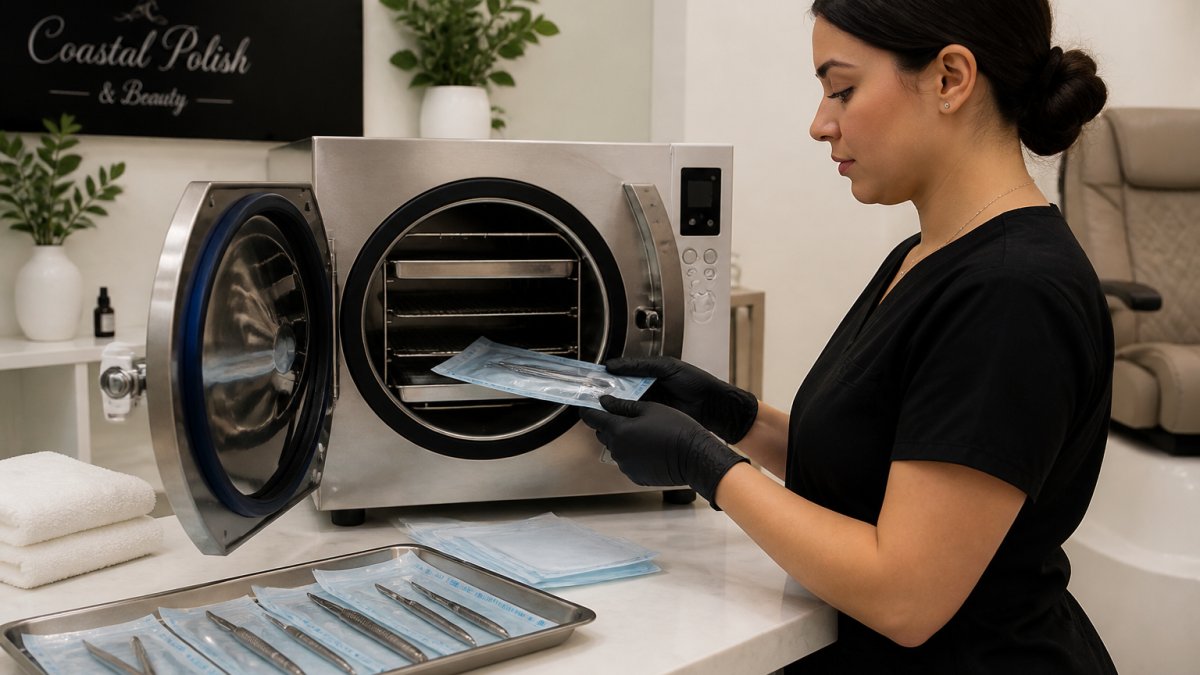
The instrument-processing chain, step by step
- Cleaning. Used instruments are scrubbed to remove visible debris, biofilm, and residue. Sterilization cannot penetrate dirt or dried blood, so cleaning comes first.
- Rinsing and drying. Instruments are rinsed and dried so residual moisture does not interfere with the sterilization cycle.
- Packaging. Clean instruments are placed in sterilization pouches or cassettes. The packaging protects them from recontamination after the cycle.
- Sterilization. The sealed load runs through an autoclave cycle using steam under pressure. Time and temperature are set according to the manufacturer's instructions for the specific instruments.
- Storage. Sterilized packs are stored in a clean, dry area and remain sealed until the moment of use.
Single-use versus reusable tools
- Nail files and buffers (porous surfaces trap debris)
- Disposable blades and curettes
- Foot basin liners
- Gloves and towels
How to verify sterilization in practice
- "Can I see where your instruments are processed?" A confident provider will show you the area or explain why it is separated from the treatment room.
- "How do you know the autoclave is working?" Look for biological indicators, chemical indicator strips inside packs, and a maintenance log.
- "Are files and buffers single-use?" The answer should be yes.
- "What happens to a pack that has been opened but not used?" It should be reprocessed, not returned to the drawer.
You can read more about what to look for in a provider in our guide on signs of poor nail salon hygiene to understand what safety standards actually mean in practice.
What to Expect During a Medical Pedicure
-
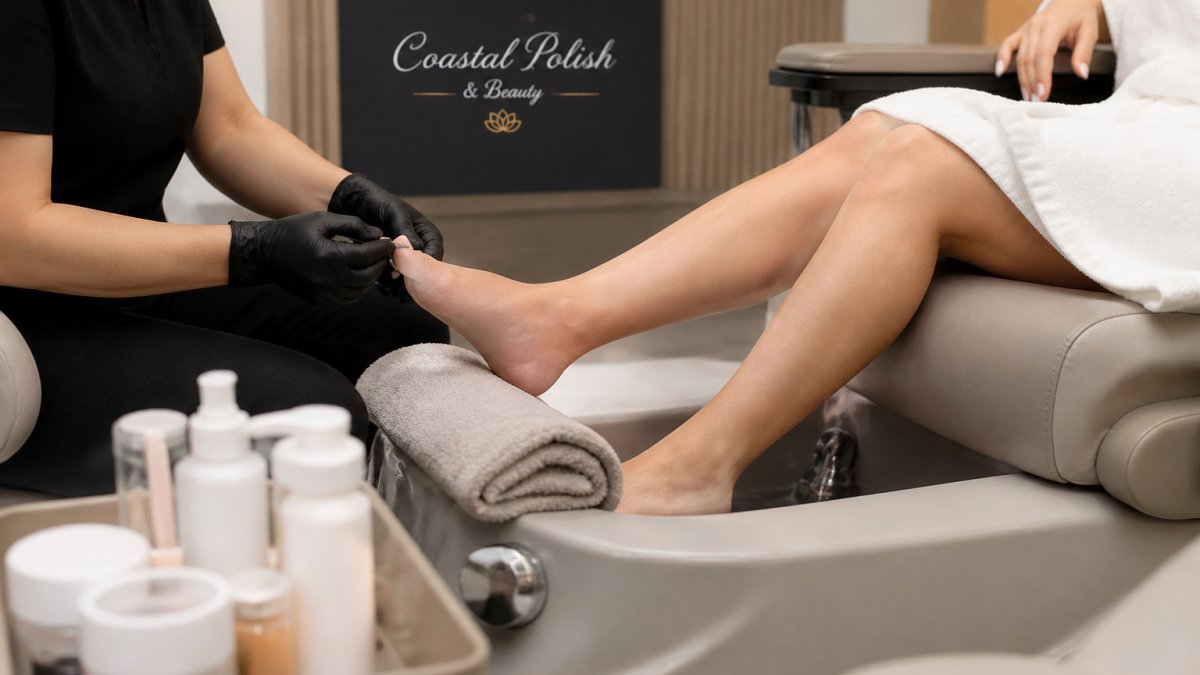
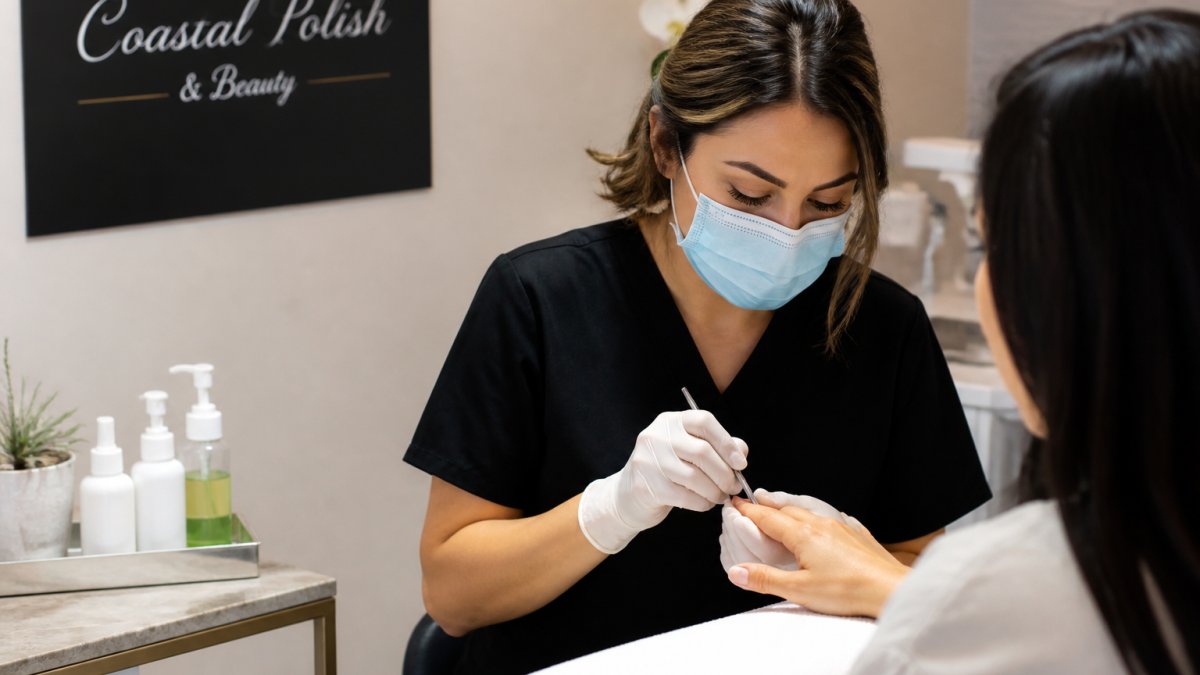
Foot Assessment, The technician examines your feet, nails, skin, and any existing conditions. They ask about your health history, medications, and any foot pain or concerns.
-
Nail Evaluation, They check for fungal signs, damage, thickness, and overall health. They note any ingrown nails or other issues.
-
Gentle Cleansing, Your feet soak in warm water with clinical-grade cleansers, not standard salon products. This softens skin and nails safely.
-
Therapeutic Nail Care, Nails are trimmed, shaped, and treated based on their condition. Damaged nails receive special attention. Healthy nails get maintenance care.
-
Callus and Hardened Skin Management, Instead of aggressive scrubbing, the technician uses gradual, safe methods to reduce calluses. Multiple sessions may be needed for thick calluses.
-
Nail and Cuticle Treatment, Clinical-grade products address dryness, brittleness, or other nail issues. Cuticles are treated gently to prevent damage.
-
Skin Hydration, A moisturizing treatment is applied to feet and lower legs. Medical-grade products penetrate deeper than standard lotions.
-
Education, The technician explains what they found and recommends at-home care. They discuss frequency of visits and any concerns they identified.
-
Polish Application (optional), If desired, polish is applied using professional techniques. Many clients skip this to showcase healthy, natural nails.
Explore our full range of services at Coastal Polish & Beauty to see how medical pedicures fit into your wellness routine.
Medical Pedicure for Diabetic Feet and High-Risk Conditions
High-risk protocols include:
- Thorough assessment before any treatment
- Gentle handling to avoid skin or nail damage
- Avoiding aggressive callus removal that could cause bleeding
- Checking for existing wounds or infection
- Using sterile, single-use instruments exclusively
- Knowing when to refer a client to a podiatrist
Medical Pedicure Aftercare: Maintaining Long-Term Foot Health
General aftercare includes:
- Keep feet dry for at least 24 hours after treatment
- Avoid tight shoes or pressure on treated areas
- Wear clean socks to prevent contamination
- Apply recommended moisturizer daily to maintain hydration
- Avoid soaking feet in public pools or hot tubs for 48 hours
- Trim nails straight across at home using clean tools
- Wear supportive shoes that fit properly
A safe at-home nail-care sequence
- Soak briefly. A few minutes in lukewarm water softens nails and skin without over-hydrating them.
- Dry thoroughly. Pat feet dry, including between the toes. Moisture left behind feeds fungus.
- Trim straight across. Use clean, sharp nippers or clippers. Cut straight across rather than curving down at the corners, curved cuts encourage ingrown nails.
- File the edges. Smooth sharp corners with a single-use or personal file. Do not file deep into the sides of the nail.
- Clean under the nail gently. Use a soft brush or the blunt end of a tool. Avoid digging with sharp objects, which can lift the nail from the bed.
- Moisturize the skin, not the nail bed. Apply lotion or cream to the surrounding skin and heel, then wipe excess from the nail plate.
- Inspect. Look at each foot in good light. Note changes in color, thickness, or shape, and any new pain.
Warning signs that need clinical care
- Spreading redness, warmth, or swelling around a nail or toe
- Drainage of pus or fluid
- Severe or worsening pain
- A dark streak or discoloration spreading from the nail
- A nail that is lifting from the bed
- Fever or chills alongside a foot problem
- Any wound on a foot with diabetes or poor circulation
Planning maintenance between visits
- Note the date of your last visit and set a reminder for the provider's recommended interval.
- Track changes in a phone note or calendar, color, thickness, pain, or new calluses.
- Adjust seasonally. Closed shoes in colder months can increase pressure and callus buildup; sandal season exposes nails to more trauma.
- Bring questions to each visit. Aftercare works best when it is a conversation, not a handout.
Choosing a Provider for Professional Foot Assessment and Care
- What sterilization method do you use? (Look for autoclave sterilization)
- What certifications or training do your technicians have?
- Do you specialize in high-risk feet or specific conditions?
- Can you explain your assessment process?
- What products do you use, and why?
- How do you handle clients with diabetes or circulation issues?
Red flags to watch for:
- Vague answers about sterilization
- No mention of foot assessment
- Rushing through appointments
- One-size-fits-all approach for all clients
- Unwillingness to discuss their process
Use our luxury nail salon guide to evaluate and compare providers based on their qualifications, approach, and commitment to your foot health.
Learn more about hygiene standards and what they mean in practice so you can evaluate providers confidently.
When you're ready to book an appointment with a provider who prioritizes your foot health and safety.
Frequently Asked Questions
What is the difference between a medical pedicure and a regular pedicure?
A medical pedicure uses clinical-grade sterilization, specialized tools, and personalized assessment of foot conditions. A regular salon pedicure focuses on cosmetic appearance. Medical-grade nail care addresses fungal infections, ingrown toenails, calluses, and foot discomfort with professional supervision. Technicians performing medical pedicures follow infection control protocols similar to healthcare settings, while traditional salons prioritize relaxation and polish application.
Who may benefit from medical-grade nail care?
Anyone with foot health concerns benefits, especially those with diabetes, poor circulation, reduced sensation, fungal infections, or chronic foot pain. People with ingrown toenails, severe calluses, or nail damage gain from professional assessment and specialized treatment. Even without existing conditions, individuals seeking preventive maintenance and long-term foot health can benefit from personalized care and professional supervision that medical-grade services provide.
How often should you get a medical pedicure?
Frequency depends on your foot condition and needs. Those with diabetes or high-risk feet may benefit from visits every 4-6 weeks for preventive maintenance. Others with specific concerns like fungal infections might need more frequent appointments initially, then transition to maintenance visits every 6-8 weeks. Your provider will recommend a schedule based on your foot assessment and personalized care plan.
What should I expect for medical pedicure aftercare?
After a medical pedicure, keep feet clean and dry for at least 24 hours to prevent infection. Avoid tight shoes and excessive moisture initially. Use recommended moisturizers or treatments your provider suggests for calluses or dry skin. Watch for any signs of irritation or infection and report them promptly. Following aftercare guidance extends the benefits and supports long-term foot health maintenance between appointments.
Medical-grade nail care is an investment in your foot health, not just cosmetic appearance. At Coastal Polish & Beauty, we combine clinical expertise with personalized attention to help you maintain healthy, beautiful feet. Our sterilized instruments, trained technicians, and individualized care plans mean your feet get the professional assessment and treatment they deserve. Book your medical pedicure today and feel the difference that true foot health care makes.