 blog
Common Mistakes to Avoid After a Head Spa
Table of Contents
- Why the First 72 Hours Matter After a Head Spa
- How Long to Wait to Wash Hair After Head Spa
- Head Spa Aftercare Tips for Maximum Results
- Best Scalp Serums for Post-Treatment Care
- Common Post-Treatment Mistakes and How to Avoid Them
- What to Do Between Professional Treatments
- Frequently Asked Questions
Last Updated: October 2, 2026
Why the First 72 Hours Matter After a Head Spa
The first 72 hours after a head spa are critical: your scalp barrier is temporarily weakened and needs protection to heal. Professional treatments cleanse deeply to remove buildup and improve follicle health, but this also temporarily compromises the protective layer shielding your scalp from environmental stressors.
What happens in those 72 hours determines whether you see lasting results or experience irritation. Many people make preventable mistakes, using the wrong products, washing too soon, or ignoring early signs of sensitivity, but avoiding these common mistakes to avoid after a head spa is straightforward once you know what to do.
At Coastal Polish & Beauty, we guide clients through post-treatment care because proper aftercare compounds results.
How Long to Wait to Wash Hair After Head Spa
Wait at least 24 to 48 hours before washing your hair after a head spa treatment. This waiting period allows your scalp barrier to begin recovering and your scalp's natural oils to redistribute.
Here's why timing matters:
- First 24 hours: Your scalp is most sensitive. Washing too soon strips away protective sebum that your scalp needs to rebalance.
- 24-48 hours: A safer window opens. If you must wash, use only lukewarm water and a gentle, sulfate-free cleanser.
- After 48 hours: Your scalp has stabilized enough for normal washing, though cool water is still gentler than hot.
What "gentle" actually means:
- Use your fingertips, not your nails. Avoid vigorous scrubbing.
- Keep water temperature cool or lukewarm, never hot.
- Choose products without sulfates or harsh detergents.
- Rinse thoroughly to prevent product buildup.
Light rinsing with cool water is fine; you're avoiding shampooing and scrubbing. If you exercise or sweat, rinse gently with cool water instead of a full wash, and save shampooing for day two or three.
Head Spa Aftercare Tips for Maximum Results
Protecting your scalp barrier during recovery is the foundation of good aftercare. When strong, your scalp stays hydrated and calm; when compromised, irritation follows.
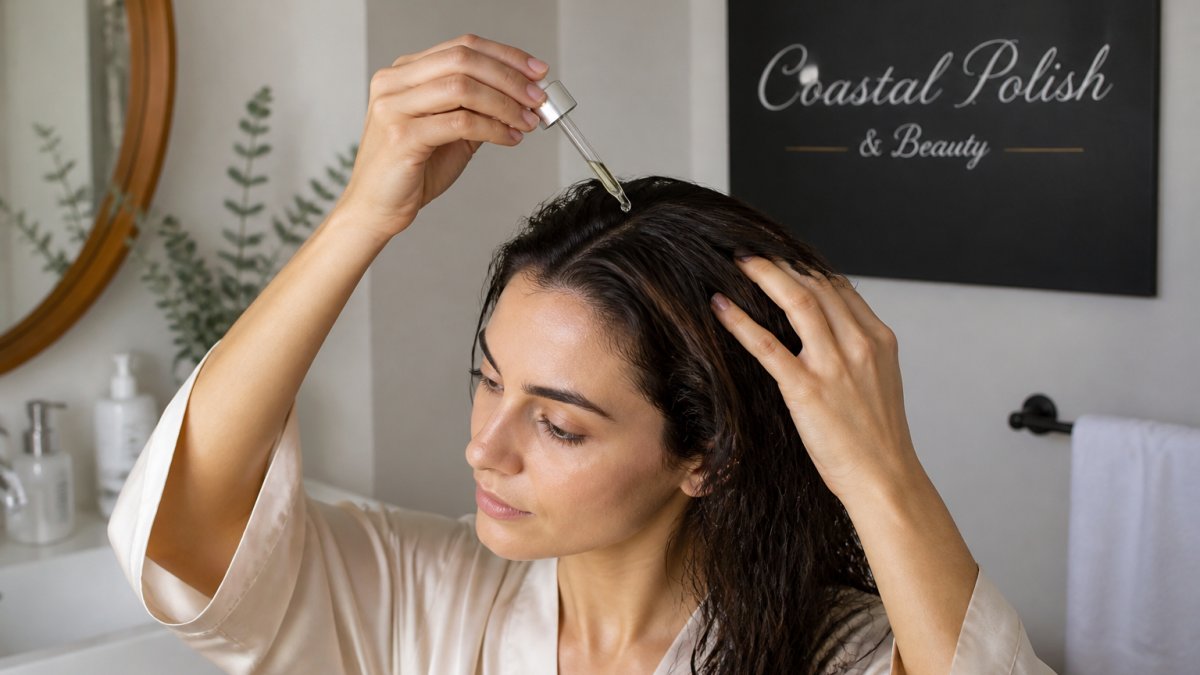
Protecting Your Scalp Barrier During Recovery
Your scalp barrier consists of natural oils, beneficial bacteria, and a protective acid layer. The head spa treatment temporarily disrupts this balance to cleanse deeply.
During the first 72 hours:
- Avoid heat styling tools entirely. Heat accelerates moisture loss from your scalp.
- Skip chemical treatments like coloring, perming, or relaxing. Your scalp cannot handle additional stress right now.
- Don't use dry shampoo or texturizing sprays. These products can clog pores and trap bacteria.
- Protect your scalp from direct sun exposure. Wear a hat if you'll be outside for extended periods.
Managing Hydration and Sebum Regulation
After a head spa, your scalp often feels tight or dry, this is temporary as it rebalances oil production. The mistake most people make is either over-moisturizing or under-moisturizing, both of which disrupt healing.
What actually helps:
- Use a lightweight hydrating mist or toner designed for scalp care. These provide hydration without heaviness.
- Apply scalp serums that contain soothing agents like niacinamide or peptides. These support barrier recovery.
- Avoid leave-in conditioners on your scalp itself. These are meant for hair strands, not scalp skin.
- Drink plenty of water. Internal hydration supports skin health from within.
Best Scalp Serums for Post-Treatment Care
Choosing the right scalp serum after a head spa supports barrier recovery and reduces inflammation, but ingredient compatibility matters: not all serums are safe immediately post-treatment.
What to look for in a post-treatment scalp serum:
- Niacinamide (4-5% concentration), reduces inflammation and strengthens the scalp barrier without irritation
- Peptide complex, supports scalp microbiome health and follicle strength
- Soothing agents like centella asiatica, allantoin, or panthenol, calm irritation and redness
- Lightweight texture, absorbs quickly without leaving residue or buildup
- pH-balanced formula (ideally 4.5-5.5), matches your scalp's natural pH for faster recovery
Ingredients to avoid in the first 48-72 hours post-treatment:
- AHAs and BHAs (glycolic acid, salicylic acid, lactic acid): These chemical exfoliants can over-strip an already-sensitized scalp, causing burning, excessive flaking, or prolonged irritation. Wait until day 5-7 before reintroducing them.
- Vitamin C (L-ascorbic acid): While beneficial long-term, high concentrations can sting and destabilize a healing barrier. Save this for week two.
- Retinol or retinoids: These accelerate cell turnover, which is counterproductive when your scalp is already in recovery mode. Introduce after 7-10 days.
- Essential oils at high concentrations: Lavender, tea tree, and peppermint oils can feel soothing but may trigger contact dermatitis on sensitized skin. Diluted versions are safer; undiluted oils should be avoided.
- Alcohol-based serums: Denatured alcohol dries out your scalp and disrupts barrier recovery. Look for alcohol-free formulas.
Application technique for maximum absorption:
Common Post-Treatment Mistakes and How to Avoid Them
Understanding what goes wrong helps you avoid it. These are the most frequent mistakes we see clients make after a head spa, and how to sidestep them.
Applying the Wrong Products Too Soon
Many people apply regular hair products immediately after treatment, but conditioners, leave-in treatments, and styling products are too heavy for a freshly treated scalp. Heavy products trap heat and bacteria, triggering irritation or folliculitis. Silicone-based products create an occlusive layer that prevents natural moisture regulation during recovery.
Schedule and Appointment today for 10% Off your service →
What to do instead:
- Skip all leave-in conditioners for the first 48 hours
- Avoid silicone-based products entirely for 72 hours
- Don't use dry shampoo, texturizing sprays, or volumizers
- Wait until day three before resuming your normal styling routine
Mixing Incompatible Active Ingredients
Layering products with conflicting active ingredients accelerates irritation on a compromised barrier. Avoid: Niacinamide + Vitamin C (causes flushing), Peptides + Retinol (conflicting signals), AHAs/BHAs + Soothing agents (over-strips), and Multiple hydrating serums (uneven moisture and bacterial buildup).
How to check for conflicts:
Ignoring Seasonal and Environmental Adjustments
Summer adjustments: Apply lightweight hydrating serums twice daily. Use UV-protective scalp spray or hat during outdoor time. Rinse after sweating with cool water only. Avoid chlorinated pools for 5 days, chlorine is harsh on treated scalps.
Winter adjustments (low humidity, cold air, dry heating):
- Switch to richer (but still lightweight) serums with occlusive ingredients like squalane or plant ceramides. Dry air accelerates moisture loss from your scalp.
- Apply serum to a damp scalp, not dry, to lock in hydration. In winter, your scalp dries faster.
- Reduce shower frequency slightly if possible; hot showers in winter strip moisture faster than in other seasons.
- Use a humidifier in your bedroom to combat dry indoor heating, which can extend sensitivity by 2-3 days.
Spring/Fall (variable humidity and temperature swings):
- Monitor your scalp daily. Rapid environmental changes can trigger unexpected sensitivity even days into recovery.
- Have both a lightweight and slightly richer serum on hand to adjust based on how your scalp feels.
Skipping Scalp Sensitivity Management
Some people assume their scalp will feel fine without intervention. Sensitivity often appears 12-24 hours post-treatment as inflammation peaks. Ignoring it leads to discomfort and potential complications.
Common sensitivity signals:
- Mild itching or tingling
- Slight redness or flushing
- Tightness or tenderness when touching your scalp
- Temporary dryness or flaking
- A "tight" feeling, as if your scalp is pulling
How to manage sensitivity:
- Apply a soothing scalp serum twice daily (morning and evening)
- Take cool (not cold) showers instead of hot ones
- Avoid touching or scratching your scalp, even if it itches
- Wear loose hairstyles that don't pull on your scalp
- Sleep on a clean pillowcase to prevent bacteria transfer
- If itching is severe, apply a cool (not cold) compress for 5-10 minutes to reduce inflammation
Ignoring Environmental Stressors
Your scalp is temporarily more vulnerable to environmental factors. Sun exposure, pollution, chlorine, and humidity all affect healing.
During the first 72 hours:
- Avoid chlorinated pools or hot tubs. Chlorine is harsh on a treated scalp and can trigger chemical irritation.
- Protect your scalp from direct sun. UV exposure increases inflammation and can cause post-inflammatory hyperpigmentation on darker scalps.
- Skip saunas or steam rooms. Heat accelerates moisture loss and can reactivate inflammation.
- Avoid windy environments when possible. Wind dries out your scalp faster and can irritate sensitive skin.
- Minimize exposure to air pollution. If you live in an urban area, consider staying indoors more during the first 48 hours, or wear a hat if you must go outside.
What to Do Between Professional Treatments
The days between head spa visits matter as much as the aftercare period. Proper maintenance extends results and keeps your scalp healthy long-term.
Weekly scalp care routine:
- Use a gentle, sulfate-free shampoo 2-3 times per week
- Apply a hydrating scalp serum or toner 3-4 times weekly
- Massage your scalp for 2-3 minutes during each wash to improve micro-circulation
- Avoid heat styling 1-2 days per week to let your scalp recover
Monthly maintenance:
- Schedule a scalp treatment or exfoliation every 4-6 weeks to maintain results
- Use a clarifying shampoo once monthly to remove buildup
- Assess your scalp barrier health. If irritation returns, scale back product use.
Frequently Asked Questions
Can I wash my hair immediately after a head spa?
No. Wait at least 24-48 hours before shampooing to allow your scalp barrier to fully recover. The treatment opens your follicles and increases micro-circulation, so premature washing strips away beneficial oils and disrupts the healing process. When you do wash, use lukewarm water and a gentle sulfate-free shampoo to avoid further irritation.
What scalp serums should I use after a head spa treatment?
Choose serums with niacinamide, peptide complexes, or soothing agents like centella asiatica. Look for non-greasy formulas with high absorbency that support scalp barrier function and reduce inflammation. Avoid heavy oils or products with alcohol in the first week. Apply serums to damp hair 24-48 hours post-treatment, focusing on the roots for maximum absorption and follicle health.
Is it okay to exercise right after a head spa session?
Avoid strenuous exercise for at least 24 hours after your treatment. Sweating increases trans-epidermal water loss and can irritate your newly treated scalp. If you must exercise, wait until the next day and wear a loose, breathable hat to minimize friction and protect your scalp from environmental stressors like sweat and bacteria buildup.
How can I extend the benefits of my head spa treatment?
Follow a consistent post-treatment protocol: avoid hot water, use pH-balanced products, apply scalp serums regularly, and minimize heat styling for the first week. Maintain hydration by drinking water, protect your scalp from direct sunlight, and schedule maintenance treatments every 4-6 weeks. Consistency in your aftercare routine is key.