 how-to
How to Repair Damaged Nails After Acrylics at Home
Last Updated: November 3, 2026
Quick Summary
You can repair damaged nails after acrylics at home by removing acrylics gently, protecting the nail plate, and keeping it moisturized. Soak off acrylic until it softens, never pry it off, then apply strengthener, cuticle oil, and a rich moisturizer daily while the nail grows out.
- Soak nails in warm water with acetone for 10 to 15 minutes before removing acrylic.
- Never pry or peel off acrylic, because it tears away layers of the natural nail.
- Apply cuticle oil once or twice daily to hydrate the nail and surrounding skin.
- Fingernails grow about 3 millimeters per month, and the full plate takes four to six months to replace.
- See a healthcare provider if nails change color, lift from the nail bed, or show pus or swelling.
Table of Contents
- Why Acrylics Leave Nails Thin, Dry, and Brittle
- How to Remove Acrylics Safely Without Peeling or Ripping
- What to Put on Nails After Removing Acrylics
- Can I Paint My Nails After Removing Acrylics?
- Caring for Paper-Thin Nails After Acrylics
- How Long Nails Take to Grow and Recover After Acrylics
- When Nail Damage Needs a Professional's Attention
- Booking Your Next Visit for Healthier Nails at Coastal Polish & Beauty
- Frequently Asked Questions
Acrylic nails can leave your natural nails thin, dry, and brittle, but you can repair damaged nails after acrylics at home with gentle removal, regular moisturizing, and patience. This guide walks you through the steps that help weak nails recover. Most of the work is simple: remove acrylics safely, protect the nail plate, keep it hydrated, and give it time to grow out.
Why Acrylics Leave Nails Thin, Dry, and Brittle
Acrylic nails bond to the top layer of your natural nail. When that layer is removed, it can take some of the nail with it. Over time, repeated filing and removal can leave the nail plate feeling thin and rough.
Dryness is the other common problem. Acrylic products, filing, and harsh removal can strip moisture from the nail and the skin around it.
Common signs of damage include:
- Peeling or flaking at the free edge
- Soft or bendable nails
- White spots or pitting on the surface
- Nails that snap or split easily
How to Remove Acrylics Safely Without Peeling or Ripping
Removal is the step that does the most damage when it goes wrong. Pulling or prying off acrylic tears away layers of the nail plate.
Follow these steps:
- Soak the nails. Soak your fingertips in warm water with a bit of acetone for 10 to 15 minutes, or until the acrylic softens.
- File the top layer. Gently file away the top coat of acrylic, keeping the file light so you do not reach the natural nail.
- Wait for the acrylic to loosen. Let it soften fully. If you have to force it, stop and soak longer.
- Push off the softened acrylic. Use a cuticle pusher or orange stick. Never pry or peel.
- Buff lightly. Use a fine buffer to smooth the surface. Do not scrub hard.
Watch out: Peeling off acrylic that has not softened is the most common way people lose a layer of their natural nail.
What to Put on Nails After Removing Acrylics
Once the acrylic is off, the nail needs moisture and protection. A few simple products do most of the work:
- A nail strengthener or repairing base coat. It forms a protective layer that helps the nail hold together.
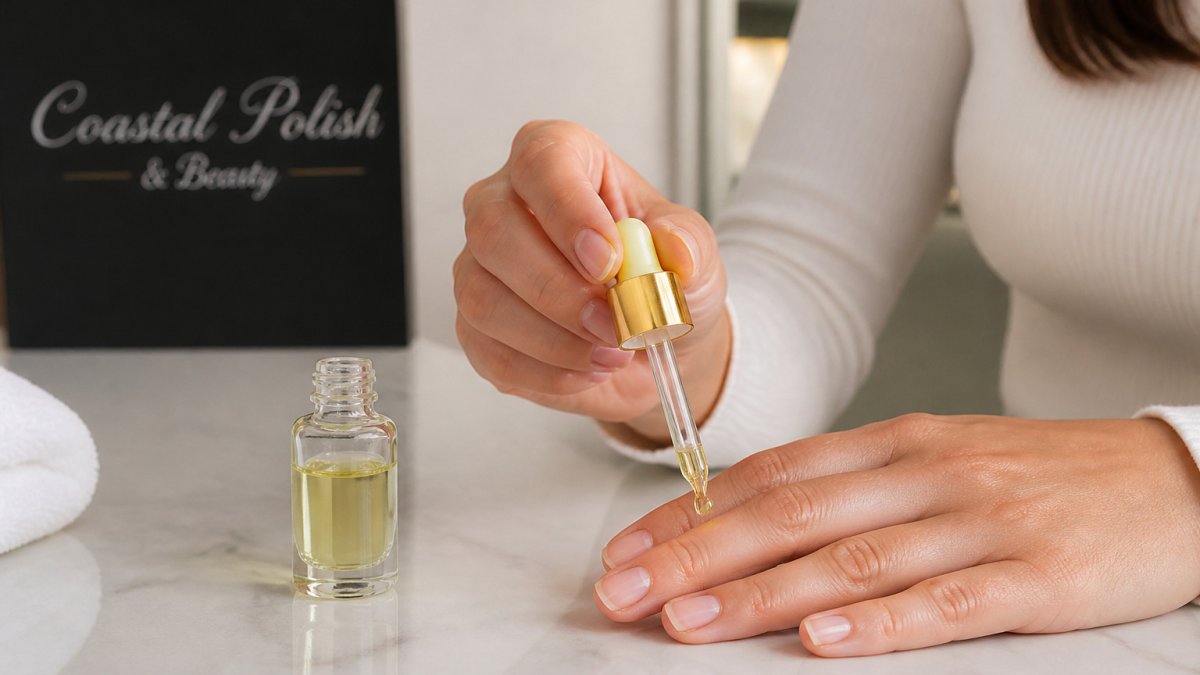
- Cuticle oil. Apply once or twice daily to hydrate the nail and the skin around it.
- A moisturizer. Massage a rich cream into your hands and nails at night.
If you are planning a gel manicure later, a strengthener used as a base can help protect the nail.
Can I Paint My Nails After Removing Acrylics?
Yes, you can paint your nails after removing acrylics, but wait until the nail surface feels smooth and no longer tender. Painting too soon can trap moisture and make peeling worse.
Use a strengthening base coat before color. Choose polish that is free of harsh chemicals if your nails feel sensitive. Avoid heavy gel or acrylic enhancements until the nails have recovered.
Caring for Paper-Thin Nails After Acrylics
Paper-thin nails are not one problem. Peeling, thinning, pitting, brittleness, and lifting look similar at a glance but respond to different care. Matching the routine to the damage is the difference between slow improvement and no improvement.
Thinning (bendable, flexible, translucent at the tips). This is the classic acrylic-damage pattern: the nail plate has lost layers. Keep nails short, file in one direction with a fine-grit file, and avoid acetone. A strengthener with a light film former can add support, but heavy hardeners can make a thin nail more brittle. Wear gloves for dishes and cleaning, and treat the nail gently for the full growth cycle.
Peeling or flaking at the free edge. Peeling usually means the nail is dry and the edge is catching on things. Seal the edge by filing it smooth, apply cuticle oil two to three times daily, and keep a thin coat of a hydrating base coat on the surface. Avoid picking at the peeling edge, which lifts more layers.
Pitting or white spots. Small pits and white spots often reflect past trauma or dryness rather than active infection. They will grow out. Moisturize consistently and avoid buffing the surface hard to 'smooth them out,' which removes more nail.
Schedule and Appointment today for 10% Off your service →
Brittleness (snapping, splitting). Brittle nails break rather than bend. They often need moisture plus a light protective coating rather than a hardener. Limit water exposure, use a rich hand cream at night, and consider a soft-gel overlay only after the plate has thickened, not before.
Lifting from the nail bed. If the nail separates from the bed, do not dig or trim into the lifted area. Keep it dry and covered, and see a clinician if it is painful, discolored, or spreading, since lifting can be a sign of infection or underlying skin conditions.
Daily habits that apply across all types:
- Apply cuticle oil once or twice a day, working it into the nail and surrounding skin
- Wear gloves for cleaning and dishwashing
- Avoid picking at lifting edges
- Take a break from enhancements, gels, and polish when possible
- Choose a gentle, acetone-free remover when you do use polish remover, and limit how often you use it
Watch out: Do not treat every nail the same way. A hardener that helps a peeling nail can make a brittle nail snap more easily, and buffing a pitted nail removes the very surface you are trying to protect.
How Long Nails Take to Grow and Recover After Acrylics
Recovery has two separate clocks. The first is how quickly the visible surface stops looking rough. The second is how long it takes for a fully new nail plate to replace the damaged one.
Fingernails grow at roughly 3 millimeters per month on average, though the rate varies with age, circulation, seasonal temperature, and overall health. A fingernail plate is roughly 1 to 1.5 millimeters thick and takes about four to six months to fully replace from cuticle to free edge. Toenails grow far more slowly, often around 1 millimeter per month, so toenail recovery after acrylics or gels can take a year or more.
What that means in practice:
- Weeks 1 to 4: The surface may still look rough, peel at the free edge, or feel tender. New growth appears as a thin band of smooth nail at the cuticle. Keep nails short and continue oil and moisturizer.
- Months 2 to 3: The new growth band widens. If the damage was mostly surface roughness from filing, the nail may already look and feel noticeably better. If the nail plate was thinned, it will still flex and bend.
- Months 4 to 6: For most people, the damaged portion has grown out enough to be filed away. This is the realistic window for a fingernail to feel structurally normal again.
- Beyond 6 months: If nails still split, lift, or look discolored after this window, the cause is likely something other than simple acrylic wear, and it is worth having a clinician look at it.
A common pattern is that people judge recovery by how the nail looks rather than how it behaves. A nail can look smooth while still being thin enough to bend under light pressure. Test gently: press the free edge. If it flexes easily, the plate is still thin and needs protection, regardless of appearance.
Watch out: Do not use the timeline as a reason to reapply acrylics early. Applying a new enhancement over a still-thin plate restarts the damage cycle and can push recovery out by another full growth cycle.
Consistency matters more than any single product. Daily cuticle oil, gloves for wet work, and keeping nails short do more for the timeline than an occasional strengthener.
The table below summarises the recovery timeline the article describes, so you can see what to expect at each stage.
| Stage | What to expect | What to do |
|---|---|---|
| Weeks 1 to 4 | Surface may still look rough, peel at the free edge, or feel tender | Keep nails short and continue oil and moisturizer |
| Months 2 to 3 | New growth band widens; thinned plate still flexes | Keep protecting the nail with daily care |
| Months 4 to 6 | Damaged portion has grown out enough to file away | Nail should feel structurally normal again |
| Beyond 6 months | Splitting, lifting, or discoloration persists | See a clinician |
| Fingernail growth | About 3 mm per month on average | Plate takes about 4 to 6 months to fully replace |
| Toenail growth | Often around 1 mm per month | Recovery can take a year or more |
When Nail Damage Needs a Professional's Attention
Most acrylic damage improves with home care, but some signs need a doctor or dermatologist. See a healthcare provider if you notice:
- Nails that change color, thicken, or lift from the nail bed
- Persistent pain, swelling, or redness around the nail
- Pus, bleeding, or a foul smell
- Nail changes that do not improve after several months of care
Watch out: Do not dig under lifting nails or try to drain an infection at home. These can make an infection worse.
Booking Your Next Visit for Healthier Nails at Coastal Polish & Beauty
If your nails need a professional touch, Coastal Polish & Beauty offers manicures, pedicures, and nail services in a clean, relaxed space. Book your next appointment for healthier nails and a peaceful, refreshing visit.
Frequently Asked Questions
How do you fix damaged nails after taking off acrylics?
Start by keeping nails short, filing gently, and buffing lightly to smooth any rough or peeling areas. Apply cuticle oil once or twice daily and use a nail strengthener or repairing base coat to protect the nail plate. Avoid picking at lifting edges, limit harsh chemicals, and give your nails a break from enhancements for several weeks. Most mild damage improves noticeably within a few months as the nail grows out, though severe thinning or persistent pain should be checked by a professional.
How long does it take for nails to heal after acrylics?
Recovery depends on how much damage occurred, but nails typically grow about 3 millimeters per month, so it can take roughly three to six months for a full nail to replace itself. Surface roughness and mild dryness often improve within a few weeks of consistent moisturizing and gentle care. Thin or peeling nails may need longer, and repeated acrylic use can extend the timeline considerably.
Is it normal for nails to be damaged after acrylics?
Some dryness, thinning, and surface roughness are common after acrylics, especially when removal involved forceful peeling or the nail was filed too aggressively. However, persistent pain, swelling, discoloration, or pus around the nail are not normal and should be evaluated by a healthcare provider. Taking breaks between enhancements and choosing a skilled technician can reduce the risk of lasting damage.