 blog
Luxury Pedicure for Cracked Heels: A Complete Treatment Guide
Table of Contents
- What Makes a Luxury Pedicure Different for Cracked Heels
- How Professional Exfoliation and Callus Reduction Work
- Paraffin Wax Treatment and Deep Hydration Benefits
- How Long Does a Luxury Pedicure Take
- Post-Pedicure Home Maintenance for Heels
- Luxury Nail Salon Private Room Services and Hygiene Standards
- When to See a Podiatrist vs. a Nail Technician
- Frequently Asked Questions
Last Updated: September 24, 2026
What Makes a Luxury Pedicure Different for Cracked Heels
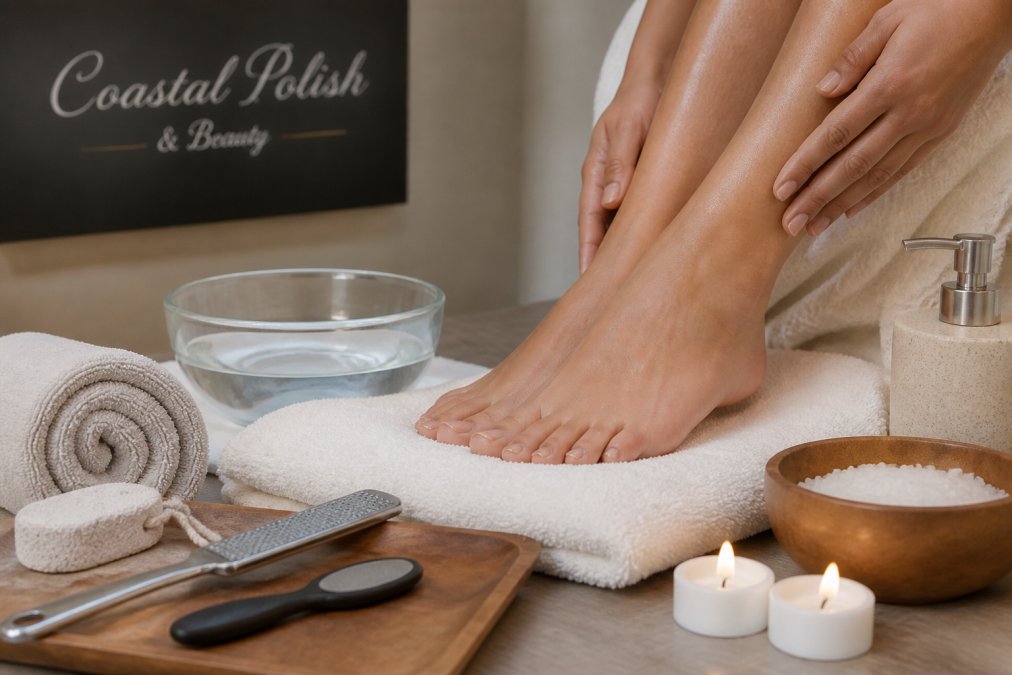
A luxury pedicure cracked heels treatment goes far beyond basic nail care. It combines professional-grade exfoliation, targeted hydration, and therapeutic techniques designed specifically to repair severely damaged skin. At Coastal Polish & Beauty, we understand that cracked heels require a personalized approach that addresses underlying dryness and callus buildup.
The difference lies in the products, timing, and expertise involved. A standard pedicure might include a quick foot file and basic lotion. A luxury pedicure for cracked heels treatment incorporates specialized keratolytic agents, extended soak times, and intensive moisture barriers that penetrate deep into the stratum corneum, the outermost layer of skin where cracks form.
Most people don't realize that cracked heels aren't a cosmetic issue alone. They're a sign that your skin's moisture barrier has broken down. Without proper treatment, cracks deepen, become painful, and can lead to infection. A true luxury pedicure addresses this systematically.
How Professional Exfoliation and Callus Reduction Work
Professional exfoliation removes dead skin cells that trap moisture and prevent healing. When done correctly, it's the foundation of any effective cracked heels treatment. The process combines chemical and mechanical methods that go much deeper than at-home foot files alone.
Chemical Exfoliation: The Science Behind Professional-Grade Actives
Luxury pedicure services for cracked heels often use chemical exfoliants, keratolytic agents that dissolve the bonds between dead skin cells. These are far more effective than mechanical scrubbing alone because they work at the cellular level:
- Urea (20-40% concentration), The gold standard in professional foot care. Urea penetrates the stratum corneum and breaks hydrogen bonds between keratin proteins, softening calluses without damaging healthy tissue. At-home products typically contain 5-10% urea; professional-grade formulations are 2-4 times stronger, which is why results are dramatically faster.
- Lactic acid (10-15% concentration), An alpha-hydroxy acid (AHA) that gently dissolves dead skin while hydrating. Lactic acid is less irritating than glycolic acid, making it ideal for sensitive heel skin. It also supports the skin's natural moisture factor, improving hydration alongside exfoliation.
- Salicylic acid (1-2% concentration), A beta-hydroxy acid (BHA) that penetrates oil-based debris and works well for thickened, callused skin. Salicylic acid is particularly effective when fungal infection is a secondary concern, as it has mild antimicrobial properties.
These chemical exfoliants are typically applied in a pre-soak or treatment cream and left on the skin for 10-20 minutes, allowing time for the active ingredients to work. This is why rushing through exfoliation defeats the purpose, the chemistry requires contact time.
Mechanical Exfoliation: Tools and Technique
After chemical exfoliants have softened the calluses, a luxury pedicure uses professional-grade mechanical tools:
- Callus planes and shavers, Specialized stainless steel tools with a precise blade angle that remove softened dead skin without gouging healthy tissue. These require training to use safely and are far more effective than pumice stones or foot files.
- Electric files and buffers, Rotary tools that provide consistent, controlled exfoliation across large areas. Professional electric files operate at speeds (typically 3,000-6,000 RPM) that remove dead skin efficiently without heat buildup that can irritate skin.
- Pumice stones and foot rasps, Used for lighter maintenance exfoliation after chemical treatment has softened the calluses. Professional-grade pumice is denser and more effective than retail versions.
Why Combination Approach Outperforms Either Method Alone
Chemical exfoliants soften and dissolve; mechanical tools remove. Using both together can achieve enhanced results:
- Chemical exfoliants alone can soften calluses but may not remove the bulk of dead skin.
- Mechanical exfoliation alone on unprepped skin can be painful and may risk damaging healthy tissue.
- Combined, they can work synergistically: chemistry prepares the skin, and mechanics can remove it efficiently.
The Callus Balance: Protection vs. Cracking
A luxury pedicure doesn't aim to remove all calluses, they protect your heels from pressure and impact. Instead, professional callus reduction brings them to a manageable thickness (typically 1-2 mm) while improving skin elasticity in surrounding areas. This balance is critical: calluses that are too thick become inflexible and crack under pressure; calluses that are too thin leave heels vulnerable to injury.
A skilled technician assesses your individual callus thickness and adjusts exfoliation intensity accordingly. This personalized approach helps ensure careful treatment.
Paraffin Wax Treatment and Deep Hydration Benefits
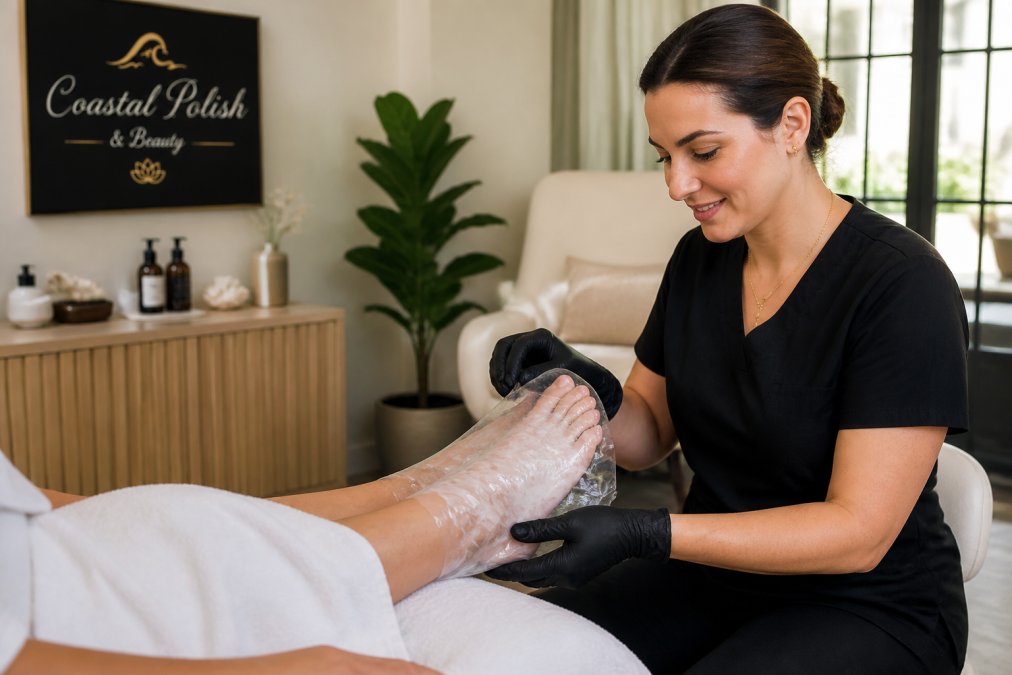
Paraffin wax treatment can be an effective method for intensive foot hydration. The warm wax creates an occlusive seal that traps moisture against your skin, allowing deep penetration of hydrating ingredients.
Schedule and Appointment today for 10% Off your service →
The process works through heat and occlusion. Warm paraffin wax is applied to your feet after exfoliation and hydrating treatments. As it cools, it forms a protective barrier that prevents water loss, the primary cause of heel cracks. Staying wrapped in wax for 10-15 minutes allows your skin to absorb moisture deeply into the dermal layer.
Many salons use paraffin infused with additional ingredients like shea butter, vitamin E, or essential oils. The result is noticeably softer, more hydrated skin that maintains moisture longer after your appointment.
Deep hydration from paraffin treatment can offer lasting benefits. Your heels may feel softer immediately, and improvement can continue as your skin's moisture barrier repairs itself. Regular luxury pedicure appointments can create cumulative benefits.
How Long Does a Luxury Pedicure Take
A luxury pedicure cracked heels treatment requires time, typically 90 to 120 minutes. This extended duration allows for thorough exfoliation, hydration, and paraffin treatment.
The timeline breaks down roughly as follows: foot soak (10-15 minutes), professional exfoliation and callus reduction (30-40 minutes), hydrating treatments and massage (20-30 minutes), paraffin wax application and wrapping (15-20 minutes), and finishing touches (10-15 minutes).
Post-Pedicure Home Maintenance for Heels
Your luxury pedicure results can be supported by what you do at home. Post-pedicure home maintenance for heels is important. The first 24 hours are often critical, as your skin may be most receptive to moisture during this window.
| Post-Pedicure Step | Timing | Frequency |
|---|---|---|
| Avoid water | First 6-8 hours | After appointment |
| Apply intensive cream | Within 2 hours | Immediately |
| Wear cotton socks | Overnight | First night |
| Daily heel balm | Evening | Every day |
| Light exfoliation | 3-5 minutes | Weekly |
Luxury Nail Salon Private Room Services and Hygiene Standards
The environment where you receive your luxury pedicure matters significantly. Private room services offer both comfort and critical hygiene advantages. At Coastal Polish & Beauty, our private room setting ensures your treatment space meets the highest standards for cleanliness and personal attention.
When to See a Podiatrist vs. a Nail Technician
Understanding when to seek podiatric care versus professional nail services is essential for foot health and safety. A nail technician provides cosmetic nail care, exfoliation, and hydration treatments for healthy skin. A podiatrist specializes in diagnosing and treating foot medical conditions and can clear you for professional pedicure treatment when underlying health concerns exist.
When a Pedicure Is Unsafe: Medical Contraindications
- Diabetes or neuropathy, Reduced sensation in your feet means you cannot feel if a tool causes injury. Professional exfoliation carries potential infection risk if the skin barrier is compromised. A podiatrist must assess your foot health and sensation before clearance.
- Open fissures, bleeding, or signs of infection, Visible cracks that bleed, surrounding redness, warmth, swelling, or discharge indicate bacterial or fungal infection. Pedicure tools can potentially spread infection deeper or introduce new pathogens. Medical treatment must come first.
- Fungal or bacterial foot infections, Athlete's foot, toenail fungus, or bacterial infections are contagious and worsen with moisture exposure and shared tools. A podiatrist must treat the infection before any pedicure.
- Severe circulation problems or peripheral artery disease, Poor blood flow slows healing and increases infection risk. Warm water soaks and extended pressure from foot baths can potentially cause complications. Medical clearance is necessary.
- Recent foot surgery or trauma, Healing tissue is fragile. Exfoliation, heat, and pressure can potentially disrupt recovery. Wait for your surgeon's clearance.
- Immunosuppression or blood clotting disorders, Medications that suppress immunity or thin blood can increase infection and bleeding risk from minor cuts during exfoliation. Consult your physician before scheduling.
- Severe psoriasis, eczema, or other inflammatory skin conditions on the feet, Professional exfoliation can potentially trigger flare-ups or worsen inflammation. A dermatologist should advise on safe treatment timing.
The Right Partnership Approach
Frequently Asked Questions
What makes a luxury pedicure better for treating cracked heels than a standard pedicure?
A luxury pedicure for cracked heels combines professional-grade exfoliation, paraffin wax treatment, and intensive hydration. Luxury treatments may use keratolytic agents and premium heel balms with higher concentrations of urea and salicylic acid to soften calluses and repair fissures. The extended time allows technicians to apply multiple layers of treatment and perform deeper callus removal, addressing the stratum corneum where cracked heels develop.
How often should you get a luxury pedicure for severe cracked heels?
For severe cracked heels, professional pedicure care every 2-3 weeks initially can help improve skin elasticity and moisture barrier. Once heels improve, monthly maintenance pedicures can help prevent regression. The frequency depends on how quickly your skin responds to treatment and your daily foot stress. Your technician can assess your heel condition and recommend a personalized schedule during your first visit.
What ingredients should I look for in a luxury heel treatment?
Look for urea (a keratolytic agent that softens dead skin), salicylic acid (for gentle exfoliation), glycerin (for deep hydration), and shea butter (for skin elasticity). Paraffin wax is essential for intensive moisture barrier repair. Professional-grade formulations contain higher concentrations of these actives than over-the-counter products, delivering faster callus softening and rejuvenation results.
Can a professional luxury pedicure fix deep heel fissures, or do I need to see a doctor?
A luxury pedicure can help improve most deep fissures through professional exfoliation, callus reduction, and therapeutic foot care. However, if fissures are bleeding, severely painful, or show signs of infection, see a podiatrist first. Medical contraindications like diabetes, neuropathy, or compromised immune systems require professional medical evaluation before any pedicure service. A skilled nail technician will screen for these conditions during your consultation.