 how-to
Maintain Healthy Nails Between Salon Visits
Table of Contents
- Why Nail Maintenance Between Visits Matters
- How to Keep Nails from Breaking and Peeling
- Establish a Cuticle Care Routine
- How to Care for Gel Nails Between Appointments
- Daily Habits That Protect Nail Health
- How Often to Get a Manicure for Optimal Results
- When to Seek Professional Help
- Frequently Asked Questions
Last Updated: October 10, 2026
Why Nail Maintenance Between Visits Matters
The work you do at home directly affects how your nails look when you return for your next salon visit. At Coastal Polish & Beauty, we understand that to maintain healthy nails between salon visits is essential for keeping your manicures looking fresh and preventing damage.
Without a maintenance routine, even the best salon treatment fades quickly. A few simple habits can dramatically extend the life of your manicure and keep your nails strong.
How to Keep Nails from Breaking and Peeling
Broken and peeling nails result from insufficient moisture and protection. Breaking occurs when nails become brittle and dry; peeling happens when layers separate from dehydration or trauma.
Moisturize nails and hands daily
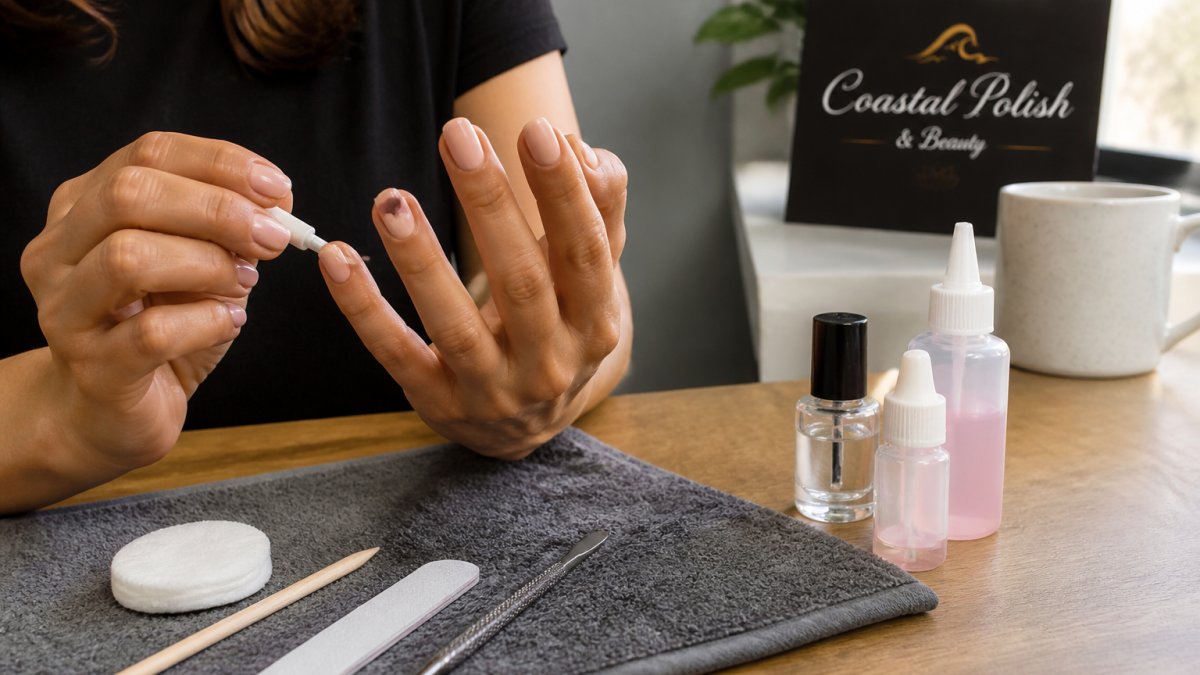
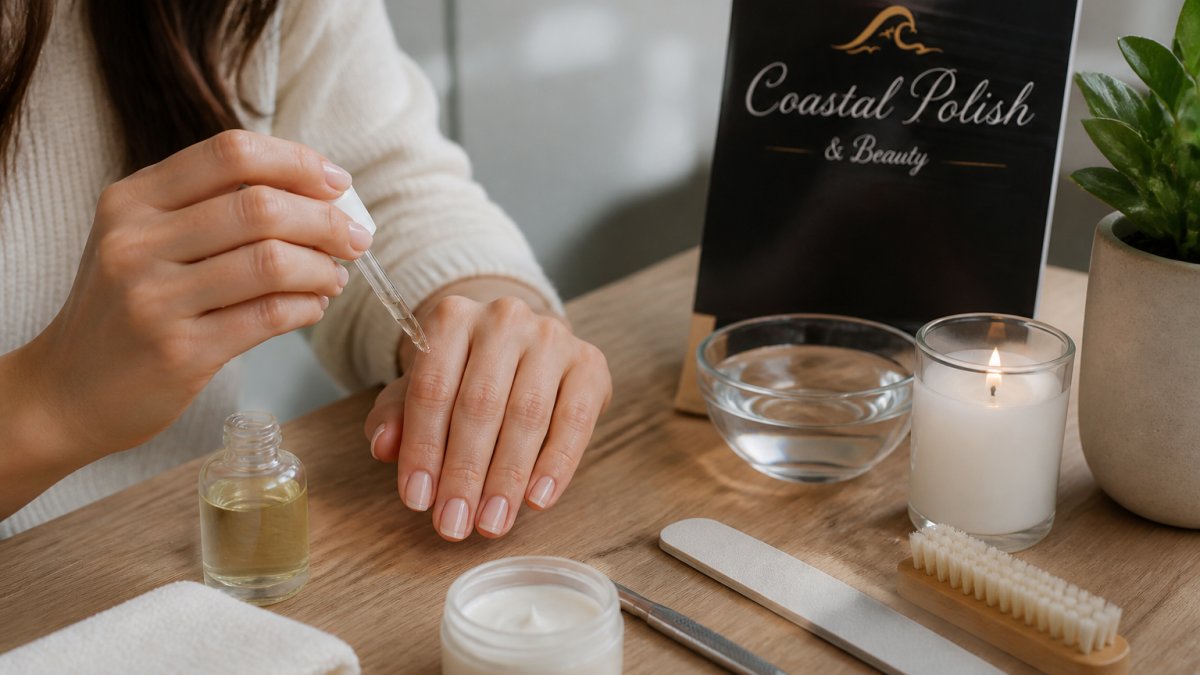
Moisturizing is the single most important step you can take between salon visits to maintain healthy nails. Apply hand cream or cuticle oil at least twice daily, preferably after washing your hands.
Moisturize right after you shower or wash dishes when nails are slightly damp to lock in hydration. Look for products with jojoba oil, almond oil, or shea butter.
Moisturize cuticles, they protect the nail matrix where new growth begins and support stronger nail growth.
File gently and maintain shape
How you file matters more than how often. Aggressive filing causes peeling and breakage by creating tiny fractures.
Use a gentle, one-directional filing motion from the outer edge toward the center. Never saw back and forth, which damages nail layers.
Keep nails at a moderate length; longer nails are more prone to breaking due to increased surface area exposure.
Round or slightly square edges are stronger than sharp points and distribute pressure more evenly.
Protect nails during household chores
Water and harsh chemicals cause nails to swell and soften, making them vulnerable to peeling and breaking during dishwashing, cleaning, or laundry.
Wear cotton-lined latex or nitrile gloves for household chores to prevent direct contact with water and chemicals. Keep pairs under your sink and in cleaning supplies.
Establish a Cuticle Care Routine
Cuticles are a protective barrier for nail growth. Healthy cuticles support stronger, faster-growing nails.
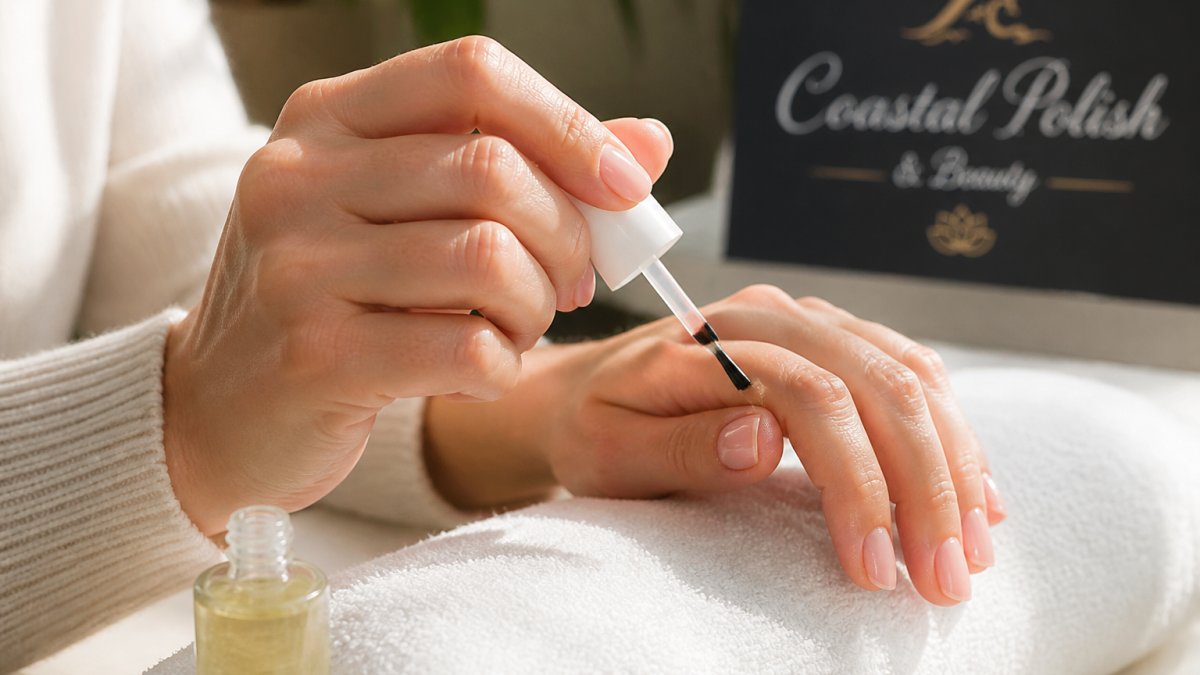
Three times per week, apply cuticle oil and massage gently using small circular motions to improve circulation and keep cuticles soft.
Never cut cuticles at home, they protect the nail matrix from infection.
If cuticles are dry or cracked, apply oil daily. Severe problems need professional attention at Coastal Polish & Beauty.
How to Care for Gel Nails Between Appointments
Gel manicures last longer than polish but require specific care. Improper care between appointments leads to chips, lifts, and damage.
Safe removal of gel polish at home
Never peel or pick at gel polish, it removes nail layers and takes months to repair. If gel lifts or chips, resist removing it yourself.
If you must remove gel at home, soak nails in pure acetone for 10-15 minutes, then gently roll it off with a wooden stick.
After gel removal, give nails at least one week without polish or enhancements to rehydrate and repair. Moisturize heavily and avoid excessive water exposure.
Handling chips, lifts, and cracks
Small cosmetic chips can wait until your next appointment. If the chip exposes the nail or gel is lifting, contact Coastal Polish & Beauty for a repair appointment.
Lifts occur when gel separates from the nail, allowing water and bacteria to get trapped underneath. Schedule a repair as soon as possible.
If you have a crack in the nail plate, avoid gel manicures until it grows out. Applying gel traps moisture and worsens damage. Focus on moisturizing and protecting the nail.
Daily Habits That Protect Nail Health
Small daily choices compound over time. The habits you practice between salon visits determine whether your nails stay strong or become weak and damaged.
Keep nails clean and dry
Moisture underneath nails creates an environment where bacteria and fungi thrive. After washing hands, dry thoroughly, including under nails, using a soft brush.
Keep nails dry throughout the day. If hands get wet frequently, dry them immediately, prolonged moisture softens nails.
Clean nails gently with a soft brush, not metal tools, which damage the nail surface.
Avoid picking, biting, and using nails as tools
Picking, biting, and using nails as tools cause major damage by weakening structure, creating irregular edges, and putting stress on nails.
Schedule and Appointment today for 10% Off your service →
If you bite your nails, identify triggers and find alternatives like stress balls or fidget toys. If picking is the problem, keep nails filed smooth.
Use actual tools instead of your nails to protect them and make tasks easier.
How Often to Get a Manicure for Optimal Results
Appointment frequency depends on your nail type, lifestyle, and services. Structure at-home care into a daily and weekly routine.
Daily maintenance routine
Morning: Apply cuticle oil or hand cream to nails and cuticles after showering.
Throughout the day: Wear cotton-lined nitrile gloves for water exposure.
Evening: Apply hand cream or cuticle oil before bed for overnight absorption.
Anytime: Dry hands thoroughly after water contact and clean under nails with a soft brush.
Weekly maintenance routine
Two to three times per week: Apply cuticle oil, wait 1-2 minutes, then gently push back cuticles with a wooden stick and massage with circular motions.
Once per week: File nails gently using one-directional motions from outer edge toward center to prevent peeling.
As needed: Touch up chipped polish or address visible damage.
Appointment frequency by nail type and condition
Natural nails in good condition: Schedule a manicure every 3-4 weeks.
Gel manicures: Book every 3-4 weeks. Regular visits catch lifting or damage early.
Weak, brittle, or peeling nails: Start with every 2-3 weeks, extending to 3-4 weeks once nails strengthen.
Acrylic or other enhancements: Maintenance appointments every 2-3 weeks to fill in growth and repair damage.
When to book an extra appointment
Don't wait for your regular appointment if:
- Gel is lifting significantly (more than a quarter-inch). Schedule a repair within a few days.
- You have a crack or break in the nail plate. A technician can assess healing needs.
- Polish is heavily chipped and you can't maintain it. A quick touch-up keeps your manicure intact.
- You notice signs of infection (redness, swelling, warmth, or discharge). This requires immediate evaluation.
Lifestyle adjustments
If your hands are frequently in water, book every 2-3 weeks initially. If you have a desk job and can protect nails easily, extend visits to every 4-5 weeks.
When to Seek Professional Help
Knowing which issues are cosmetic, which need a nail technician, and which signal a medical problem ensures you get the right care.
Cosmetic concerns: book a salon appointment
These cosmetic issues can be addressed during a regular manicure:
- Chips or minor cracks in polish (normal wear and tear).
- Slight discoloration from polish staining (fades as nails grow).
- Uneven nail length or shape (file yourself or have a technician shape them).
- Dry or peeling cuticles (respond to consistent moisturizing and professional cuticle work).
Nail technician concerns: call your salon
These issues require professional assessment:
- Gel lifting or separation. Contact your salon within a few days for repair.
- Visible cracks or breaks in the nail plate. A technician can assess and recommend care.
- Persistent peeling or flaking despite consistent moisturizing for 2+ weeks. A technician can identify the cause.
- Nails that don't grow or remain weak despite good at-home care for 4+ weeks.
- Redness, swelling, or warmth around the nail or cuticle without discharge.
Medical concerns: consult your doctor
These changes may signal an underlying health condition and need medical evaluation, not salon treatment:
- Persistent discoloration (dark streaks, brown or black lines, or white spots that don't grow out) lasting more than a few weeks. While some discoloration is harmless (like a bruise under the nail from trauma), persistent or unexplained discoloration can indicate fungal infection, melanoma, or other conditions requiring diagnosis.
- Thickening or hardening of the nail that makes it difficult to file or trim. This can signal fungal infection, psoriasis, or other skin conditions.
- Nail separation from the nail bed (the nail lifts away from the pink skin underneath). While gel lifting is a cosmetic issue, separation of the natural nail plate indicates a medical problem such as thyroid disease, psoriasis, or fungal infection.
- Horizontal ridges or grooves across multiple nails. These can indicate past illness, nutritional deficiency, or medication side effects.
- Nails that are very brittle and break constantly despite excellent care for 6+ weeks. This may indicate thyroid problems, anemia, nutritional deficiency, or other systemic issues.
- Yellowing or discoloration of the nail bed itself (not just the surface) that doesn't improve with buffing. This can signal fungal infection, lung disease, or other conditions.
- Pain or tenderness in the nail or surrounding tissue that doesn't resolve after a few days. This may indicate infection, injury, or other problems needing medical attention.
Infection: seek immediate care
Do not wait for a salon appointment or regular doctor's visit if you notice:
- Redness, swelling, warmth, and pus or discharge around the nail or cuticle. These are signs of bacterial infection (paronychia) that may need antibiotics.
- Itching, burning, or unusual odor under or around the nail, especially if accompanied by discoloration or thickening. These suggest fungal infection, which requires antifungal treatment.
- Sudden pain or throbbing in the nail or finger after trauma (crushing, cutting, or stubbing). This may indicate a blood clot under the nail or fracture needing evaluation.
Contact your doctor or an urgent care clinic for these symptoms. Do not attempt home treatment or wait for a salon appointment.
Nail trauma: professional assessment helps
If your nail is crushed in a door, severely cracked, or partially torn off:
- Partial damage (nail cracked but still attached): A technician can assess whether the nail will heal normally or needs protection during growth. Avoid gel or enhancements until the nail grows out, and keep it clean and dry.
- Severe crushing or separation: Contact your doctor. Significant trauma can cause permanent damage or require professional care to prevent infection.
- Complete loss of the nail: This requires medical evaluation. The nail bed may need protection while a new nail grows back (a process that takes 3-6 months).
Frequently Asked Questions
How do you maintain healthy nails between salon visits?
Maintain healthy nails by moisturizing hands and nails daily with cuticle oil or hand cream, filing gently in one direction, keeping nails clean and dry, wearing protective gloves during household chores, and avoiding picking or biting. For gel nails, follow removal guidelines carefully and schedule touch-ups every 3-4 weeks to prevent damage from lifting or growth.
How often should you get a manicure to keep nails healthy?
Frequency depends on your nail growth rate, lifestyle, and whether you wear enhancements. Regular visits prevent damage and keep nails in optimal condition.
What is the best cuticle care routine between salon appointments?
Apply cuticle oil or moisturizer 3-4 times weekly, focusing on the cuticle area and surrounding skin. Gently push back cuticles with a soft tool after softening them with warm water, never cutting them as they protect nail growth. Keep cuticles hydrated throughout the day, especially after washing hands or exposure to water. Proper cuticle care prevents peeling, infection, and brittleness.
Is it safe to remove gel polish at home between appointments?
You can safely remove gel polish at home using proper technique: soak nails in acetone-soaked cotton wrapped in foil for 10-15 minutes, then gently scrape away softened polish. Avoid picking or forcing polish off, as this damages the nail surface. After removal, moisturize nails thoroughly and consider giving them a break before applying new polish. If nails feel weak or damaged after removal, wait a week before your next manicure.