 how-to
How to Avoid Rushed Nail Appointments
Table of Contents
- Why Nail Technicians Rush Appointments
- Red Flags That Signal a Rushed Nail Service
- The Impact of Rushing on Nail Health
- Average Time for Luxury Manicure: What to Expect
- How to Communicate With Your Nail Technician
- Best Time of Day for Nail Appointments
- Quality vs. Speed: What Premium Service Actually Requires
- Conclusion
Last Updated: August 27, 2026
Why Nail Technicians Rush Appointments
Rushed nail appointments rarely happen by accident. They result from systemic pressures that accumulate throughout the day.
Overbooking is the primary culprit. When salons schedule clients back-to-back without buffer time, technicians face impossible math: 45 minutes to complete a service requiring 90 minutes. One delayed client throws off the entire day's schedule, creating a domino effect where each rushed appointment compromises the next. Economic pressure compounds this, many salons measure success by appointment volume rather than quality, incentivizing speed over excellence. Staffing shortages worsen the problem, forcing remaining technicians to absorb extra clients and leading to burnout and corner-cutting.
At Coastal Polish & Beauty, we reject this model entirely. Our commitment to personalized care means we schedule adequate time for each service and refuse to overbooking, allowing our technicians to deliver the quality that premium clients deserve.
Red Flags That Signal a Rushed Nail Service
Learning to spot warning signs protects you from poor results and potential nail damage.
Minimal or skipped cuticle prep is the first red flag. Proper preparation takes 5-10 minutes; rushing through it in under two minutes leads to lifting, chipping, and premature polish failure (peer-reviewed research). Insufficient filing and shaping is another indicator, nails need consistent shaping with smoothed edges and a slightly buffered surface. Watch for skipped primer or dehydrator steps; applying gel polish directly without these products causes immediate adhesion failure and lifting within days.
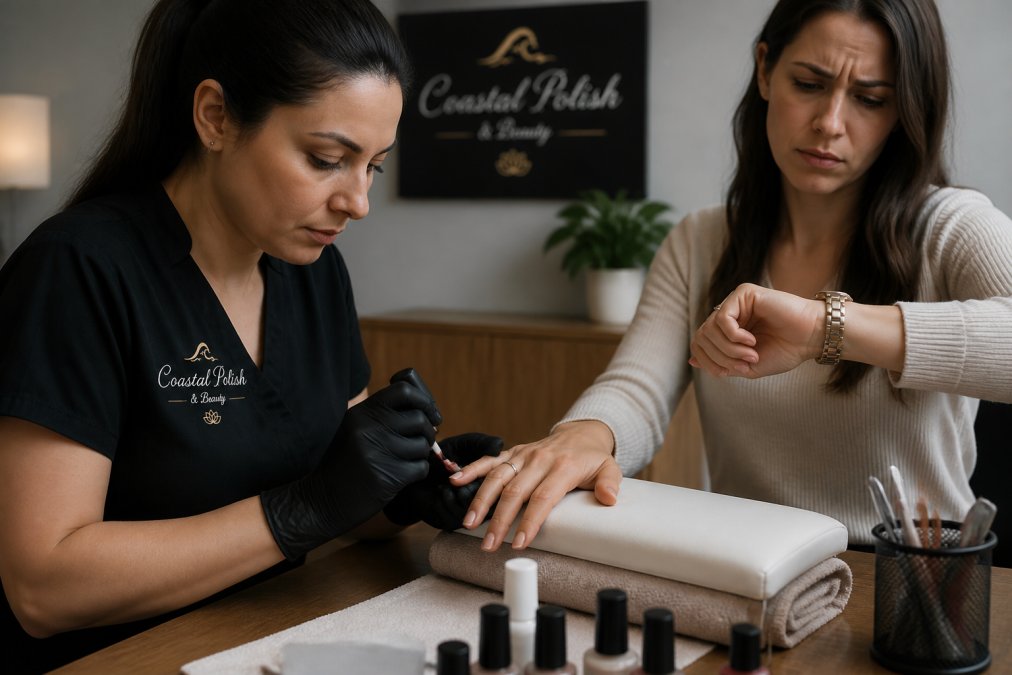
Thin or uneven polish application is visible instantly. Quality application requires multiple thin layers, each properly cured. Inadequate curing time signals serious rushing, gel polish requires specific curing times, and rushing through the lamp means the polish never fully hardens. Pressure to leave quickly is perhaps the most obvious red flag. If you feel rushed, you're receiving rushed service.
The Impact of Rushing on Nail Health
Rushed appointments damage the nail plate and surrounding tissue with effects lasting months.
Over-filing removes too much of the nail plate, making nails thin, brittle, and prone to breaking. Since nail plates grow at about 3-4 millimeters per month, severe over-filing can take 6 months to fully recover (peer-reviewed research). Heat spikes from improper curing damage the delicate nail bed tissue, causing burning sensations during or after the appointment. Lifting from inadequate prep creates an environment for fungal or bacterial infections, notoriously difficult to treat and persistent for months.
Allergic reactions occur more frequently in rushed appointments when primers and base coats contact skin carelessly. Nail bed separation (onycholysis) happens when the nail literally separates from the bed underneath, causing pain and requiring months to resolve. Chronic damage from repeated rushed services compounds over time, progressively weakening nails and making them more prone to problems.
Average Time for Luxury Manicure: What to Expect
A luxury manicure typically requires 60-90 minutes from start to finish (the American Academy of Dermatology). Salons advertising "quick manicures" in 30 minutes cannot include thorough preparation and quality application.
Breaking down the components shows why time matters: cuticle soaking and prep (10-15 minutes), nail shaping and filing (10-15 minutes), base coat application and curing (5-10 minutes), gel polish application in thin layers (15-20 minutes), final curing (5-10 minutes), and finishing details (5 minutes). Nail art adds 15-45 minutes depending on complexity. Gel extensions require 45-60 minutes alone, making a full extension manicure 90-120 minutes minimum.
Premium salons schedule appointments with buffer time between clients, preventing late starts and rushing. A 90-minute appointment should include 10-15 minutes of buffer, meaning the salon books 100-105 minutes of actual time. This buffer separates quality salons from rushed ones.
How to Communicate With Your Nail Technician
Clear communication prevents misunderstandings and sets the stage for quality service.
Call the salon before booking and ask how long they schedule for your desired service. A quality salon will give a specific timeframe without pressuring you toward a rushed appointment. Arrive early to communicate preferences and show reference images on a tablet, this eliminates ambiguity about color, finish, design, or length.
Be specific about timeline. Tell your technician upfront: "I'm not in a rush today. I'd like to relax and enjoy this." Discuss product preferences and sensitivities early to prevent mid-service problems. Ask questions during the service if something doesn't feel right. Provide constructive feedback rather than criticism, keeping the conversation collaborative.
Schedule and Appointment today for 10% Off your service →
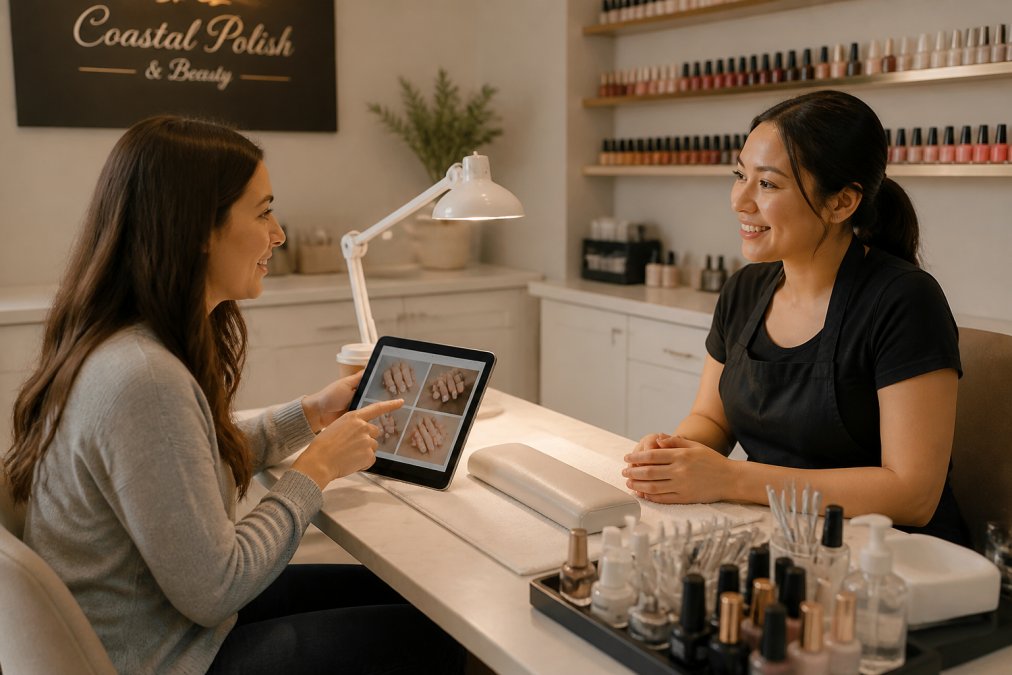
Never pressure your technician to rush. If you're running late, reschedule rather than asking them to speed up.
Best Time of Day for Nail Appointments
Timing your appointment strategically improves quality. Early morning appointments (9-11 a.m.) are ideal, technicians are fresh and the salon is less crowded. Mid-morning to early afternoon (11 a.m. to 2 p.m.) is the busiest time and most likely to involve rushing. Late afternoon can be hit or miss depending on technician fatigue.
Weekday appointments are generally better than weekends. Weekends are peak times with higher stress and rushing. Avoid holiday weeks and special occasions when everyone books simultaneously. First appointment of the day is often best, the technician hasn't fallen behind schedule and is focused and attentive.
Ask the salon directly about their least busy times. A quality salon will be honest about traffic patterns.
Quality vs. Speed: What Premium Service Actually Requires
Speed and quality are inversely related in nail services. The faster a technician works, the lower the quality becomes. A technician completing a manicure in 30 minutes has either skipped steps or performed them poorly.
The premium price point reflects time investment. A salon scheduling 90 minutes for a service pays the technician for 90 minutes of work and blocks that chair from other clients. Quality salons price accordingly. Cutting corners creates false savings, a rushed manicure chipping in a week costs more per day of wear than a quality manicure lasting 3-4 weeks.
Professional standards exist for a reason. The best technicians are actually slower, not faster, because they care about quality. They don't rush cuticle prep, skip primer, or cut curing time short. This careful approach separates premium service from rushed service.
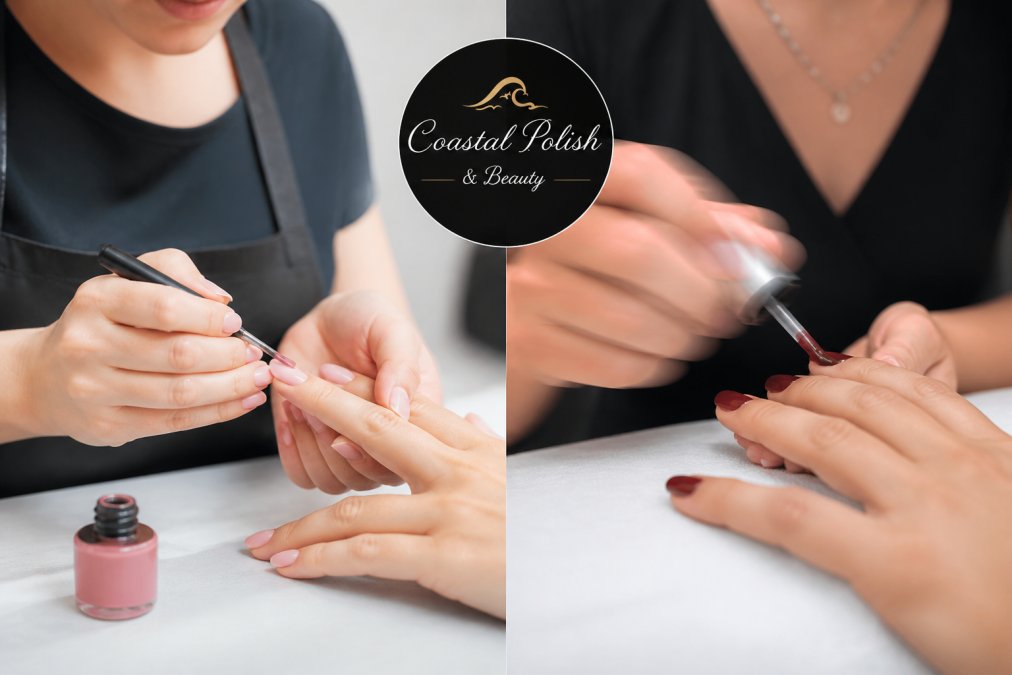
A quality manicure takes longer but lasts longer, looks better, and protects your nail health. This is the actual trade-off: short-term convenience versus long-term value and nail health.
Avoiding rushed nail appointments comes down to understanding what quality requires: time, attention, and refusal to compromise on foundational steps. Early appointments on quieter days at salons scheduling adequate time consistently deliver better results than peak-hour bookings at high-volume locations.
Your nail health depends on the care you receive. Rushed appointments cause real damage taking months to repair. Premium service protects your nails while delivering lasting results. When you book with Coastal Polish & Beauty, you're choosing a salon that refuses to rush. Our commitment to personalized care means adequate time for every service, proper technique for every step, and results reflecting the quality you deserve. Book now and experience the difference that unhurried, expert care makes.
Frequently Asked Questions
How long should a high-quality manicure take?
A premium manicure typically requires 60-90 minutes for gel applications, depending on complexity. This includes proper cuticle prep, dehydration, base coat, color application, and curing time. Rushing this timeline compromises nail health and service quality. Budget extra time for nail art or intricate designs. Premium salons prioritize service quality over turnaround time to ensure lasting results.
What are the signs of a rushed nail service?
Watch for skipped cuticle prep, insufficient buffer time between coats, over-filing that thins the nail plate, and pressure to leave before curing is complete. If your technician seems hurried, doesn't explain what they're doing, or skips the dehydrator step, these are red flags. Rushed services often result in lifting, chipping, or nail damage within days.
Does booking during off-peak hours prevent rushed appointments?
Yes. Scheduling during slower times, typically mid-week mornings or early afternoons, allows technicians to work without time pressure. Off-peak appointments mean fewer clients waiting, better workstation organization, and more attention to detail. Your technician can focus on proper nail preparation, curing time, and your specific preferences without feeling rushed.
How can I communicate my preference for a slower, more detailed service?
During booking, mention that you prefer a relaxed appointment and value quality over speed. At your visit, tell your technician your concerns, whether about durability, nail health, or specific design details. Ask questions about each step: cuticle prep, primer application, and curing time. Clear communication sets expectations and prevents misunderstandings about service duration.
This article was written using GrandRanker