 how-to
What to Look for in a Scalp Health Specialist
Table of Contents
- Why Scalp Health Matters and When Professional Help Is Needed
- Understanding Scalp Health Specialists: Dermatologist vs Trichologist for Hair Loss
- Essential Scalp Specialist Credentials and Qualifications
- Red Flags: When to Seek a Dermatologist for Hair Loss Immediately
- Key Questions to Ask at Your Scalp Health Consultation
- What to Expect at Your First Appointment With a Scalp Health Specialist
- How to Evaluate and Choose the Right Scalp Health Specialist
- Frequently Asked Questions
Last Updated: October 19, 2026
Why Scalp Health Matters and When Professional Help Is Needed
A healthy scalp is the foundation for strong, vibrant hair. It's living skin that needs proper care, and problems can affect hair growth, texture, and appearance.
Many people ignore scalp problems until they become serious. A small issue like itching or flaking can signal something that needs professional attention. Catching problems early makes treatment easier and more effective.
You should consider seeing a scalp health specialist when you notice:
- Persistent itching or burning sensations that don't improve with regular washing
- Visible flaking, scaling, or buildup that over-the-counter products don't fix
- Redness, inflammation, or sensitivity that lasts more than a few weeks
- Unusual hair loss or thinning, especially if it's rapid or in patches
- Scalp pain or tenderness when touching your hair
- Signs of infection like oozing, crusting, or unusual odor
We understand that scalp health connects to overall wellness, and we recognize when professional evaluation becomes necessary.
Understanding Scalp Health Specialists: Dermatologist vs Trichologist for Hair Loss
Two main types of professionals treat scalp conditions; understanding the difference helps you choose the right one.
A dermatologist is a medical doctor specializing in skin conditions, including the scalp.
A trichologist specializes in hair and scalp health, studying hair structure, growth cycles, and scalp conditions. They focus on non-medical approaches like nutrition, hair care practices, and product recommendations.
Here's when to choose each:
| Professional | Best For | Can Prescribe | Training |
|---|---|---|---|
| Dermatologist | Medical conditions, infections, severe cases | Yes, medications | Medical school + specialization |
| Trichologist | Hair growth, scalp care, product advice | Varies by location | Specialized certification |
Choose a dermatologist if you have:
- Suspected infection or fungal issues
- Autoimmune conditions affecting hair
- Severe inflammation or redness
- Hair loss that needs medical evaluation
Choose a trichologist if you're concerned about:
- General hair health and growth
- Scalp care routines and products
- Nutritional factors affecting hair
- Preventive scalp wellness
Many people benefit from seeing both: a dermatologist rules out medical problems, then a trichologist optimizes your scalp care routine.
Essential Scalp Specialist Credentials and Qualifications
Not all scalp health specialists have the same qualifications, so checking credentials protects you.
For dermatologists:
- Medical degree (MD or DO)
- Completed dermatology residency program
- Board certification from the American Board of Dermatology
- State medical license
- Ongoing continuing education requirements
Verify these credentials by checking the American Board of Dermatology directory or your state's medical board website.
For trichologists:
- Certification from an accredited trichology program (typically 100-200+ hours of training)
- Membership in professional organizations like the International Association of Trichologists
- Continuing education in hair science and scalp conditions
- Understanding of hair growth cycles and scalp physiology
Trichology credentials vary by state, so ask about specific training and certifications.
Red flags to watch for:
- Claims to cure baldness or guarantee results
- Pressure to buy expensive products immediately
- Unwillingness to discuss credentials
- No clear explanation of their training or experience
- Lack of professional licensing or certification
Ask directly about credentials, training, and licensing; a qualified specialist will answer clearly.
Red Flags: When to Seek a Dermatologist for Hair Loss Immediately
Some scalp conditions need urgent medical attention. Don't delay if you notice these warning signs.
Seek immediate help if you experience:
- Sudden, rapid hair loss (losing more than 50-100 hairs per day)
- Bald patches appearing overnight or within days
- Scalp pain, burning, or severe itching that interferes with daily life
- Signs of infection: pus, oozing, crusting, or foul odor
- Scalp redness spreading or worsening despite treatment
- Hair loss accompanied by fever, fatigue, or other systemic symptoms
- Scarring alopecia (permanent hair loss with visible scarring)
These symptoms suggest conditions needing medical diagnosis and treatment; waiting lets them progress.
Progressive thinning differs from sudden loss. Gradual thinning over months gives you time to schedule a consultation, but if hair loss accelerates or appears in patches, contact a dermatologist promptly.
Many serious scalp conditions are treatable when caught early. Medical intervention can stop progression and sometimes restore hair growth. Delaying diagnosis often means missing the window for effective treatment.
Key Questions to Ask at Your Scalp Health Consultation
Most guides tell you to "ask questions" but never which ones change the outcome. The questions below separate a specialist who can help you from one who will sell you a routine.
Before you book: scope of practice and credentials
- Are you a board-certified dermatologist, or a trichologist? If trichologist, what certification do you hold, and is your practice supervised by or affiliated with a physician?
- Can you diagnose and prescribe medication for my condition, or will you refer me to a physician for anything medical?
- Which conditions do you treat most often, inflammatory scalp disease, scarring hair loss, hormonal thinning, or general hair and scalp care?
- How many scalp-focused patients do you see in a typical week?
That last question matters: a general dermatologist may see mostly acne and eczema, while a scalp-focused practitioner sees patterned hair loss and seborrheic dermatitis daily.
About diagnosis and testing
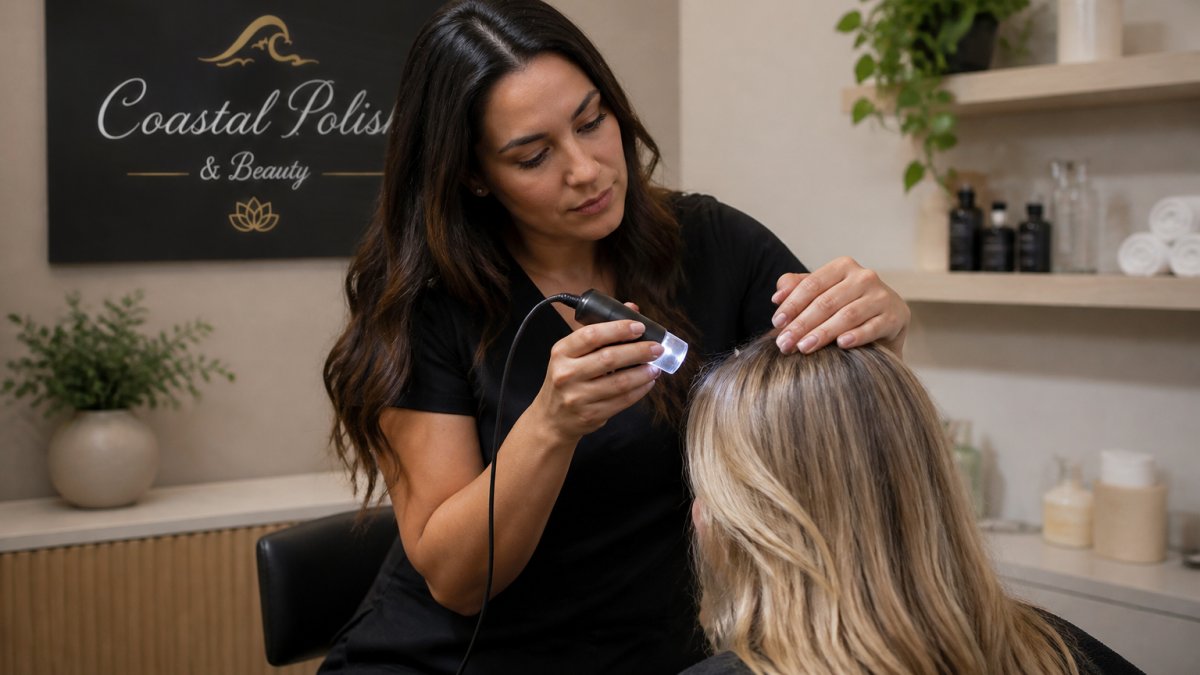
- What will you actually examine, and will you use a dermatoscope?
- Will you do a pull test, a scalp biopsy, blood work, or a fungal culture, and under what circumstances?
- If my case is unclear, will you refer me for a second opinion rather than treat empirically?
- How will you rule out thyroid disease, iron deficiency, or other systemic causes before treating my scalp directly?
About treatment, risk, and timeline
- What are the realistic outcomes, and what is the failure rate for the first-line treatment you're recommending?
- What are the side effects, and which ones should make me call you immediately?
- How long before I should expect measurable change, and how will we measure it, photos, a hair count, a symptom log?
- If this doesn't work, what is the next step, and at what point do we stop and reassess?
About cost, insurance, and access
- What is the consultation fee, and is it billed as medical or cosmetic? Cosmetic visits are typically not covered by insurance even when a dermatologist performs them.
- Do you accept my plan, and is a referral required?
- What will follow-up visits, procedures, and any at-home products cost out of pocket?
- Do you offer telehealth for follow-ups, and are there cancellation or no-show fees?
Ask for the fee schedule in writing before the appointment. A practice that won't provide one is telling you something.
About coordination and follow-up
Schedule and Appointment today for 10% Off your service →
- Will you coordinate with my primary care physician or an endocrinologist if labs point to a systemic cause?
- Who do I contact between visits if symptoms worsen, and how quickly should I expect a response?
- What is your policy if I want to stop treatment or switch providers?
A specialist who answers these clearly, without defensiveness, is worth your time; one who dodges the credential, cost, or referral questions is not.
What to Expect at Your First Appointment With a Scalp Health Specialist
A first scalp evaluation follows a predictable sequence.
Before the appointment
- Write down when symptoms started, what makes them better or worse, and any treatments you've tried, including over-the-counter shampoos and how long you used each.
- Note family history of hair loss, autoimmune disease, thyroid conditions, and skin disorders.
- Bring photos of the problem area taken over time, progression is often more informative than a single snapshot.
- Ask the office whether to wash your hair beforehand. Many specialists prefer to see the scalp with its natural oils and without heavy styling products, so skip the wash the night before if they don't specify.
- Bring your insurance card, ID, a medication list, and any prior lab or biopsy results.
Step 1: History-taking
The visit usually opens with a structured history rather than an immediate exam.
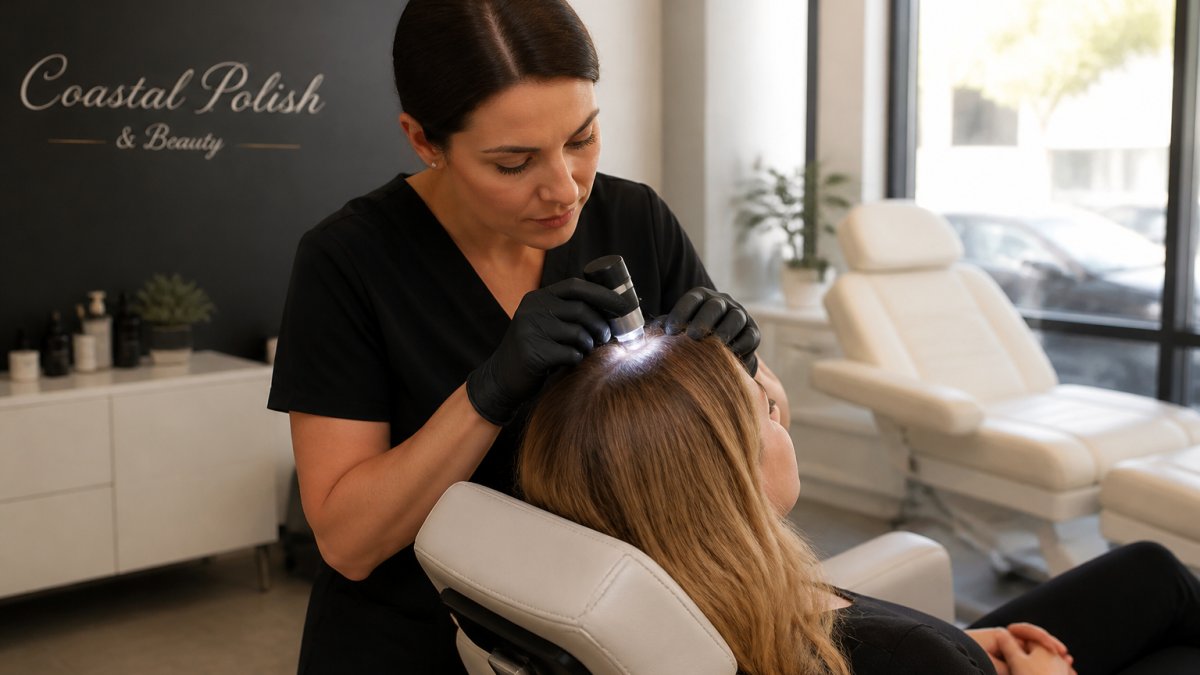
Step 2: Visual and dermatoscopic exam
Step 3: The pull test
The specialist grasps a small bundle of hairs, typically 40 to 60, and applies gentle traction.
Step 4: Possible trichoscopy, biopsy, or labs
Step 5: Diagnosis and plan
The specialist should explain what they found, what they ruled out, and why.
What to bring
- Insurance card and photo ID
- Current medication and supplement list
- Prior test results, biopsy reports, and photos
- Your written questions
- A notebook or phone for notes
Most first visits run 30 to 45 minutes, longer if a biopsy or extensive trichoscopy is performed.
If the specialist recommends an expensive at-home regimen before establishing a diagnosis, treat that as a reason to get a second opinion rather than a reason to buy.
How to Evaluate and Choose the Right Scalp Health Specialist
Finding the right specialist takes research, but the right professional makes a real difference in your outcomes.
Start by identifying specialists in your area:
Search online for dermatologists and trichologists, and read reviews on Google, Healthgrades, or Yelp.
Check credentials and qualifications:
Evaluate the practice:
- Is the office clean and professional?
- Are staff members friendly and helpful?
- Do they answer questions thoroughly?
- Is the office conveniently located?
- Do they accept your insurance?
- Are appointment times reasonable?
Consider the specialist's approach:
- Do they listen carefully to your concerns?
- Do they explain things in understandable terms?
- Do they seem rushed or unhurried?
- Do they discuss multiple treatment options?
- Do they focus on your specific situation rather than pushing one treatment?
Ask about communication:
- Can you reach them between appointments?
- Do they follow up after treatment?
- Will they coordinate care with other providers if needed?
- How do they handle emergencies or urgent concerns?
Trust your instincts:
You should feel comfortable with your specialist. If something feels off, keep looking. The right fit matters for long-term care and better outcomes.
Insurance and access:
Ask about insurance acceptance and out-of-pocket costs. Some specialists offer payment plans or sliding scale fees; understand what you'll pay before committing.
Choosing a scalp health specialist is an important decision for your hair and overall wellness. When you're ready to address scalp concerns with expert guidance, a qualified scalp health specialist provides the personalized evaluation and treatment plan you deserve.
Frequently Asked Questions
What credentials should a scalp health specialist have?
A qualified scalp health specialist should hold a medical degree (MD or DO) if they are a dermatologist, or a license from an accredited trichology program if they are a trichologist. Dermatologists complete medical school and residency training in dermatology, often with additional fellowship training in hair and scalp conditions. Trichologists should be certified by organizations like the International Association of Trichologists (IAT) or the American Trichological Association (ATA). Always verify credentials through your state's medical board or the specialist's professional association.
When should I see a dermatologist for hair loss?
See a dermatologist for hair loss if you experience sudden, excessive shedding, bald spots, progressive thinning, scalp pain, inflammation, or if hair loss persists longer than a few weeks. Dermatologists can diagnose underlying medical conditions, perform scalp biopsies if needed, and prescribe medical treatments. They are the appropriate choice for severe, progressive, or medically complex cases, especially if you suspect an autoimmune condition, infection, or medication side effect.
What questions should I ask at a scalp health consultation?
Ask about the specialist's diagnosis process, what tests or examinations they recommend, the underlying cause of your scalp condition, treatment options and their expected timeline, costs and insurance coverage, potential side effects, and how progress will be monitored. Request clarification on whether your condition requires ongoing treatment or if it can be resolved. Ask about preventive care and lifestyle changes that support scalp health. Understanding these details helps you make an informed decision and set realistic expectations for recovery.
What is the difference between a dermatologist and a trichologist for hair loss?
Dermatologists are licensed physicians with medical degrees who specialize in skin, hair, and scalp conditions. They can diagnose medical causes of hair loss, order lab tests, perform biopsies, and prescribe medications. Trichologists are specialists trained specifically in hair and scalp health but are not physicians and cannot prescribe medications in most states. Trichologists excel at analyzing hair structure, recommending care routines, and identifying non-medical causes. For complex or severe hair loss, a dermatologist is the appropriate choice; for routine scalp care and hair health optimization, a trichologist can be valuable.