 how-to
Sensitive Skin Waxing Tips: A 2026 Guide
Table of Contents
- Prepare Your Skin Before Waxing
- Choose the Best Wax for Sensitive Skin
- How to Prevent Waxing Irritation
- Post-Waxing Skincare Routine for Sensitive Skin
- What to Avoid After Waxing
- Sensitive Skin Waxing at a Professional Salon
- Frequently Asked Questions
Last Updated: September 3, 2026
Prepare Your Skin Before Waxing
Getting your skin ready before a waxing appointment is the foundation for a smooth experience, especially with sensitive skin. Start by exfoliating gently two to three days before your appointment to remove dead skin cells and prevent ingrown hairs, timing matters, as exfoliating too close to waxing can over-sensitize your skin barrier. Use a gentle physical exfoliant or mild chemical exfoliant like glycolic acid.
Hydration is equally critical. Drink plenty of water in the days leading up to your appointment; well-hydrated skin is more resilient and recovers faster. Avoid irritants for at least 48 hours before waxing: retinoids, vitamin C serums, benzoyl peroxide, salicylic acid, and other active treatments thin the skin barrier and increase thermal sensitivity. The night before your appointment, apply a rich moisturizer with hypoallergenic formulas and soothing ingredients like aloe vera or witch hazel.
On the day of your appointment, wear loose, breathable clothing to avoid friction against freshly waxed skin. Avoid caffeine and alcohol, both of which increase thermal sensitivity and pain perception.
Choose the Best Wax for Sensitive Skin
Not all waxes are created equal, and choosing the right formula makes a measurable difference for sensitive skin.
Hard Wax vs. Soft Wax for Reactive Skin
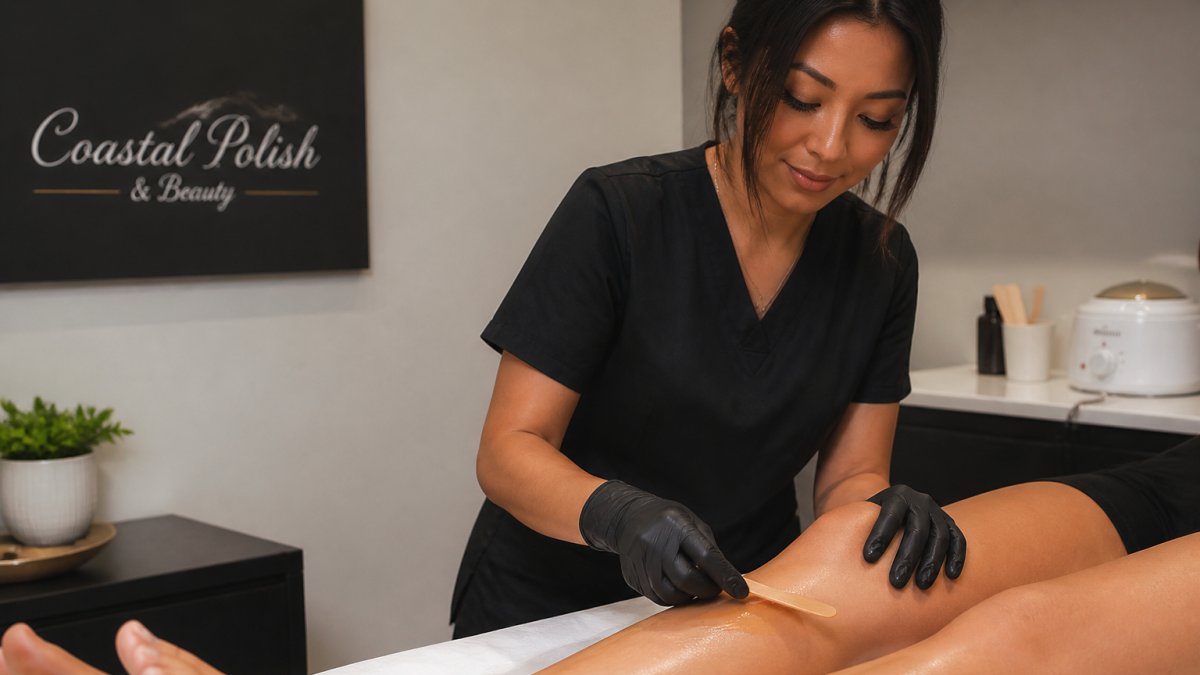
Hard wax adheres to hair rather than skin, making it gentler on the skin barrier and ideal for sensitive skin. It minimizes trauma to surrounding tissue and works best on thicker, coarser hair for facial waxing, underarms, and bikini areas.
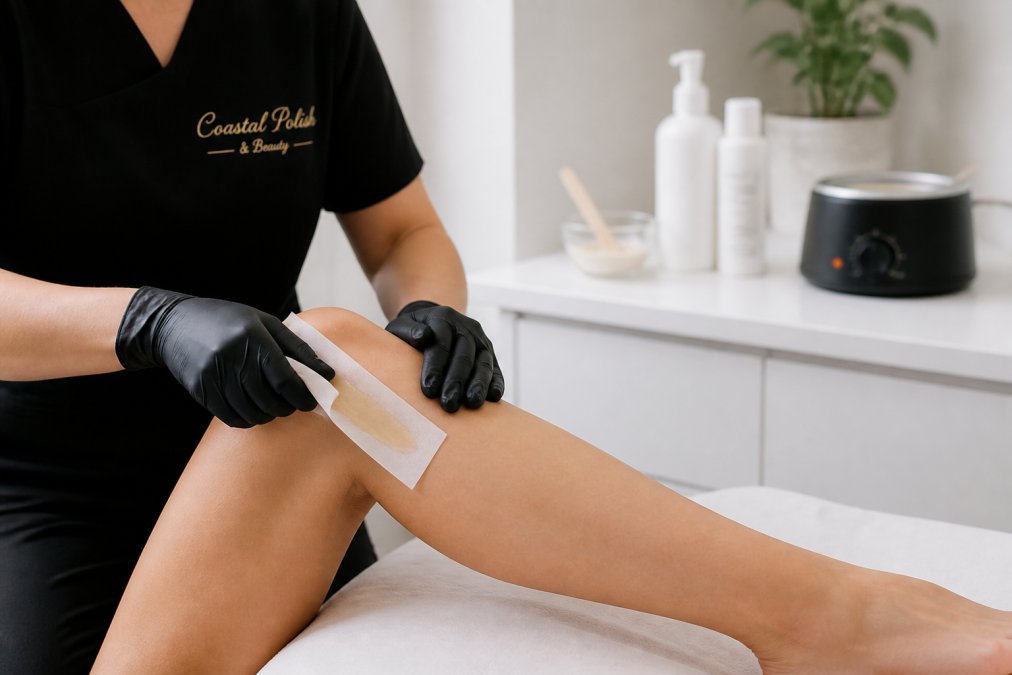
Soft wax adheres to both hair and skin, making it more efficient for large areas like legs but more aggressive during removal. For sensitive skin, soft wax should be a secondary choice, reserved for areas with very coarse hair where hard wax struggles to grip.
At Coastal Polish & Beauty, we prioritize hard wax formulations for clients with reactive skin. If you're choosing between the two, ask your technician about their hard wax options first.
Key Ingredients to Look For and Avoid
Ingredients to seek out:
- Aloe vera, reduces inflammation and cools irritated skin
- Witch hazel, a natural astringent that calms redness
- Chamomile extract, hypoallergenic and soothing
- Titanium dioxide, provides a gentle, protective barrier
- Lavender oil, antimicrobial and calming (patch test first)
Ingredients to avoid:
- Artificial fragrance, common irritant
- Parabens, potential allergen
- Sulfates, can disrupt the skin barrier
- Synthetic dyes, unnecessary and irritating
- High alcohol content, drying and inflammatory
Read the ingredient label or ask your salon directly. A reputable salon should be transparent about their wax composition.
How to Prevent Waxing Irritation
Strategic steps before and during your appointment can dramatically reduce post-waxing irritation.
Timing and Your Hormonal Cycle
Your hormonal cycle affects skin sensitivity significantly. Skin barrier function weakens during the luteal phase (the two weeks before menstruation), when estrogen and progesterone levels drop, increasing thermal sensitivity and inflammation risk.
Schedule your waxing appointment during the follicular phase, ideally in the week after your period ends. During this phase, estrogen levels rise, strengthening the skin barrier and improving resilience. Avoid waxing during the three days immediately before and after your period, when skin sensitivity peaks and pain perception increases.
If you have an irregular cycle or use hormonal birth control, track your symptoms instead of relying on calendar dates and book appointments during your more resilient window.
Managing Pain and Thermal Sensitivity
Communicate with your technician about your sensitivity level. A skilled professional adjusts wax temperature and removal speed based on your feedback. Wax that's too hot causes thermal burns; wax that's too cool doesn't adhere properly, requiring multiple applications.
Breathing techniques reduce pain perception during waxing. Take slow, deep breaths as the technician applies wax, hold your breath briefly during removal, then exhale. Apply a numbing cream 20 minutes before your appointment if pain is a significant concern. Over-the-counter products containing benzocaine or lidocaine are effective for most skin types.
Post-Waxing Skincare Routine for Sensitive Skin
The hours immediately after waxing are critical. Your skin barrier is temporarily compromised, and the wrong products or habits can trigger days of irritation.
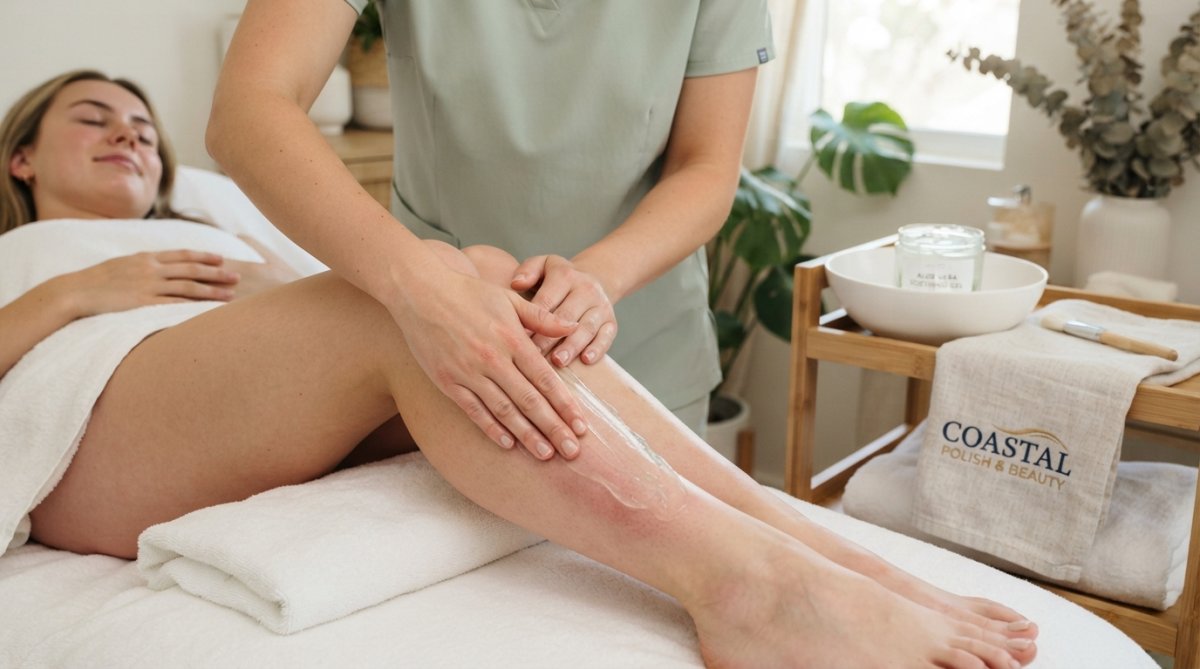
Soothing Ingredients and What to Apply
Apply a soothing product within 15 minutes of waxing while your skin is still warm and pores are open.
Best post-waxing ingredients:
- Aloe vera gel, cooling and anti-inflammatory
- Witch hazel, reduces redness without over-drying
- Centella asiatica (cica), strengthens skin barrier
- Hyaluronic acid, hydrates without heaviness
- Niacinamide, calms inflammation and supports barrier repair
Apply these products in order: first a cooling gel or hydrating serum, then a lightweight moisturizer, then a barrier-repair cream if needed. Skip makeup for at least 24 hours after waxing, as it traps bacteria and heat against freshly waxed skin.
Schedule and Appointment today for 10% Off your service →
For the first 48 hours after waxing, avoid active ingredients entirely, no retinoids, glycolic acid, salicylic acid, vitamin C, or benzoyl peroxide. Return to your regular routine only after redness has completely faded.
Clothing and Friction Management
Wear loose, breathable clothing for at least 48 hours after waxing. Tight jeans, leggings, or fitted underwear create friction and trap heat. Choose loose cotton clothing instead to allow air circulation.
For underarm waxing, avoid deodorant and antiperspirant for 24 hours. For bikini and leg waxing, avoid tight swimwear and athletic wear for at least 48 hours. Sleep on clean sheets the night of waxing to reduce bacteria and friction.
What to Avoid After Waxing
Avoid hot baths, saunas, steam rooms, and hot showers for at least 24 hours after waxing. Heat dilates pores and blood vessels, increasing redness and inflammation. Take cool or lukewarm showers instead.
Skip intense exercise and sweating for 48 hours after waxing. Sweat contains salt and bacteria that irritate freshly waxed skin. Light walking is fine, but avoid gym workouts, running, and hot yoga.
Don't apply sunscreen for at least 24 hours after waxing. Most sunscreens irritate compromised skin; wear protective clothing instead. After 24 hours, use a mineral sunscreen labeled for sensitive skin.
Avoid swimming in chlorinated pools or salt water for at least 48 hours. Don't use fragrance-based products for at least 48 hours. Avoid touching, rubbing, or scratching waxed areas for at least 24 hours; apply a cool compress if you feel itching instead.
Sensitive Skin Waxing at a Professional Salon
Professional salons offer advantages that at-home waxing can't match, especially for sensitive skin. When booking, tell your salon upfront that you have sensitive skin and ask about their wax formulations and hard wax options.
During your appointment, communicate continuously about wax temperature, pain levels, and any irritation developing. A professional adjusts their technique based on your feedback. Ask about sanitation practices, tools should be sterilized between clients, and disposable applicators should be used for wax application.
At Coastal Polish & Beauty, our commitment to a clean, safe environment extends to our waxing services. Our expert technicians understand that sensitive skin requires personalized attention and premium products. We prioritize your comfort and skin health using hard wax formulations and hypoallergenic ingredients designed for reactive skin.
After your appointment, ask your technician for specific aftercare recommendations. Book your next appointment during your optimal cycle window if possible. Consistent appointments with the same technician help them learn your skin's patterns and adjust accordingly.
Managing sensitive skin waxing requires thoughtful preparation, the right product choices, and strategic aftercare. The difference between irritation that lasts days and skin that recovers smoothly often comes down to these details. At Coastal Polish & Beauty, we understand that sensitive skin deserves expert care in a clean, welcoming environment. Our technicians specialize in personalized waxing techniques using premium, hypoallergenic formulations designed to keep your skin calm and comfortable. Book your appointment with us and experience the difference that attentive, professional care makes for your sensitive skin.
| Preparation Phase | Action | Timing |
|---|---|---|
| Exfoliation | Use gentle physical or chemical exfoliant | 2-3 days before |
| Hydration | Drink water consistently | Throughout week before |
| Avoid irritants | Skip retinoids, acids, active treatments | 48 hours before |
| Moisturize | Apply rich, hypoallergenic moisturizer | Night before |
| Day of appointment | Wear loose clothing, avoid caffeine/alcohol | Day of |
According to research on skin barrier function, dermatological studies on skin sensitivity, the skin barrier's resilience fluctuates based on hydration levels and hormonal changes. This supports the timing and preparation strategies outlined above.
The American Academy of Dermatology guidelines on post-procedure care emphasize avoiding active ingredients and heat exposure during the skin recovery window, which aligns with the 48-hour aftercare protocol discussed in this guide.
For those with reactive skin prone to folliculitis, clinical research on waxing-related infections shows that hard wax formulations combined with proper post-waxing hygiene significantly reduce infection risk compared to soft wax applications.
Frequently Asked Questions
What is the most gentle waxing method for sensitive skin?
Hard wax is generally gentler for sensitive skin than soft wax because it adheres to hair rather than skin, reducing pore dilation and irritation. Hard wax also allows for lower application temperatures, which minimizes thermal sensitivity. Soft wax requires higher heat and grips the skin, making it more likely to cause post-waxing redness and inflammation. For the most hypoallergenic experience, ask your technician about formulas with soothing ingredients like aloe vera and witch hazel, and ensure a patch test is performed 24 hours before your appointment.
How do I prevent ingrown hairs on sensitive skin?
Prevent ingrown hairs by exfoliating gently 2-3 days after waxing with a soft exfoliating glove or mild scrub, which removes dead skin cells that trap new hair growth. Avoid friction from tight clothing for 48 hours post-waxing, as pressure and sweat create conditions for folliculitis. Keep the area hydrated with fragrance-free moisturizer, and avoid caffeine and alcohol for 24 hours, as both increase inflammation and pore dilation. If you have a history of ingrown hairs, discuss this with your technician before waxing so they can recommend the best wax formula and post-care routine for your skin.
Should I exfoliate before or after a wax?
Exfoliate 1-2 days before waxing to remove dead skin cells and allow the wax to grip hair more effectively, reducing the number of passes needed. Do not exfoliate immediately before waxing, as this compromises your skin barrier and increases irritation risk. After waxing, wait at least 48 hours before exfoliating again. When you do exfoliate post-waxing, use only gentle methods like a soft cloth or mild chemical exfoliant with salicylic acid or glycolic acid at low concentrations. Aggressive exfoliation too soon can trigger inflammation and reactive skin responses.
What should I realistically expect during the first 48 hours after waxing sensitive skin?
Expect mild redness and warmth for 12-24 hours, which is normal as your skin barrier recovers. Some sensitivity to touch is common. Avoid hot showers, saunas, swimming, and intense exercise during this window, as heat and friction amplify inflammation. Apply soothing products like aloe vera gel or hydrating serums to calm the area. If redness persists beyond 48 hours, feels intensely hot, or develops into bumps or pustules, this may indicate folliculitis or an allergic reaction to the wax formula. Contact your salon or dermatologist if symptoms worsen.
This article was written using GrandRanker