 ultimate-guide
Signs of a Hygienic Nail Salon: What to Look For
Table of Contents
- Visual Cleanliness and Salon Environment
- Nail Salon Sterilization Requirements and Methods
- Single-Use Items and Tool Hygiene Standards
- Foot Basin and Pedicure Chair Sanitation
- Technician Hygiene and Professional Standards
- How to Sanitize Nail Tools at Home
- Ventilation, Chemical Safety, and State Board Compliance
- What to Do If You Suspect an Infection
- Frequently Asked Questions
Last Updated: August 31, 2026
Visual Cleanliness and Salon Environment
A truly hygienic nail salon maintains spotless floors, sanitized surfaces, and organized workstations where tools are visibly stored in clean containers. Nail stations should have clean, non-porous work surfaces with no visible dust, dried polish, or debris. Floors should be swept and mopped regularly throughout the day, and a hygienic salon will have clearly designated areas for clean tools, used tools awaiting sterilization, and chemicals in proper storage.
Biohazard waste, including used files and buffers, should be in a separate, clearly marked container. Single-use items should be stored in sealed packages, not sitting open on shelves. The waiting area matters too, magazines should be current and clean, seating sanitized between clients, and water stations spotless with no visible mold or mineral buildup.
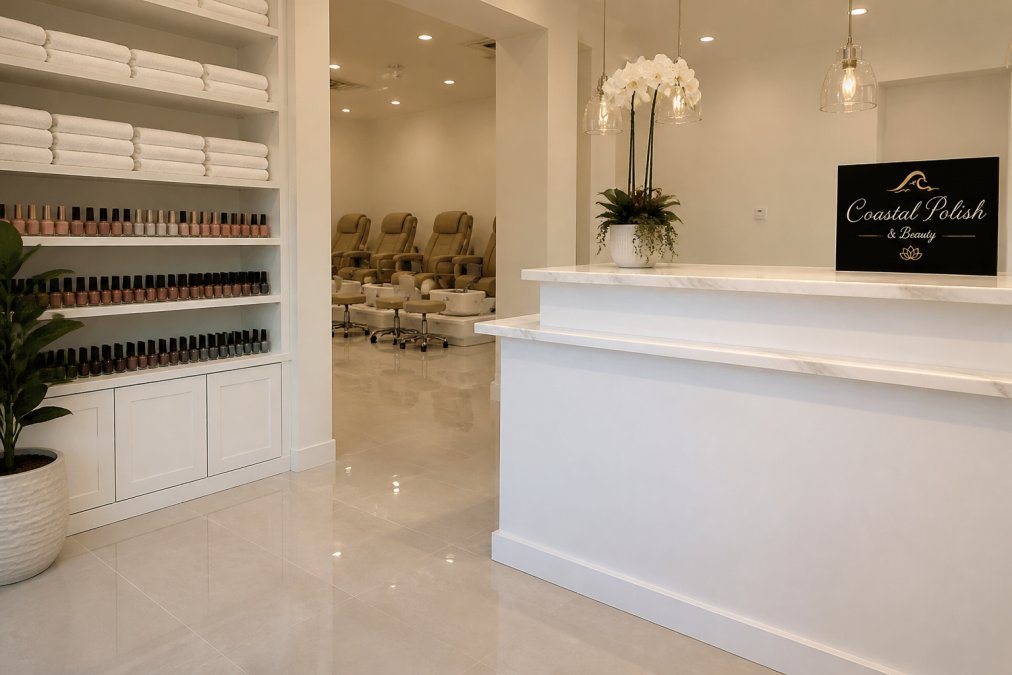
Ask yourself: Would you feel comfortable eating at this salon's reception desk? If the answer is no due to visible dirt or disorganization, that's a red flag.
Nail Salon Sterilization Requirements and Methods
Understanding how a salon sterilizes tools is essential to evaluating whether it meets actual health standards. There are two primary sterilization methods: autoclave sterilization and chemical disinfection.
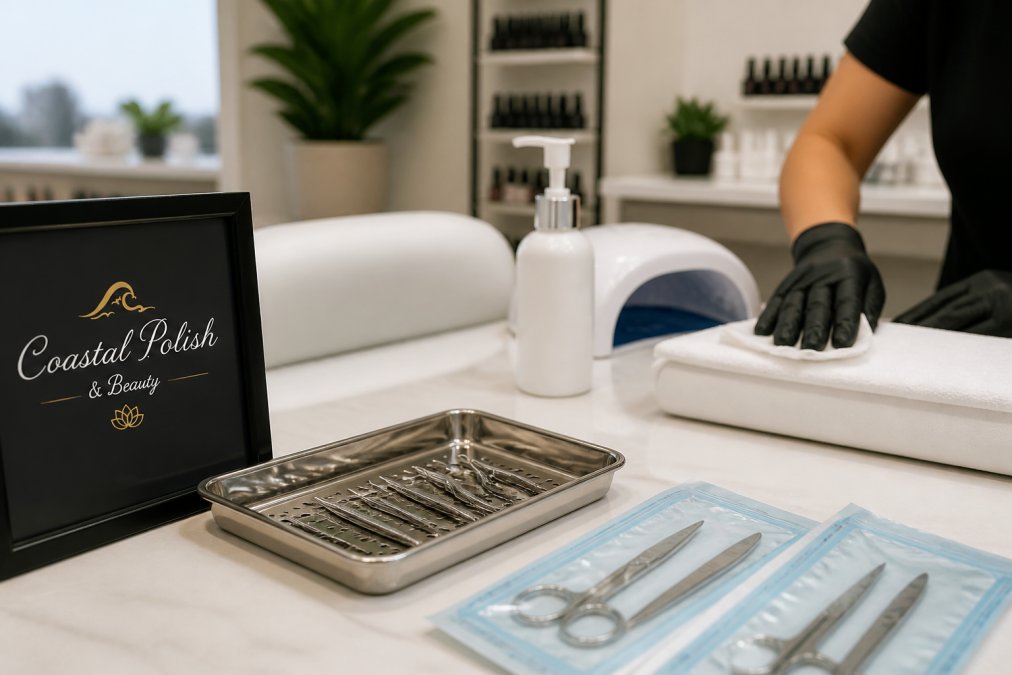
An autoclave is a pressurized steam sterilizer that kills all pathogens, including bacterial spores, through heat and moisture. Autoclaves reach temperatures around 250-270°F under pressure with cycle times of 15-30 minutes. Ask when it was last serviced and whether they run regular spore tests to verify it's working correctly, spore tests are the only way to confirm an autoclave is actually sterilizing.
Chemical disinfection uses hospital-grade disinfectants like glutaraldehyde or quaternary ammonium solutions to kill most pathogens. It's faster than autoclave sterilization but less comprehensive and doesn't reliably eliminate all bacterial spores. Many salons use this method for metal implements between clients, then store tools in a clean, sealed container.
Metal implements like cuticle nippers, pushers, and clippers can be autoclaved or chemically disinfected. Porous tools like nail files and buffers cannot be reliably sterilized once porous and should be single-use only.
Ask directly: "How do you sterilize your metal tools?" Listen for specific answers about autoclave cycles, chemical solutions, contact times, or spore testing. Vague responses are a warning sign.
Single-Use Items and Tool Hygiene Standards
The easiest way to prevent cross-contamination is to use items once and discard them. A hygienic nail salon uses single-use files, buffers, toe separators, and pumice stones, never reusing these items across clients.
How to Tell If Nail Files Are Reused
Nail files are porous by nature. Once a file contacts a nail, bacteria and fungi can lodge in the microscopic ridges. Chemical disinfection cannot reliably remove these pathogens. The only safe option is single-use.
When you arrive for your appointment, watch what happens when the technician approaches your station. Do they pull a fresh file from a sealed package or a clean, sealed container? Or do they grab a file from a jar or drawer where multiple files are stored together? A hygienic nail salon opens a new file in front of you, you should see the package or hear the seal break.
The same applies to buffers, toe separators, pumice stones, and emery boards. If a salon advertises reusable tools that are "sanitized between clients," be cautious. Sanitizing is not the same as sterilizing, and porous materials cannot be reliably sterilized.
Foot Basin and Pedicure Chair Sanitation
Foot basins and pedicure chairs are high-contact surfaces that touch multiple clients daily. Improper sanitation is a direct pathway for fungal and bacterial infections. A hygienic nail salon has a documented process for cleaning these items between every single client.
Traditional foot basins should be emptied, scrubbed with a brush to remove all debris and biofilm, rinsed thoroughly, and then filled with fresh water and hospital-grade disinfectant. This process should take 5-10 minutes per client. Ask the salon how long they spend cleaning basins, if the answer is "a few minutes," that's not enough time.
Pipe-less systems circulate water through internal pipes rather than sitting in a static basin. They require regular flushing with disinfectant solutions to kill pathogens inside the pipes. Ask whether the salon uses a documented cleaning protocol for their specific basin system and how often they perform deep cleaning.
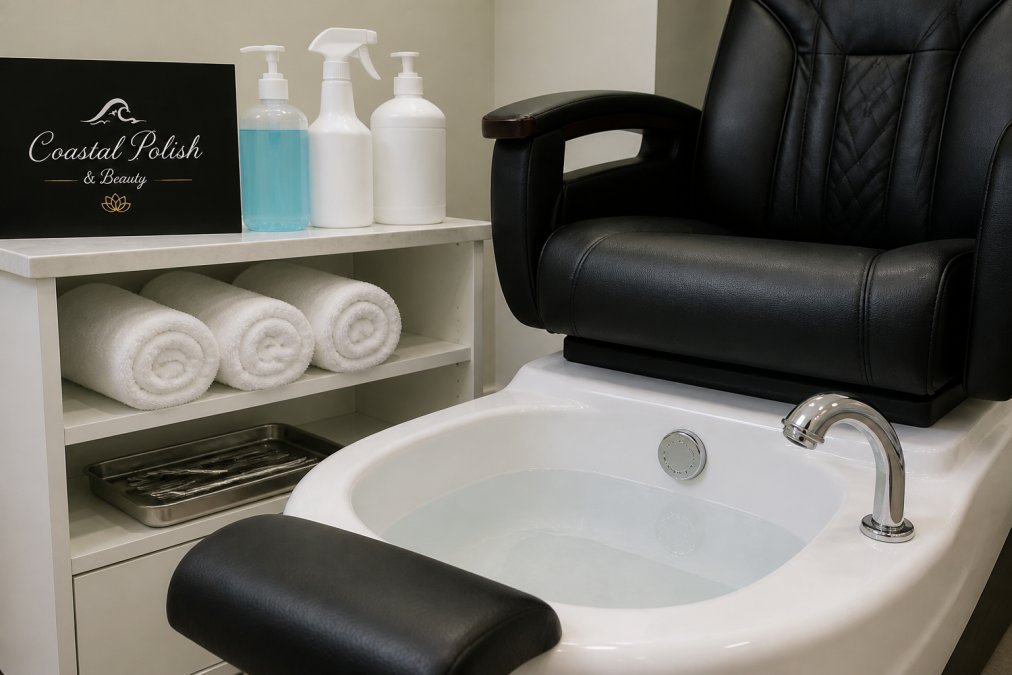
The pedicure chair itself, cushions, armrests, and footrest, should be wiped down with disinfectant between clients. Disposable chair covers are preferable because they eliminate contamination risk from the chair's fabric or crevices.
Watch the technician's process when you arrive. Do they spend time cleaning the basin before your service? Do they use fresh water or refill the same basin? A hygienic nail salon makes this process transparent and unhurried.
Technician Hygiene and Professional Standards
The technician's personal hygiene directly impacts your safety. Technicians should wear fresh gloves for each client and change gloves between different services on the same client. Gloves should be latex-free or clearly labeled if latex is used.
Hand washing is non-negotiable. Technicians should wash their hands before putting on fresh gloves for each client. A hygienic nail salon has a visible handwashing station at or near the technician's workstation.
Technicians should have clean, well-maintained nails of their own. Long, chipped, or dirty nails on a technician are a red flag. Their hands should be visibly clean without visible dirt under the nails or on the skin.
Schedule and Appointment today for 10% Off your service →
Professional standards also include appropriate PPE. Technicians should wear gloves and consider wearing a mask, especially when working in close proximity to your face. A hygienic nail salon has documented standards and holds technicians accountable.
How to Sanitize Nail Tools at Home
Even if you visit a hygienic nail salon, maintaining your own tools at home prevents cross-contamination between visits.
For metal tools (cuticle nippers, pushers, clippers), wash them with soap and hot water immediately after use. Dry thoroughly, then soak in a hospital-grade disinfectant solution for the contact time specified on the label, typically 10-15 minutes. Alternatively, use rubbing alcohol (70% isopropyl alcohol) for at least 10 minutes. Rinse, dry completely, and store in a clean, sealed container.
For porous tools (nail files, buffers, pumice stones), the safest approach is replacement rather than sanitization. Discard files and buffers after a few uses and replace them with new ones. Replace pumice stones monthly or whenever they show visible wear.
Store all tools in a clean, dry container with a lid. Never store wet tools in a sealed container, as moisture promotes fungal growth. If you share nail tools with family members, sanitize between users. Never share tools if anyone has a known nail infection, fungal infection, or open wounds near the nail area.
Ventilation, Chemical Safety, and State Board Compliance
Nail salons use numerous chemicals that release fumes. Proper ventilation protects both technicians and clients from chemical exposure and respiratory irritation.
Look for visible ventilation systems. Nail stations should have individual ventilation hoods or fans that draw fumes away from the breathing zone. The salon should have general ventilation and air exchange systems that pull air out and replace it with fresh outside air.
Ask about ventilation maintenance. Filters should be replaced regularly (typically monthly or quarterly). Ductwork should be cleaned to prevent buildup of chemical residue. A hygienic nail salon can tell you when filters were last changed and when the system was last serviced.
Chemical safety includes proper storage and handling. Polishes, removers, acrylics, and gels should be stored in clearly labeled, sealed containers away from heat and direct sunlight. Safety Data Sheets (SDS) for all chemicals should be available on-site and accessible to staff. If a salon cannot produce SDS sheets, that's a serious compliance issue.
State boards regulate nail salons and require specific sanitization, ventilation, and safety standards. You can verify a salon's licensing and complaint history by searching your state board's website. A hygienic nail salon displays its license prominently and welcomes questions about compliance.
What to Do If You Suspect an Infection
If you develop signs of a nail infection after a salon visit, act quickly. Fungal infections typically appear as discoloration, white, yellow, or brown spots, on the nail plate. The nail may become thick, brittle, or crumbly. Bacterial infections are less common but more urgent, with signs including redness, swelling, warmth, or pus around the nail or nail bed.
Document the timing of your salon visit and the specific symptoms you develop. Take photos of any visible changes. Report suspected infections to your state's nail salon licensing board. Provide the salon's name, location, date of visit, and description of symptoms. The board may investigate and take action if violations are confirmed.
If you contracted an infection at a salon, you may be entitled to compensation for medical treatment. Document all medical visits, test results, and treatment costs. Some salons carry liability insurance that covers infection claims.
Prevention is always easier than treatment. Choosing a hygienic nail salon, one that demonstrates visible cleanliness, documented sterilization practices, single-use items, proper ventilation, and compliance with state board standards, dramatically reduces your infection risk.
At Coastal Polish & Beauty, we understand that hygiene and safety are non-negotiable. Our newly renovated salon meets rigorous sterilization standards, uses single-use items for all porous materials, maintains professional-grade ventilation, and employs expert technicians trained in proper sanitation protocols. Every client receives our full attention in a clean, safe environment designed for your peace of mind. When you choose a salon that prioritizes your health, you're choosing to relax without worry. Book Now with Coastal Polish & Beauty and experience the difference that genuine commitment to hygiene makes.
Frequently Asked Questions
Q: How do I know if a nail salon is truly sanitary?
A: A hygienic nail salon displays multiple visible signs: tools are stored in sealed containers, technicians change gloves between clients, foot basins are cleaned visibly between uses, and the space smells fresh without overwhelming chemical odors. Ask to see their sterilization equipment and ask how they sanitize implements. Reputable salons welcome these questions and can explain their sterilization methods, including whether they use an autoclave or hospital-grade disinfectants. Visual cleanliness, organized storage, and technician hygiene are the quickest indicators of overall sanitation standards.
Q: What should I look for in nail salon sterilization requirements?
A: State boards regulate nail salon sterilization requirements, and standards vary by state. Most require either autoclave sterilization or immersion in hospital-grade disinfectants like Barbicide for a minimum contact time (typically 10-15 minutes). Ask the salon which method they use and how long they follow the contact time. Metal implements like nippers, pushers, and cuticle tools should never be reused without proper sterilization. Reputable salons can show you their state board license and explain their specific sterilization protocol. You can verify your state's requirements by contacting your state board of cosmetology.
Q: How can I tell if nail files are reused instead of single-use?
A: Nail files cannot be effectively sterilized and should always be single-use. Watch whether the technician opens a new file from a sealed package for your service. If files are pulled from a jar or container and used on multiple clients, that's a red flag. Single-use files are inexpensive and a sign of a hygienic salon. Before your appointment, ask directly: 'Do you use single-use files for each client?' A quality salon will confirm they do and may even show you their unopened supply. If a technician reuses files, cross-contamination risk increases significantly.
Q: What are the signs of an infection from a nail salon?
A: Infections from nail salons typically appear within days to weeks and include redness, swelling, warmth, or pus around the nail or cuticle area. Fungal infections cause discoloration, thickening, or crumbling of the nail itself and develop more slowly over weeks. If you notice any of these symptoms after a salon visit, stop using nail polish, keep the area clean and dry, and contact a dermatologist. Do not return to that salon. Bacterial infections may require antibiotics, while fungal infections need antifungal treatment. Prompt medical attention prevents complications and helps identify whether the salon's practices were the cause.
This article was written using GrandRanker