 ultimate-guide
What Is Included in a Luxury Manicure Service?
Table of Contents
- What Is Included in a Luxury Manicure Service?
- Luxury Manicure vs Standard Manicure: Key Differences
- Essential Steps in a Premium Nail Treatment
- Benefits of Paraffin Wax for Hands
- How Long Does a Luxury Manicure Take?
- Nail Salon Etiquette and Tipping: What to Expect
- Safety, Contraindications, and Ingredient Transparency
- Frequently Asked Questions
Last Updated: September 26, 2026
What Is Included in a Luxury Manicure Service?
A luxury manicure is a premium nail service that goes beyond basic polish application to include exfoliation, hydration treatments, massage therapy, aromatherapy, and extended relaxation time in a spa-like setting. At Coastal Polish & Beauty, we understand that clients don't just want polished nails. They want an hour that feels like it belongs to them.
Luxury Manicure vs Standard Manicure: Key Differences
The core difference comes down to time, technique, and treatment depth. A standard manicure typically runs 30 to 45 minutes and focuses on shaping, cuticle care, and polish. A luxury manicure extends to 60 to 90 minutes and adds therapeutic elements: exfoliation, moisturizing masks, extended hand massage, and often paraffin or aromatherapy.
| Feature | Standard Manicure | Luxury Manicure |
|---|---|---|
| Duration | 30-45 minutes | 60-90 minutes |
| Exfoliation | Rarely included | Always included |
| Hand massage | Brief or skipped | Extended, 10-15 minutes |
| Moisturizing mask | Not offered | Standard |
| Aromatherapy | None | Often included |
| Paraffin treatment | Add-on cost | Frequently included |
| Polish options | Basic lacquer | Gel, shellac, premium lacquer |
Essential Steps in a Premium Nail Treatment
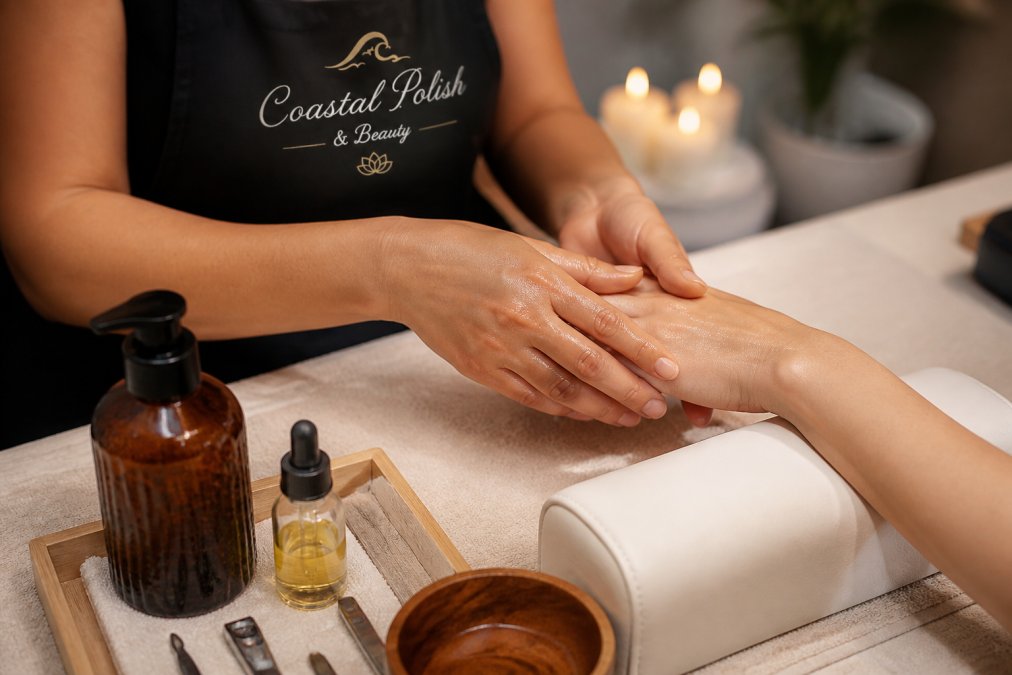
A premium nail treatment follows a deliberate sequence, and each step prepares the skin and nail plate for the next. What separates a luxury service from a standard one isn't the list of steps, it's the time and technique invested in each.
-
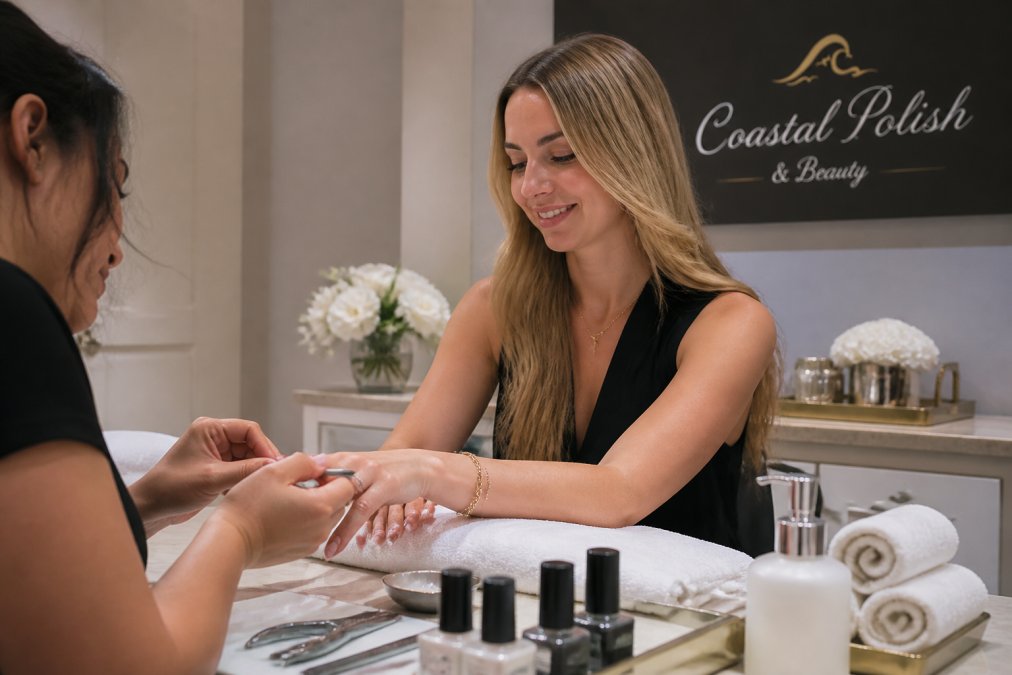
Consultation and assessment (5-10 minutes). Your technician reviews nail condition, discusses shape preferences, and flags concerns like peeling, ridges, or sensitivity. This is when you disclose allergies, skin conditions, or recent treatments, a thorough consultation is the best predictor of a service that fits you rather than a template.
-
Sanitization and prep. Hands are cleansed, and the technician sanitizes their own hands and the work surface. Tools should come out of a sealed sterilization pouch or UV cabinet in front of you.
-
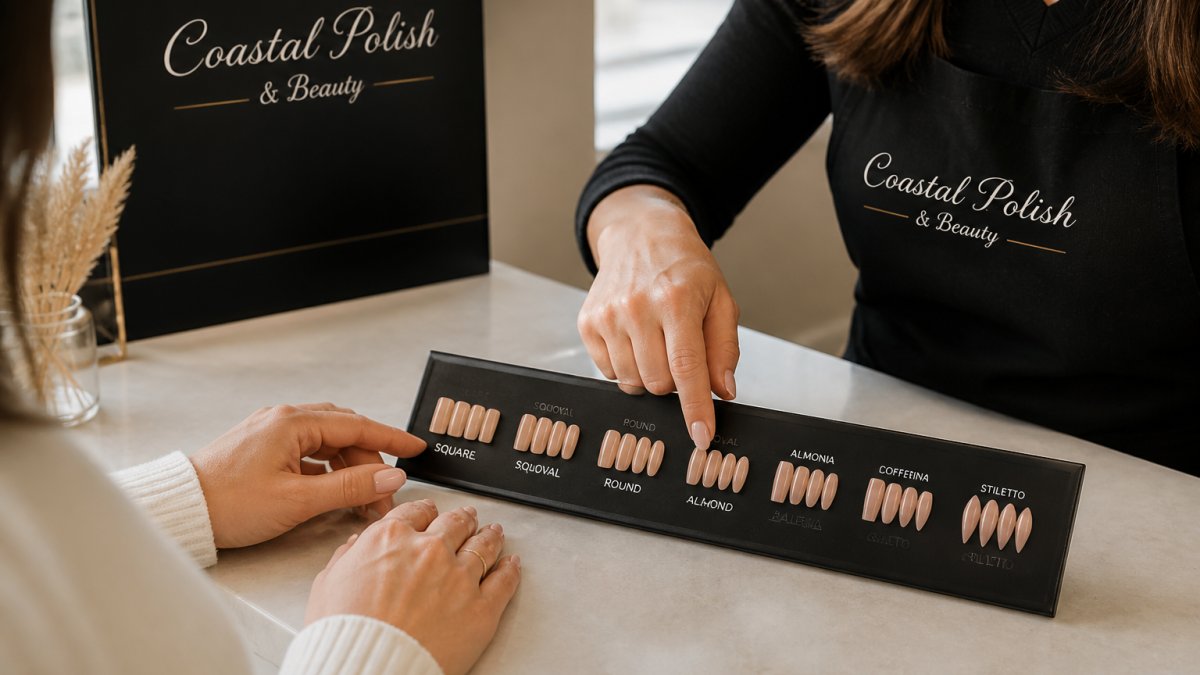
Shaping and cuticle care (10-15 minutes). Nails are filed in one direction to your chosen shape, square, squoval, oval, almond, or coffin, to avoid splitting the nail plate. Cuticles are gently pushed back, and only true hangnails or dead tissue are trimmed. Aggressive cuticle cutting is a red flag: the cuticle seals the nail matrix against infection.
-
Exfoliation (5-10 minutes). A sugar, salt, or enzyme scrub is worked into the hands and forearms in circular motions. Physical scrubs slough off dead corneocytes mechanically; enzyme scrubs (papain, bromelain, or fruit acids) dissolve the bonds holding dead cells together. Either way, the goal is to clear the surface so later moisturizers penetrate rather than sit on dead skin.
-
Massage with oil or serum (10-15 minutes). This is the step luxury services stretch and standard services skip. A skilled technician works from the fingertips up the forearm using effleurage (long, gliding strokes), petrissage (kneading), and friction techniques. Massage increases local blood flow, delivering oxygen and nutrients to the skin and nail matrix, and stimulates lymphatic drainage, reducing puffiness around the knuckles and wrists.
-
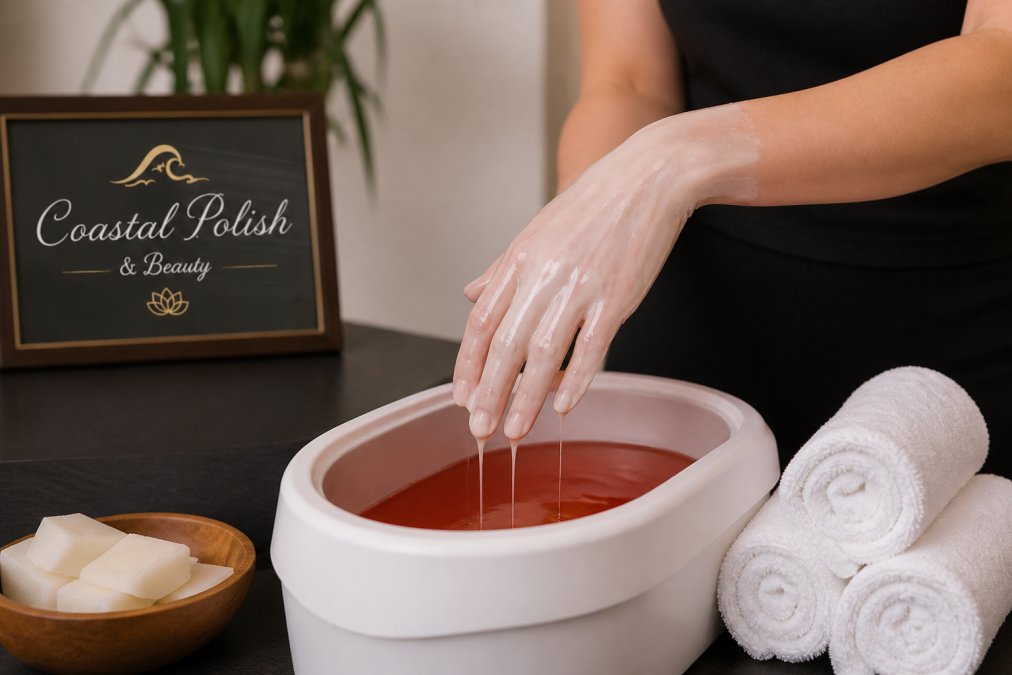
Moisturizing mask or paraffin treatment (10-20 minutes). Hands are coated in a rich mask, often shea butter, glycerin, hyaluronic acid, or ceramides, then wrapped in warm towels, plastic, or paraffin. The occlusion is the point: trapping heat and moisture forces ingredients into the upper layers of skin instead of letting them evaporate. Paraffin's slow release of heat as the wax cools is what makes it feel therapeutic rather than merely moisturizing.
-
Polish application (15-30 minutes). Base coat, color, and top coat for traditional lacquer; or gel, shellac, or builder gel cured under a UV or LED lamp. Gel and shellac add 10-15 minutes of curing but typically last two to three weeks without chipping, changing how often you need to return.
-
Finishing oil and aftercare guidance (5 minutes). Cuticle oil, usually jojoba, vitamin E, or a blend, seals the service and keeps the nail plate flexible so it bends rather than cracks. A good technician explains how often to reapply (daily, ideally) and what to avoid (harsh acetone, using nails as tools).
Exfoliation, Hydration, and the Moisturizing Mask
These three steps work as a system: exfoliation clears the surface, hydration replenishes moisture, and the mask seals it in.
Aromatherapy and the Spa Atmosphere
Aromatherapy is the sensory layer of a luxury manicure. Essential oils, warm towels, dimmed lighting, and quiet music shift the appointment from a task into a genuine pause. Scents often tie to the treatment: lavender for relaxation, citrus for energy, eucalyptus for renewal.
Benefits of Paraffin Wax for Hands
Paraffin wax treatment is one of the most requested upgrades in premium nail care. Warm wax is applied to the hands, then wrapped in plastic and a towel or mitt. As it cools, it releases heat into the skin, opening pores and helping moisturizers absorb more deeply.
The benefits are straightforward:
Schedule and Appointment today for 10% Off your service →
- Intense hydration for dry, cracked, or weathered skin
- Therapeutic relief for stiff joints and tired hands
- Improved circulation and skin rejuvenation
- Softer cuticles and smoother nail beds
How Long Does a Luxury Manicure Take?
A luxury manicure typically takes 60 to 90 minutes. A service with paraffin, extended massage, and gel polish runs closer to 90 minutes; a simplified luxury service without wax may finish in about an hour.
Nail Salon Etiquette and Tipping: What to Expect
Standard tipping for nail services in the United States runs 15% to 20% of the service total; for luxury services with extended massage or specialized treatments, 20% is the common baseline. Cash is always appreciated, though most salons offer card or digital tipping at checkout.
A few etiquette points worth knowing:
- Arrive 5 to 10 minutes early to settle in rather than rushing the start.
- Speak up about preferences, pressure, or sensitivity before the service begins.
- Avoid phone calls during massage or mask steps; the quiet is part of what you're paying for.
- Reschedule rather than cancel late when possible, since technicians reserve that time for you.
Safety, Contraindications, and Ingredient Transparency
Safety in premium nail care comes down to three things: sanitation, ingredient disclosure, and honest screening for contraindications. This matters because the treatments that make a luxury service feel indulgent, heat, massage, essential oils, extended skin contact, are also the ones most likely to cause a reaction in the wrong client.
Sanitation: What to Look For
Sanitation is non-negotiable. Tools should be disinfected between every client, files and buffers should be single-use or properly sterilized, and technicians should wash hands before and after each service. Metal implements should be cleaned, then sterilized in an autoclave or hospital-grade UV cabinet, not just wiped with alcohol. Porous items (emery boards, buffer blocks, orange sticks) can't be truly sterilized and should be discarded or given to the client.
Ingredient Transparency: The Labels That Matter
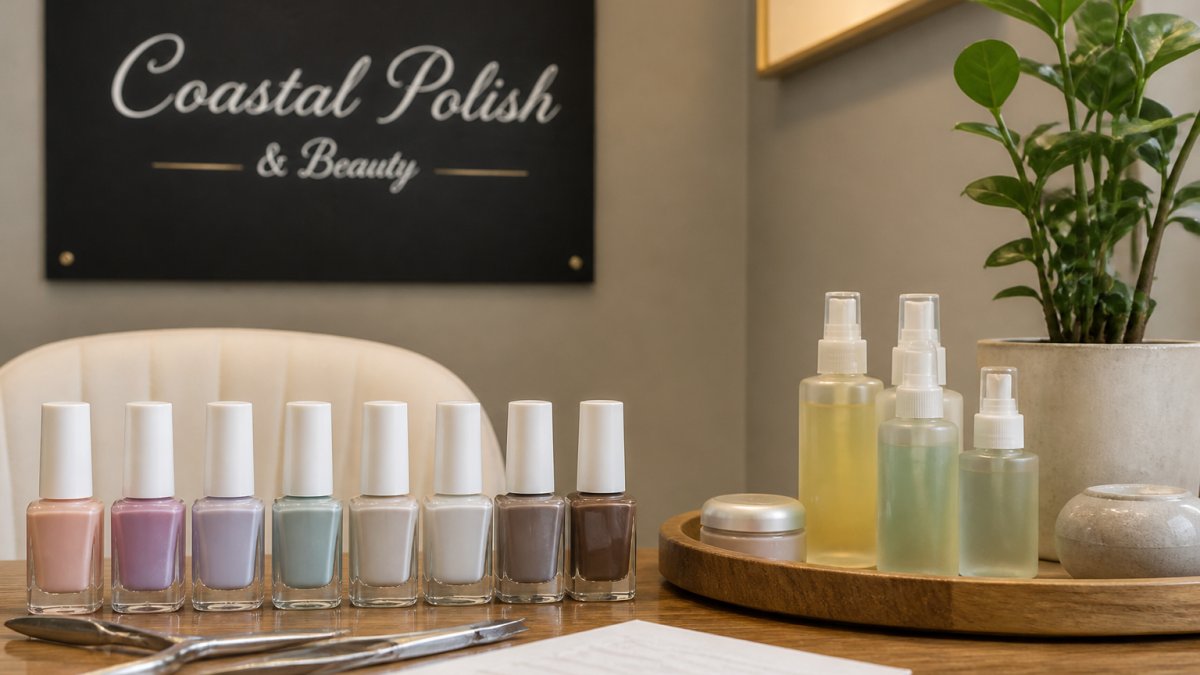
Ingredient transparency matters for clients with sensitive skin or allergies, and it's also a quality signal. Ask what's in the exfoliant, mask, and massage oil. Quality salons keep ingredient lists available and will substitute products when needed.
A few label terms worth knowing:
- "10-free" or "12-free" polish. These formulas exclude common irritants like toluene, formaldehyde, formaldehyde resin, camphor, dibutyl phthalate (DBP), xylene, ethyl tosylamide, and triphenyl phosphate. The exact list varies by brand, so ask which ingredients a specific polish excludes rather than trusting the number.
- Vegan and cruelty-free. Vegan means no animal-derived ingredients (which can include carmine, guanine, and some beeswax-based formulas); cruelty-free means no animal testing. A polish can be one without the other.
- Essential oil concentration. Aromatherapy oils are potent. Citrus oils (bergamot, lemon, lime) are phototoxic, they can cause burns or hyperpigmentation if skin is exposed to UV light afterward. After a citrus oil massage, keep your hands out of direct sun for the rest of the day.
- Fragrance vs. essential oils. "Fragrance" on a label is a catch-all that can hide dozens of undisclosed compounds. If you have known sensitivities, ask for a product that lists its scent components individually.
Contraindications: When to Skip an Add-On
Contraindications are health factors that make a specific treatment inadvisable for a specific person. Disclose these during consultation, a skilled technician will adjust the service rather than risk irritation.
- Active skin infections, cuts, or open wounds on the hands. Any break in the skin is a route for bacteria. Working over it, especially with shared tools or warm water, risks spreading infection. Reschedule.
- Allergies to specific oils, fragrances, or wax ingredients. Patch-test new products on the inner wrist 24 hours before a full service if you have a history of contact dermatitis.
- Heat-sensitive conditions and paraffin. Paraffin wax is applied warm and generally well tolerated, but it isn't appropriate for clients with certain circulatory conditions, active eczema flare-ups, or neuropathy that reduces sensation in the hands. If you can't reliably feel heat, you can't tell a technician the wax is too hot.
- Recent chemical peels, laser treatments, or waxing on the hands. The skin barrier is compromised for days to weeks afterward. Exfoliation and massage can aggravate it.
- Diabetes, psoriasis, or eczema. Not automatic disqualifiers, but they warrant a conversation. A trained technician will adjust pressure, avoid aggressive cuticle work, and choose fragrance-free products.
- Pregnancy. Most luxury manicure steps are fine, but some essential oils (rosemary, sage, wintergreen) are traditionally avoided during pregnancy. Ask for an unscented or pregnancy-safe option.
Questions to Ask Before You Book
To evaluate a salon's safety and ingredient standards before you sit down, these four questions tell you more than any website copy:
- How are metal tools sterilized, and are files single-use?
- Can I see the ingredient list for the mask and massage oil?
- Do you have fragrance-free or 10-free options?
- What's your policy if I have a reaction during or after the service?
Frequently Asked Questions
What is the difference between a regular manicure and a luxury manicure?
A standard manicure covers the basics: shaping, cuticle trimming, filing, and polish. A luxury manicure adds extended cuticle care, exfoliation, a moisturizing mask, hand massage, and often paraffin wax or aromatherapy. The focus shifts from quick maintenance to nail health and relaxation, with a longer appointment and a more attentive, personalized approach.
Are paraffin wax treatments standard in luxury manicures?
They are common but not universal. Paraffin wax is often offered as an upgrade or included in higher-tier packages. The benefits of paraffin wax for hands include deep hydration, improved circulation, and relief for dry or stiff joints. If it matters to you, ask whether it is part of the base service or an add-on before you book.
How long does a luxury manicure service typically last?
Most luxury manicures run 60 to 90 minutes, compared with 30 to 45 minutes for a standard service. The extra time goes to exfoliation, masks, massage, and a slower polish application. If you are booking around a lunch break, mention your time limit when you schedule so the technician can pace the service.
How much should you tip for a luxury manicure?
Tipping etiquette for nail services generally follows 15 to 20 percent of the service total, with 20 percent being standard for excellent work in a premium setting. For add-ons like paraffin wax or a hot stone massage, tip on the full amount. Cash is always appreciated, though many salons now offer card or app-based tipping at checkout.
What specific treatments are included in a luxury manicure?
Expect cuticle care, nail plate buffing, exfoliation, a moisturizing mask, hand massage, and a hot towel wrap. Many luxury manicures also include aromatherapy, serum infusion, paraffin treatment, and a longer-lasting finish like gel or shellac. The exact menu varies, so ask for the service breakdown before booking.
How does a luxury manicure differ from a standard nail service?
The difference is depth, not just polish. A standard service focuses on shaping and color. A luxury manicure treats the whole hand: skin rejuvenation, hydration, therapeutic relief, and a sensory experience designed around relaxation. It also typically uses higher-end products and allows more one-on-one time with the technician.