 ultimate-guide
How to Choose the Right Nail Shape for Your Hands
Table of Contents
- Why Nail Shape Matters More Than You Think
- The 7 Most Popular Nail Shapes Explained
- How to Choose Based on Finger Length and Nail Bed Width
- Nail Shape Guide for Beginners: Skin Tone, Ergonomics, and Transitions
- How to File Nails at Home Without Damaging Your Natural Nails
- Maintenance and Durability by Shape
- Conclusion: Finding Your Shape
- Frequently Asked Questions
Last Updated: October 5, 2026
Why Nail Shape Matters More Than You Think
Choosing the right nail shape is the single most effective way to flatter your hands without changing a thing about your natural nails. The right silhouette can make fingers look longer, slim the hands, and bring a manicure into balance. The wrong one does the opposite.
Most people default to whatever shape is trending, then wonder why their hands look stubby or their polish chips at the corners. The fix starts with two measurements you can take in a minute: finger length and nail bed width.
How Nail Shape Changes Visual Proportion
Nail shape is the outline of the free edge, and that outline controls visual proportion. A tapered tip draws the eye upward and elongates; a wide, flat tip shortens. Geometric balance matters here: the width of the tip should relate to the width of your nail bed, not fight it. When the tip is narrower than the bed, fingers read longer. When it's wider, the hand reads broader. That single rule explains most of why a shape looks right on one person and wrong on another.
The 7 Most Popular Nail Shapes Explained
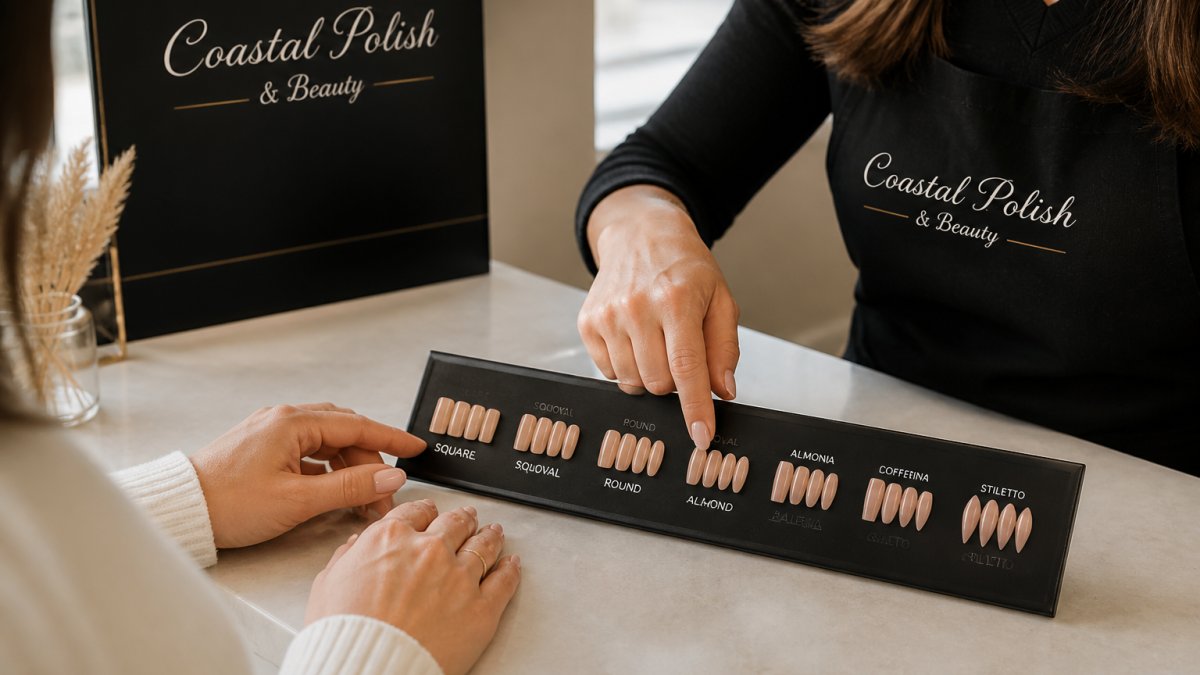
Seven shapes cover almost every request, and each one suits a different hand. Here's how they break down by silhouette, who they flatter most, and what each one actually demands of your natural nail.
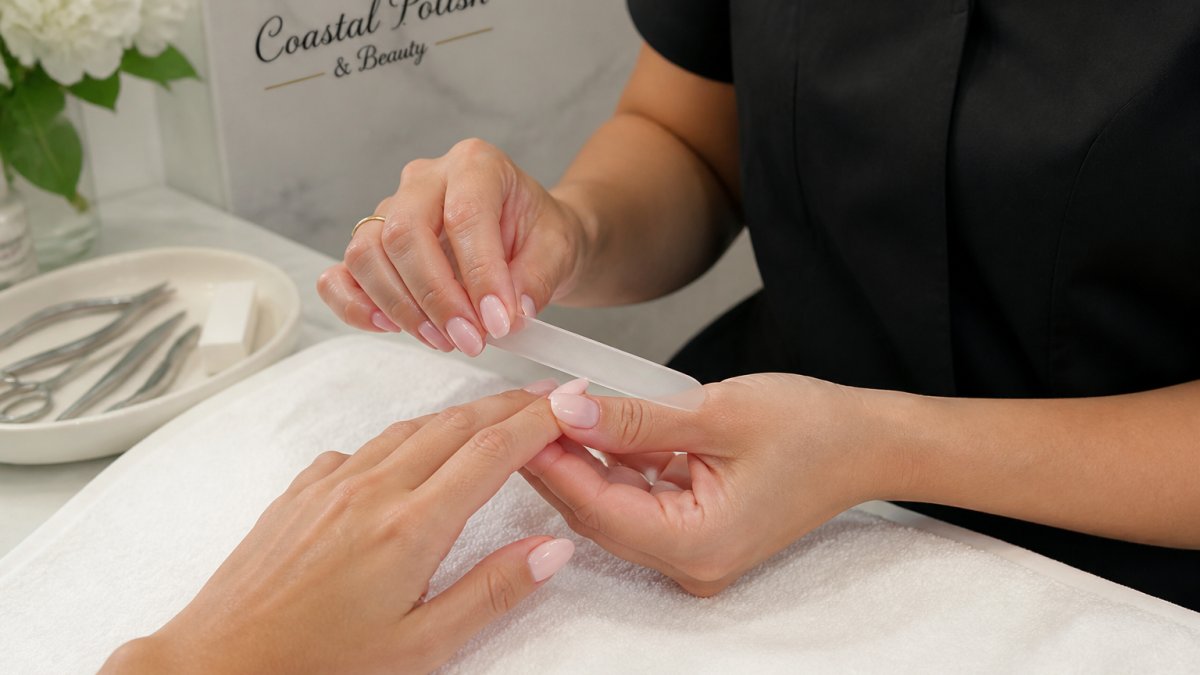
Round, Oval, and Squoval
Round follows the natural curve of your fingertip, with a soft, even edge and no corners.
Oval is round's elongated cousin: longer than it is wide, with tapered sidewalls and a gently rounded tip. Because the sides narrow as they move toward the tip, oval draws the eye upward and elongates short fingers beautifully.
Squoval blends a straight sidewall with rounded corners.
Square, Almond, Coffin, and Stiletto
Square has straight sides and a flat tip with sharp corners. It reads modern and strong, and it's the most demanding to maintain because those corners catch on everything, zippers, keyboards, car doors.
Almond tapers to a soft point, elongating the finger. It's elegant but needs length to work: the taper has to happen gradually, so a short almond just looks like a lopsided oval.
Coffin, also called ballerina, is a tapered square with a flat tip.
Stiletto narrows to a sharp point.
| Shape | Best For | Maintenance Level | Works on Natural Nails |
|---|---|---|---|
| Round | Active lifestyles, short beds | Low | Yes |
| Oval | Short fingers, elongation | Low | Yes |
| Squoval | Square lovers wanting softness | Low-medium | Yes |
| Square | Strong, modern look | Medium | Yes |
| Almond | Long, elegant fingers | Medium | With length |
| Coffin | Statement manicures | High | Enhancements only |
| Stiletto | Drama, special occasions | Very high | Enhancements only |
How Shape Affects Polish Color Impact
Most shape guides stop at geometry, but shape changes how a polish color reads on your hand. A narrow, tapered shape like almond or stiletto concentrates color into a smaller surface area, which makes deep, saturated shades, burgundy, navy, black cherry, look richer and more deliberate.
That's why the same red polish can look elegant on an almond nail and loud on a square one. If you love a bold color, a tapered shape will tame it; if you love a soft nude, a wider shape gives it more presence.
How to Choose Based on Finger Length and Nail Bed Width
The best nail shape for your hands comes down to matching the tip width to your nail bed and the silhouette to your finger length. Measure both, then apply these rules.
Best Nail Shape for Short Fingers
If your fingers are on the shorter side, oval and almond are your best allies. Both taper inward, which creates the illusion of length and slims the hands.
Schedule and Appointment today for 10% Off your service →
For longer fingers, you have more freedom. Square and squoval add width and balance a long, slender hand. Coffin and stiletto work too, though they demand more upkeep.
Nail bed width matters just as much. A narrow bed suits a tapered shape; a wide bed benefits from a squoval or square that distributes width evenly. If your nail plate is wide and short, oval gives you the most flattering proportion.
Nail Shape Guide for Beginners: Skin Tone, Ergonomics, and Transitions
Three things most shape guides skip: how your skin tone interacts with the shape, how the shape performs in daily tasks, and how to move between shapes without wrecking your nails. This section goes deeper on all three, because they're the difference between a shape that looks good in a photo and one that survives your actual week.
Skin Tone and Shape
Shape itself doesn't change with skin tone, but the polish you pair with it does, and shape changes how much of that color you see. Cool undertones tend to look best in blue-based reds and berry tones, while warm undertones suit corals, peaches, and warm nudes. On a narrow, tapered shape, those colors concentrate and read more intensely; on a wide, flat shape, they spread out and read softer. Shape the nail first, then choose color to complement.
Ergonomics: Matching Shape to How You Actually Use Your Hands
This is where practical reality wins, and it's the part most guides skip entirely. The shape you choose determines how your nails interact with the objects you touch all day, and the wrong one turns a manicure into a liability.
- Typing and desk work. Round and squoval are the only shapes that reliably survive a keyboard. Square corners catch between keys, and almond tips hit the space bar at an angle that chips the tip. Keep the free edge short, under about 3 millimeters, and round the tip corners even if you keep straight sides.
- Medical, dental, and food-service work. Many employers in these fields require short, unpolished or lightly polished nails for infection-control reasons, and gloves tear on sharp corners. Round or squoval at minimal length is the practical choice; almond and stiletto are effectively off the table because they puncture gloves.
- Manual labor, trades, and gym work. Grip strength and impact are the enemies here. Round is the most impact-resistant shape because it has no corners to catch and no point to concentrate stress. If you lift weights, keep the free edge short and avoid coffin and stiletto entirely, the flat or pointed tip takes the load directly.
- Childcare and pet care. Constant washing, gripping, and unexpected snags. Squoval gives you a slightly more polished look than round while still resisting the corner catches that break square nails.
- Service and client-facing work. If your hands are visible in handshakes, presentations, or on camera, oval and almond photograph longest and most elegant, but they need enough length to read correctly, which means more maintenance between appointments.
The pattern across all of these: the more your hands do, the rounder and shorter your shape should be. Aesthetics and function aren't opposites here, a well-shaped round or squoval nail looks intentional and polished, not plain.
Transitioning Between Shapes Without Damaging the Nail Plate
You don't have to file a square nail into an almond in one sitting, and you shouldn't. Sudden shape changes stress the nail plate and invite breaks, because you're removing structural material from the sides and the tip at the same time. Move gradually over two or three appointments, taking a little off each corner at a time.
A safe order of operations for going from a long, square shape to a shorter, rounder one:
- Take the length down first, in stages. Remove no more than about a third of the length you want to lose in one session. Let the nail adjust before the next pass.
- Round the corners before you taper the sides. Corners are where breaks start, so softening them first protects the nail while you work.
- Taper the sidewalls gradually. File from the side toward the center in one direction only, checking the silhouette against the other nails as you go.
- Stop before you think you're done. It's easy to over-file when you're chasing symmetry. Leave a little extra and refine at the next appointment.
How to File Nails at Home Without Damaging Your Natural Nails
Learning how to file nails at home is simple once you know the technique, and it protects your nail health between salon visits. Follow these steps:
- Decide your shape before you start filing, not during.
- Clip length with sharp nail clippers, cutting straight across.
- File in one direction only, from the side toward the center. Sawing back and forth frays the nail plate.
- Taper the sides gradually to match your chosen silhouette.
- Round or soften the tip corners to reduce snagging.
- Finish with a fine-grit file for a smooth edge, then buff lightly.
- Apply cuticle oil and a top coat to seal and protect.
Maintenance and Durability by Shape
Durability drops as the tip gets sharper. Round and squoval hold up for weeks with minimal fuss. Oval and almond are middle of the road. Square needs corner care. Coffin and stiletto, especially on acrylics, typically need a fill every two to three weeks to stay intact. Match the shape to how much maintenance you're willing to do, not just how it looks in a photo.
Conclusion: Finding Your Shape
The right nail shape comes down to two measurements and one honest look at your lifestyle. Coastal Polish & Beauty offers personalized manicure and pedicure services, expert nail enhancements, and a clean, comfortable environment inside the Birdhouse wellness collective, where technicians shape each nail to your hands rather than to a trend. Book Now and let us find the silhouette that makes your hands look their best.
Frequently Asked Questions
What nail shape is best for short or wide fingers?
Almond and oval shapes work best for short or wide fingers. Both taper toward the tip, which extends the visual line of the finger and creates an elongating effect. Round shapes also work well because they follow the natural curve of a short nail bed without adding width. Avoid square shapes, which can make short fingers look shorter and wider.
What are the 5 basic nail shapes?
The five foundational nail shapes are round, oval, square, squoval, and almond. Round follows the fingertip curve and suits short nails. Oval is slightly longer with tapered sides. Square has straight edges and a flat tip. Squoval blends square and oval with rounded corners. Almond tapers to a soft point, adding length to the finger.
Can the right nail shape make hands look more slender?
Yes. Shapes that taper toward the tip, like almond and oval, draw the eye vertically and create the illusion of longer, slimmer fingers. Keeping nails at a moderate length and avoiding wide, flat tips also helps. Deep sidewalls on square nails can make fingers appear wider, so filing them slightly inward can slim the hands.
How does nail shape affect the appearance of finger length?
Nail shape changes visual proportion by directing the eye along the length of the finger. Tapered shapes like almond and stiletto elongate because the sides angle inward toward the tip. Square and squoval shapes create a horizontal line at the tip, which can shorten the appearance of the finger. Matching the shape to your finger length is key to achieving geometric balance.
Finding a shape that flatters your hands is only half the equation; keeping it looking polished takes the right care. Coastal Polish & Beauty pairs personalized shaping with premium manicure and pedicure services, expert nail enhancements, and a serene, hygienic space designed for a true escape from a busy day. Get started with Coastal Polish & Beauty and enjoy nails shaped for your hands, cared for by technicians who pay attention to the details.