 How-to
Waxing While Using Retinol: What's Safe and When to Stop
Quick Summary
Waxing while using retinol is generally not recommended, because both change the outer layer of skin and doing them close together raises the risk of irritation, redness, or skin lifting. Many people can still wax safely with the right pause before the appointment, and the length depends on the retinoid type and the area being waxed.
- Tell your esthetician exactly which products you use before your appointment.
- Over-the-counter retinol usually calls for a pause of several days before waxing.
- Prescription retinoids need a longer pause, and you should confirm it with your prescriber.
- Facial skin reacts faster than thicker skin on the legs, arms, or back.
- If you waxed by accident, stop all actives and seek care for spreading redness, pus, or fever.
Table of Contents
- Is Waxing Safe While Using Retinol?
- Why Retinol and Waxing Can Irritate or Damage Skin
- When to Stop Retinol Before Waxing
- Preventing a Retinol Waxing Burn: Preparation Steps
- How to Remove Facial Hair While Using Retinol
- Retinol and Threading: Is It a Safer Alternative?
- Book Your Waxing Appointment at Coastal Polish & Beauty
- Frequently Asked Questions
Is Waxing Safe While Using Retinol?
Waxing while using retinol is generally not recommended, and many estheticians ask clients to pause retinol before waxing. Compare waxing and shaving for sensitive skin side by side to see which option is gentler.
Before your appointment, tell your esthetician exactly which products you use. Telling your esthetician which products you use is a good habit, especially if you have sensitive skin. A quick conversation lets the esthetician decide whether to wax that day, adjust the technique, or reschedule.
Why Retinol and Waxing Can Irritate or Damage Skin
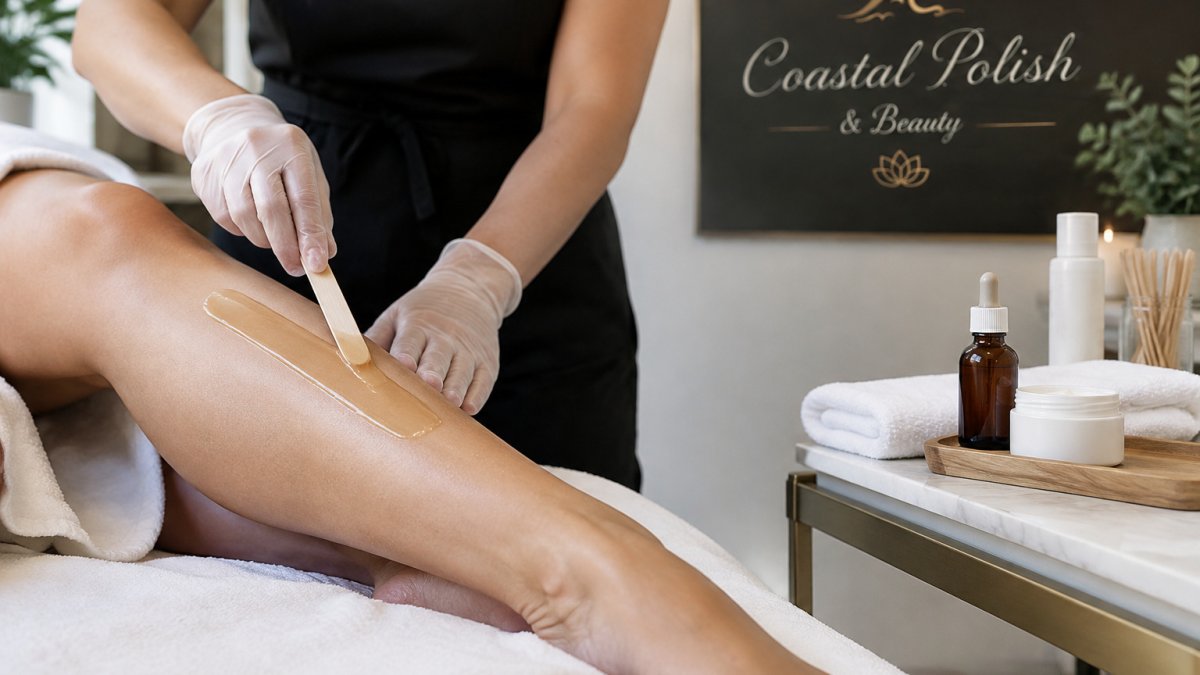
Retinol is a form of vitamin A that speeds up skin cell turnover. It thins the outer layer and makes skin more sensitive to light, friction, and products. Waxing pulls hair out from the root and removes a thin layer of skin along with it.
Common signs of a problem include:
- Redness or heat that lasts more than a few hours
- Small bumps, stinging, or a burning feeling
- Skin that lifts, peels, or looks raw
- Dryness or tightness that worsens over several days
These reactions are more likely on the face, where skin is thin and the retinol is often applied daily. Waxing over freshly exfoliated or irritated skin can make these reactions worse.
When to Stop Retinol Before Waxing
There is no single pause length that fits every retinol user, and the advice you see online varies widely for a good reason: the right interval depends on the strength of the retinoid, how long you have used it, the area being waxed, and how your skin has responded so far. What follows is a practical framework that most estheticians and dermatologists use, not a fixed rule. Confirm your own schedule with the professional who knows your skin.
Why the Pause Matters More Than the Number
Retinol and prescription retinoids speed up cell turnover and thin the outermost layer of skin. Waxing removes hair from the root and takes a thin layer of surface skin with it. If the two overlap, the skin has less margin to absorb the pull of the wax, which is when redness, stinging, and skin lifting happen. The pause is not about avoiding retinol forever; it is about giving the surface layer time to recover before it is stressed again.
A Practical Pause Framework by Retinoid Type
Use these ranges as a starting point, then adjust with your provider:
- Over-the-counter retinol (creams, serums, and retinyl palmitate products): Pausing for several days before waxing is a commonly used approach. If you apply it nightly and have used it for months, a longer pause is often advised. If you use it two or three times a week, a shorter pause may be enough.
- Adapalene 0.1% (available over the counter): Treat it closer to a prescription product, and confirm a longer pause with your provider.
- Prescription tretinoin, tazarotene, and trifarotene: These are the strongest and most likely to cause skin lifting. Do not stop a prescription without talking to the clinician who prescribed it, because they may want to adjust your routine rather than pause it entirely.
- Oral isotretinoin (Accutane and generics): This is a different category. Follow your prescriber's guidance, not a general online schedule.
Pause Schedule by Treatment Area
The area being waxed changes the risk. Facial skin, especially the upper lip, brow, and chin, is thinner and often receives daily retinol, so it reacts faster.
Watch out: the pause only works if your skin is otherwise calm. If you have active peeling, sunburn, or a recent exfoliating treatment, wait until the skin has settled before counting the pause.
What to Tell Your Esthetician
Bring the actual product or a photo of the label. Estheticians need to know the active ingredient and its strength, not just the brand name. Tell them how often you apply it, how long you have used it, and whether you have had any redness or peeling in the past two weeks. That conversation is what lets them decide whether to wax that day, switch to a gentler hard wax, or reschedule.
If You Cannot Pause in Time
If you forgot and used retinol the night before an appointment, do not let the esthetician wax over skin that is still active. Reschedule, or ask whether a patch test on a small area is appropriate. A short delay is usually a better choice than a burn that takes time to heal.
The pause length depends on the retinoid type and the area being waxed, as summarised below.
| Retinoid type | Pause guidance | Note |
|---|---|---|
| Over-the-counter retinol | Several days before waxing | Longer pause if used nightly for months |
| Adapalene 0.1% | Longer pause, confirm with provider | Treat closer to a prescription product |
| Prescription tretinoin, tazarotene, trifarotene | Longer pause, confirm with clinician | Do not stop without talking to prescriber |
| Oral isotretinoin | Follow prescriber's guidance | Not covered by a general online schedule |
| Facial skin (upper lip, brow, chin) | Reacts faster | Thinner skin, often treated daily with retinol |
| Legs, arms, back | Generally less reactive | Prescription retinoids still need a longer pause |
Preventing a Retinol Waxing Burn: Preparation Steps
A retinol waxing burn happens when waxing irritates skin that is already sensitized by retinol. The reaction can range from mild redness to skin that lifts and oozes. Good preparation lowers the risk, and knowing what to do if something goes wrong matters just as much, because most online advice stops at prevention.

Before the Appointment
- Pause retinol first. Use the schedule that fits your retinoid type and treatment area, and do not squeeze in one more application the night before.
- Keep your skin calm. Use a gentle, fragrance-free moisturizer and skip scrubs, acids, and exfoliating tools for at least a week.
- Avoid sun exposure. Sunburned or recently tanned skin is more likely to react to wax. Stay out of direct sun and skip tanning beds before your appointment.
- Do a patch test if you are unsure. Test a small area a day or two before your appointment, especially if you have sensitive skin or have reacted before.
- Tell the esthetician about any recent products or treatments. Mention retinol, acids, and any recent facials or peels, and let them choose the right wax and temperature.
On the day of your appointment, arrive with clean, product-free skin. Let the esthetician know if your skin feels tender or itchy. They can then decide whether to go ahead or wait.
If You Waxed by Accident While Using Retinol
You may have forgotten to pause, or a wax appointment may have been moved up. Here is what to do in the first day or two:
- Stop all actives immediately. No retinol, no acids, no exfoliants, and no scrubs on the treated area.
- Cool the skin. Apply a clean, cool compress for comfort. Do not use ice directly on the skin.
- Keep it clean and covered. Wash gently with lukewarm water and a mild cleanser, then apply a thin layer of plain petroleum jelly or a fragrance-free healing ointment. Avoid alcohol-based toners and scented lotions.
- Do not pick or peel. If skin lifts or scabs, leave it alone. Picking increases the chance of scarring and infection.
- Skip makeup and tight clothing over the area until it calms down.
Warning Signs That Need Medical Care
Most mild reactions settle within a few days. Seek care from a dermatologist or urgent care if you see:
- Spreading redness, swelling, or warmth that gets worse after 24 hours
- Pus, yellow crusting, or a foul odor
- Fever or chills
- Blistering or skin that will not stop oozing
- Severe pain that does not improve with cool compresses
Watch out: a reaction that looks like a burn can sometimes be a bacterial infection, especially on the face. Do not treat it with more actives or cover it with heavy makeup while you wait to be seen.
When to Restart Retinol
Do not restart retinol until the skin looks and feels normal again, with no redness, peeling, or tenderness. Recovery time varies, and a more serious burn can take longer. When you do restart, begin with a lower frequency and build back up gradually. If you use a prescription retinoid, check with your prescriber before restarting.
Preventing the Next Reaction
Once your skin has recovered, treat the pause as part of your routine rather than an afterthought. Put the wax appointment on your calendar and count back the days for your retinoid type and treatment area. Tell your esthetician what happened, so they can adjust the wax, the temperature, and the technique next time. If you react again despite pausing, ask a dermatologist whether a different hair-removal method is a better fit for your skin.
How to Remove Facial Hair While Using Retinol
If you want to remove facial hair while using retinol, you have several options, and each one affects your skin differently. Waxing removes hair from the root but takes a little skin with it.
Whichever method you choose, wait until your skin is calm, avoid aggressive exfoliation, and keep using a gentle moisturizer. If you notice burning or swelling that does not go away, contact your esthetician or a dermatologist.
Retinol and Threading: Is It a Safer Alternative?
Threading is sometimes considered a gentler option for people who use retinol, because it does not use hot wax. Some people with sensitive skin may find it easier to tolerate. However, threading still pulls hair from the root and can cause some redness, so it is not risk-free.
Ask your provider which method suits your skin best. They can explain the trade-offs based on your hair type, skin sensitivity, and how often you plan to remove facial hair.
Book Your Waxing Appointment at Coastal Polish & Beauty
If you are thinking about waxing while using retinol, plan ahead and talk with a professional first. You can see our services before you book, or book an appointment at your convenience.
At Coastal Polish & Beauty, you can leave feeling refreshed and cared for. Contact us to schedule your visit and get personalized advice before your next waxing session.
Frequently Asked Questions
What happens if I wax while using retinol?
Waxing while using retinol can increase the risk of redness, stinging, burns, and skin lifting, because retinoids thin the outer layer of skin and make it more fragile. Topical retinol makes skin more sensitive to heat and pulling force, so the wax may remove more of the surface layer than usual. Mild redness usually fades, but burns or persistent irritation need prompt care. If you notice blistering, open skin, or pain that worsens, contact a dermatologist or your healthcare provider rather than treating it at home.
How long should I stop using retinol before waxing?
Many estheticians and dermatologists suggest stopping topical retinol for a period before waxing, and often longer for prescription retinoids such as tretinoin, which are stronger. The exact timing depends on the product strength, your skin sensitivity, and the treatment area. Because recommendations vary and this is not a clinically standardized rule, ask your prescriber or your waxing professional for guidance tailored to your skin before you book.
What should I do if I waxed while using retinol?
If you waxed while using retinol and your skin is only pink, avoid retinol and harsh products, apply a fragrance-free moisturizer, and keep the area out of direct sun. Avoid exfoliating until the skin feels normal. If you see blistering, lifted skin, open wounds, or spreading redness, or if symptoms last more than a few days, see a dermatologist or healthcare professional promptly. Tell your waxing provider about the retinol use so they can adjust future appointments.
Is threading safer than waxing while using retinol?
Threading does not use heated wax, so some people with sensitive skin may find it gentler during retinol use. It still removes hair by pulling it from the follicle, so mild irritation can occur, and it is not risk-free. Whichever method you choose, pause retinol before the appointment when possible and tell your esthetician which products you use. Check the Coastal Polish & Beauty website for current services and to book.