 ultimate-guide
What to Expect from a Head Spa: A Complete Guide
Table of Contents
- What Is a Head Spa Treatment?
- The Head Spa Treatment Process, Step by Step
- Head Spa Benefits for Scalp Health and Stress Relief
- How Long Is a Head Spa Treatment?
- Who Should Skip a Head Spa: Contraindications and Safety
- DIY vs. Professional Head Spa: What You Actually Get
- Head Spa Aftercare Tips to Extend Your Results
- Conclusion
Last Updated: August 22, 2026
What Is a Head Spa Treatment?
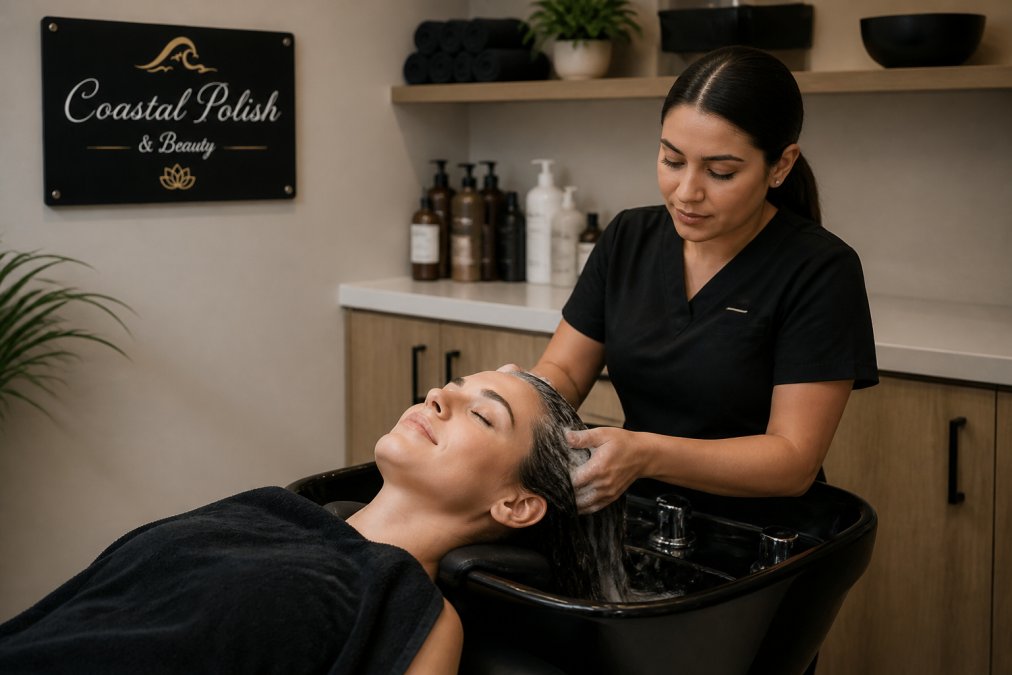
A head spa treatment is a professional scalp care service that combines deep cleansing, exfoliation, therapeutic massage, and targeted conditioning to restore balance to the scalp and promote healthier hair. Unlike a standard home shampoo, a professional head spa is a structured, multi-step protocol performed by a trained hair therapist using specialized tools, steam, and professional-grade products.
The experience addresses common scalp concerns, dryness, oiliness, product buildup, dandruff, and itchiness, while delivering genuine stress relief through carefully applied massage techniques. The result is both cosmetic and therapeutic: your scalp feels cleaner, your hair looks healthier, and your nervous system gets a real break.
At Coastal Polish & Beauty, we've designed our head spa service to deliver exactly that kind of dual benefit: visible scalp results alongside deep relaxation. Below, we'll walk you through everything you can realistically expect, from the first consultation to the final rinse.
The Head Spa Treatment Process, Step by Step
Understanding the sequence of a professional head spa treatment helps you arrive prepared and get the most out of every minute on the treatment chair. Most full-service head spas follow a consistent framework, though specific products and techniques vary by provider.
Here is the general order of a professional session:
- Scalp analysis and consultation, the therapist assesses your scalp condition before any product touches your head
- Pre-cleanse and product buildup removal, a clarifying rinse or oil application loosens residue
- Deep cleansing and exfoliation, a scalp scrub or enzyme treatment removes dead skin cells and unclogs follicles
- Steam treatment, warm steam opens the scalp's pores and prepares the skin to absorb conditioning ingredients
- Scalp massage, manual or tool-assisted massage stimulates blood circulation and activates the relaxation response
- Deep conditioning treatment, a targeted mask or serum addresses specific concerns like dryness or scalp inflammation
- Final rinse and styling, the scalp is thoroughly rinsed, and the session closes with light styling or a cool-water rinse to seal the cuticle
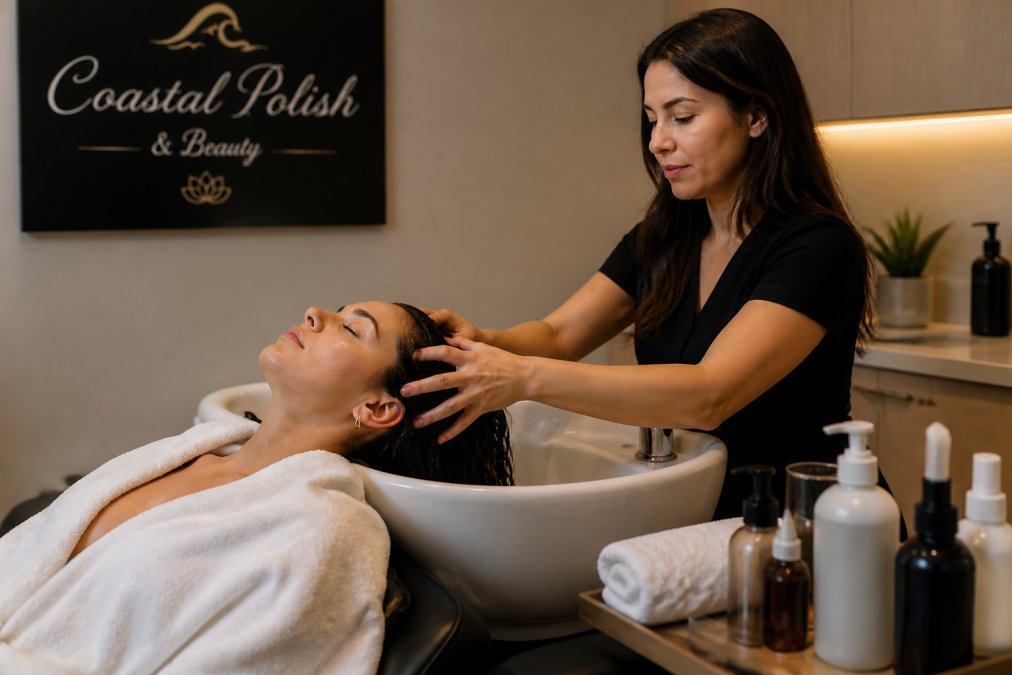
Each step builds on the last, which is why skipping steps produces noticeably weaker results.
Scalp Analysis and Consultation
The consultation separates a professional head spa treatment from a home routine. Before any product is applied, a trained hair therapist examines your scalp using a magnifying tool or digital scalp analyzer to assess sebum levels, pore congestion, hair density, and the presence of flaking or inflammation.
This analysis shapes every decision that follows: which exfoliant to use, how much pressure to apply during the massage, and which conditioning treatment to finish with. Many people arrive thinking their scalp is dry when it's actually overproducing sebum as a compensatory response to harsh shampoos. A proper assessment catches this distinction immediately.
Deep Cleansing, Exfoliation, and Steam
Deep cleansing is the technical core of the head spa treatment. Professional exfoliation removes the layer of dead skin cells, product buildup, and excess sebum that accumulates on the scalp between washes. Left unaddressed, this buildup creates conditions for an irritated, itchy scalp and can impede healthy hair growth by blocking follicles.
Steam treatment follows exfoliation in most professional protocols. According to guidance from the American Academy of Dermatology on scalp care, gentle heat helps soften the scalp's surface and improves product absorption. Steam is applied using a hooded steamer or warm towel wrap, held for several minutes to allow the scalp's pores to open fully before the conditioning phase begins.
This combination of exfoliation and steam is what most home routines miss entirely, and why professional head spa treatments deliver noticeably different results.
Scalp Massage and Deep Conditioning
The massage phase is where the therapeutic benefits become most tangible. A skilled hair therapist uses effleurage, petrissage, and acupressure-style techniques to stimulate micro-circulation in the scalp, encourage follicle stimulation, and activate the parasympathetic nervous system, the part responsible for the rest-and-digest state.
Research into scalp massage has been growing. The National Center for Complementary and Integrative Health on massage therapy documents that therapeutic massage reliably reduces cortisol levels and promotes a measurable relaxation response, which is why clients often feel genuinely calmer after a head spa, not just cleaner.
Deep conditioning follows the massage. A targeted treatment, selected based on the initial scalp analysis, is worked into the scalp and hair. This might be a hydrating mask for dry scalp conditions, a balancing serum for oiliness, or an essential oils blend for scalp health. The product sits under steam or a warm wrap to allow full absorption before the final rinse.
Head Spa Benefits for Scalp Health and Stress Relief
The head spa benefits that matter most fall into two categories: scalp health and stress relief. Both are real and well-supported by scalp biology and the physiology of therapeutic touch.
For scalp health, regular head spa treatments can:
- Remove product buildup and dead skin cells that clog follicles
- Improve sebum regulation, reducing both excessive dryness and oiliness
- Support a healthier scalp microbiome by reducing conditions that allow dandruff-causing microorganisms to thrive
- Stimulate blood circulation to the scalp, delivering more oxygen and nutrients to hair follicles
- Address pore congestion that can contribute to hair thinning over time
For stress relief and holistic wellness, the treatment offers:
- A documented reduction in cortisol through therapeutic scalp massage
- Activation of the parasympathetic nervous system, shifting the body out of a stress-driven state
- A genuine sensory experience designed to slow the nervous system down
- A structured break from screens, noise, and daily demands
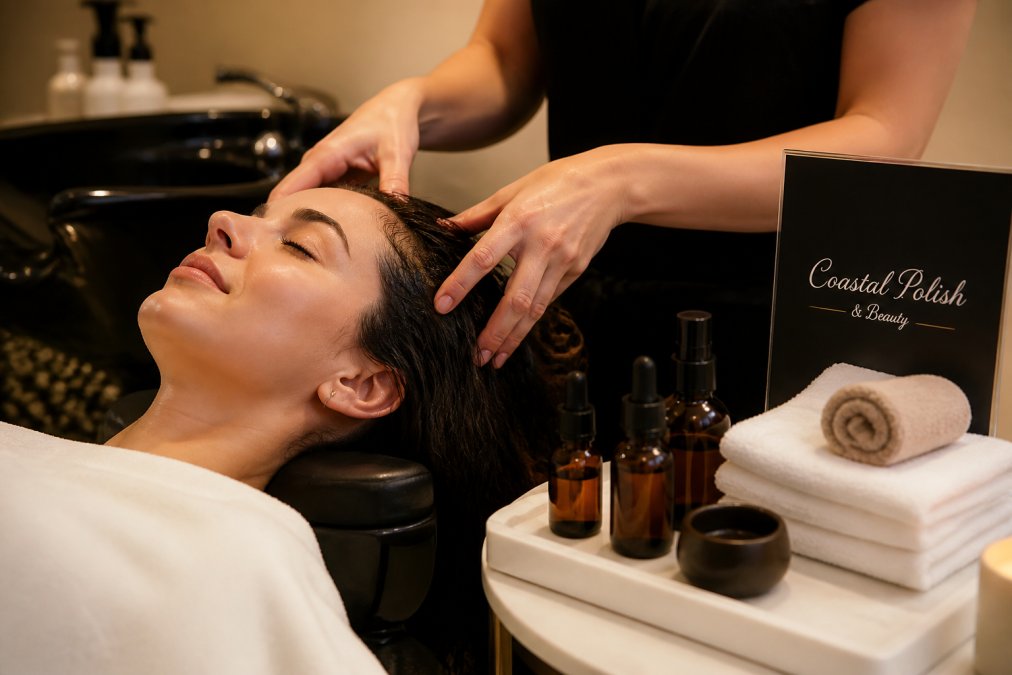
The scalp is one of the most densely innervated areas of the body. That density is exactly why scalp massage produces such a strong relaxation response, and why neglecting the scalp while spending significant effort on hair products is one of the most common mistakes in hair care.
How Long Is a Head Spa Treatment?
A standard head spa treatment runs between 45 and 90 minutes, depending on the depth of the service and the specific concerns being addressed.
Here is a general breakdown by service tier:
| Service Level | Typical Duration | What's Included |
|---|---|---|
| Express Head Spa | 30-45 minutes | Cleanse, light exfoliation, massage |
| Standard Head Spa | 60 minutes | Full cleanse, exfoliation, steam, massage, conditioning |
| Premium / Signature Head Spa | 90 minutes | All standard steps plus extended massage, scalp detox, deep conditioning mask |
| Scalp Analysis Add-On | +15 minutes | Digital scalp analysis, personalized product recommendations |
The consultation and scalp analysis, when included, typically add 10 to 15 minutes before the hands-on treatment begins. If you are booking for the first time, build that buffer into your schedule.
Schedule and Appointment today for 10% Off your service →
A common mistake first-time clients make is scheduling a head spa immediately before a high-stakes event. Your hair will be freshly washed but may be softer or more voluminous than usual, and your scalp will be sensitized. Give yourself a day between your treatment and any important occasion.
Who Should Skip a Head Spa: Contraindications and Safety
Most people are excellent candidates for a professional head spa treatment. There are, however, situations where you should consult a dermatologist or physician before booking.
Conditions that may require medical clearance:
- Active scalp psoriasis or eczema flare-ups
- Open wounds, cuts, or abrasions on the scalp
- Recent scalp surgery or hair transplant procedures (typically within six months)
- Active fungal scalp infections such as tinea capitis
- Severely sunburned scalp
- Chemotherapy or radiation treatment affecting the scalp (consult your oncologist)
Conditions to disclose to your therapist before the session begins:
- Scalp sensitivity or known allergies to specific ingredients
- Recent chemical treatments (color, relaxer, keratin), typically wait at least two weeks
- Pregnancy, some essential oils and massage techniques are contraindicated in the first trimester
According to guidance from the American Academy of Dermatology on scalp conditions, any active inflammatory scalp condition should be assessed by a board-certified dermatologist before undergoing mechanical exfoliation or steam treatments. A reputable provider will always ask screening questions before proceeding.
DIY vs. Professional Head Spa: What You Actually Get
Home scalp care has improved significantly, with good scalp scrubs, massage tools, and conditioning masks widely available. The honest question is: what does a professional head spa treatment actually give you that a careful home routine does not?
The difference comes down to three things: assessment accuracy, product access, and technique.
Assessment accuracy: At home, you are guessing at your scalp condition. A professional therapist uses magnification tools and trained observation to identify the actual state of your scalp microbiome, sebum levels, and follicle health. Getting it wrong at home means you may be treating the wrong problem.
Product access: Professional-grade exfoliants, steam equipment, and conditioning treatments are formulated at concentrations and with delivery systems not available in retail. Professional hydrotherapy equipment opens the scalp's pores in a way that a warm shower approximates but does not replicate.
Technique: Scalp massage for follicle stimulation requires sustained, consistent pressure applied in specific patterns. Most people applying a home scalp massage tool do so for two to three minutes. A professional massage phase typically runs 15 to 20 minutes, with trained pressure calibration throughout.
A home routine is valuable for maintenance between professional visits but is not a substitute for the full treatment protocol.
Head Spa Aftercare Tips to Extend Your Results
Getting the most from a head spa treatment does not end when you leave the chair. The 48 hours after your session are when your scalp is most receptive to good habits and most vulnerable to habits that undo the work.
Head spa aftercare tips to follow:
- Wait 24 hours before washing your hair. The conditioning treatments need time to absorb fully. Washing too soon removes them before they have finished working.
- Avoid heat styling for 24-48 hours. Your scalp is sensitized after exfoliation and steam. High heat from blow dryers and flat irons can cause irritation.
- Skip heavy styling products immediately after. Dry shampoos, volumizing sprays, and heavy serums reintroduce the product buildup the treatment just removed.
- Drink plenty of water. Hydration supports the scalp's recovery and helps maintain the sebum regulation improvements from the treatment.
- Protect your scalp from direct sun exposure. A freshly exfoliated scalp is more sensitive to UV exposure. Wear a hat or use a UV-protective hair product if you'll be outdoors.
- Note your scalp's response. Some mild sensitivity or increased oiliness in the first day or two is normal as the scalp recalibrates. Significant irritation, redness, or itching that persists beyond 48 hours warrants a call to your provider.
For ongoing scalp health, many hair therapists recommend a professional head spa treatment every four to six weeks, with a gentle home scalp massage routine two to three times per week in between. Consistent scalp maintenance produces cumulative improvements in hair density and follicle health over time.
| Aftercare Action | Timing | Why It Matters |
|---|---|---|
| Avoid washing hair | First 24 hours | Preserves conditioning treatment absorption |
| Skip heat styling | First 24-48 hours | Prevents post-exfoliation scalp irritation |
| Avoid heavy styling products | First 48 hours | Prevents immediate product buildup recurrence |
| Protect from sun | First 48 hours | Sensitized scalp is more vulnerable to UV |
| Resume gentle home massage | After 48 hours | Maintains micro-circulation between sessions |
Scalp health is something many people invest in too late, after visible hair thinning or persistent irritation has already taken hold. A professional head spa treatment addresses the scalp environment before problems become harder to reverse. At Coastal Polish & Beauty, our head spa service is designed around personalized care in a clean, calm setting where you are never rushed and the protocol is always tailored to what your scalp actually needs. Book your first head spa treatment with us and experience the difference that a structured, expert-led approach makes, for your scalp, your hair, and your stress levels.
Frequently Asked Questions
What should I know before going to a head spa?
Arrive with unwashed hair, product buildup actually helps the therapist assess your scalp condition accurately during the initial analysis. Avoid applying dry shampoo or heavy styling products the day before. Let your therapist know about any scalp conditions such as psoriasis, open sores, or recent chemical treatments. Wear comfortable clothing you don't mind getting slightly damp around the collar, and plan to keep the post-treatment window free so you can enjoy the relaxation response rather than rushing back into a stressful environment.
What not to do after a head spa?
Following a head spa treatment, avoid washing your hair for at least 24 hours so the conditioning and scalp-balancing products can fully absorb. Skip heat styling tools, heavy dry shampoo, and tight hairstyles that create tension on the scalp. Sun exposure right after treatment can irritate a freshly exfoliated scalp, so a hat is a smart choice if you're heading outdoors. Staying well-hydrated supports the detox process, and avoiding alcohol the same evening helps the body's relaxation response continue working.
Are head spas actually worth it?
For people dealing with dryness, oiliness, dandruff, product buildup, or chronic tension headaches, a professional head spa treatment addresses the root cause rather than masking symptoms. The combination of scalp analysis, deep cleansing, follicle stimulation, and therapeutic massage delivers results that at-home routines rarely match. Beyond scalp health, the parasympathetic nervous system activation during treatment produces measurable stress relief. Whether the value justifies the cost depends on how frequently you'd benefit, most people find one session every three to six weeks optimal.
What do you wear during a head spa?
Most head spa treatments are performed with clients fully clothed. You'll typically be draped with a towel or cape around your shoulders to protect your clothing from water and oils. Wear something comfortable with a relaxed neckline so the therapist can easily access your scalp and upper neck. You won't need to change into a robe unless the spa specifically offers a full-body relaxation component alongside the scalp service. Removing jewelry around the neck and ears beforehand keeps the experience more comfortable.
How often should you get a head spa treatment?
The right frequency depends on your scalp type and goals. Those with significant product buildup, oily scalp, or dandruff often benefit from monthly sessions until the scalp microbiome stabilizes, then shifting to every six to eight weeks for maintenance. For stress relief and general scalp health, once a month is a common starting point. Your therapist will recommend a schedule after the initial scalp analysis, which accounts for sebum regulation, hair density, and any specific conditions like pore congestion or dryness.
Does a head spa include a haircut?
A head spa treatment focuses entirely on scalp health, not hair cutting or styling. The service typically includes scalp analysis, exfoliation, deep cleansing, hydrotherapy or steam, scalp massage, and a deep conditioning treatment. Some providers offer a basic blow-dry finish, but trimming or cutting is not part of the service. If you want a cut alongside your head spa, ask when booking so the salon can schedule the appropriate time and staff.
This article was written using GrandRanker