 comparison
Nail Hardener vs Strengthener: Which Your Nails Need
Last Updated: November 5, 2026
Quick Summary
A nail hardener is a film-forming coating that dries over the nail to stiffen it, while a nail strengthener is a conditioning treatment that works into the nail so it bends rather than breaks. Choose based on your symptoms: bending and tearing point toward a hardener, while peeling, dryness and splitting usually call for a strengthener.
- A nail hardener sits on top of the nail as a protective layer and does not add moisture.
- A nail strengthener is meant to support the nail from the inside out with conditioning ingredients.
- Apply the strengthener first, let it dry fully, then finish with a hardener if the nail still bends.
- Strengtheners generally need consistent use across weeks, and a common suggestion is four to six weeks.
- Stop using a product and seek professional guidance if you notice irritation or increasing fragility.
Table of Contents
- What a Nail Hardener Is and How It Works
- What a Nail Strengthener Is and How It Works
- Nail Hardener or Strengthener First: Layering and Order of Application
- Choosing by Symptom: Bending, Peeling, Splitting, and Brittleness
- Reading Ingredient Labels: Formula Differences That Matter
- The Best Nail Strengthener and Treatment for Damaged Nails at Home
- Booking Professional Nail Care at Coastal Polish & Beauty
- Frequently Asked Questions
Nail hardeners and nail strengtheners are both sold as fixes for weak, peeling or splitting nails, and the labels on the bottles often blur the difference. Nail salon clients often ask this question after trying several products without lasting results. A nail hardener is usually a film-forming coating that stiffens the nail surface, while a nail strengthener is a treatment meant to condition the nail so it bends rather than breaks. Knowing which one your nails actually need saves money and avoids the frustration of a product that cannot do its job.
What a Nail Hardener Is and How It Works
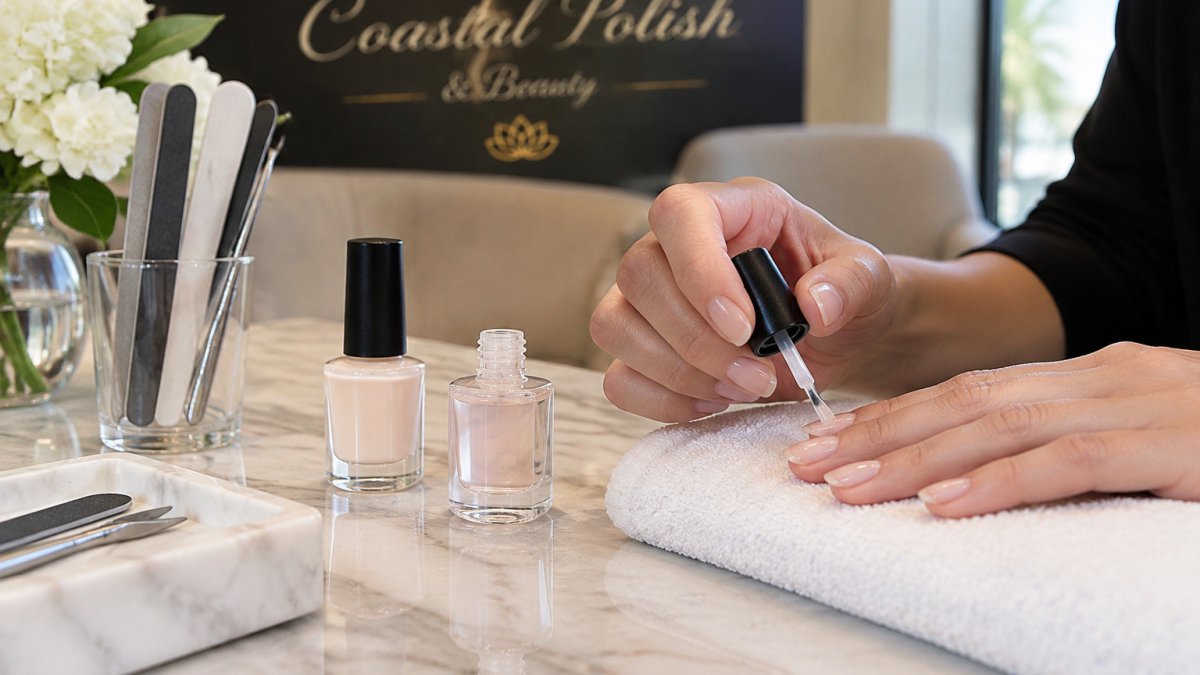
A nail hardener is typically a clear, polish-like formula that dries into a thin protective layer over the nail plate. Many hardeners contain film-forming ingredients that harden as the solvent evaporates, creating a surface barrier. This barrier can make a nail feel firmer and less likely to bend, which is why hardeners are often recommended for nails that flex too easily and tear at the edge.
The trade-off is that a coating sits on top of the nail rather than working inside it. A hardener does not add moisture or repair structure, so it cannot fix a nail that is dry at its core. A hardener's effect can fade with handwashing and filing.
What a Nail Strengthener Is and How It Works
A nail strengthener is a treatment formula designed to support a weak nail from the inside out. Most strengtheners contain conditioning ingredients such as proteins, vitamins, or moisturizing agents that absorb into the nail layers. The goal is to improve flexibility and reduce the tendency to peel or split over time.
Strengtheners generally need consistent use across weeks rather than a single application. Results vary by person, and no product can change the nail's growth pattern.
Nail Hardener or Strengthener First: Layering and Order of Application
Many people use both products, and the order matters. If you are prepping for gel, see which strengtheners work as prep under gel. Applying a film-forming hardener over a treatment can seal the conditioning ingredients out, so a common approach is to apply the strengthener first, let it dry fully, then finish with a hardener if the nail still bends.
Check each product's own directions before layering, because formulas differ. Also note that a hardener placed under gel or regular polish is a different use than one worn alone. Starting with a strengthener on clean, filed nails for several weeks, then deciding whether a hardener adds anything, is a practical sequence for most readers.
Choosing by Symptom: Bending, Peeling, Splitting, and Brittleness
Product categories are a poor starting point; the nail's behavior is a better one. Match what your nails are actually doing to the approach below, then give it a fair trial before switching products. For step-by-step home repair after acrylics, read how to repair damaged nails after acrylics at home.
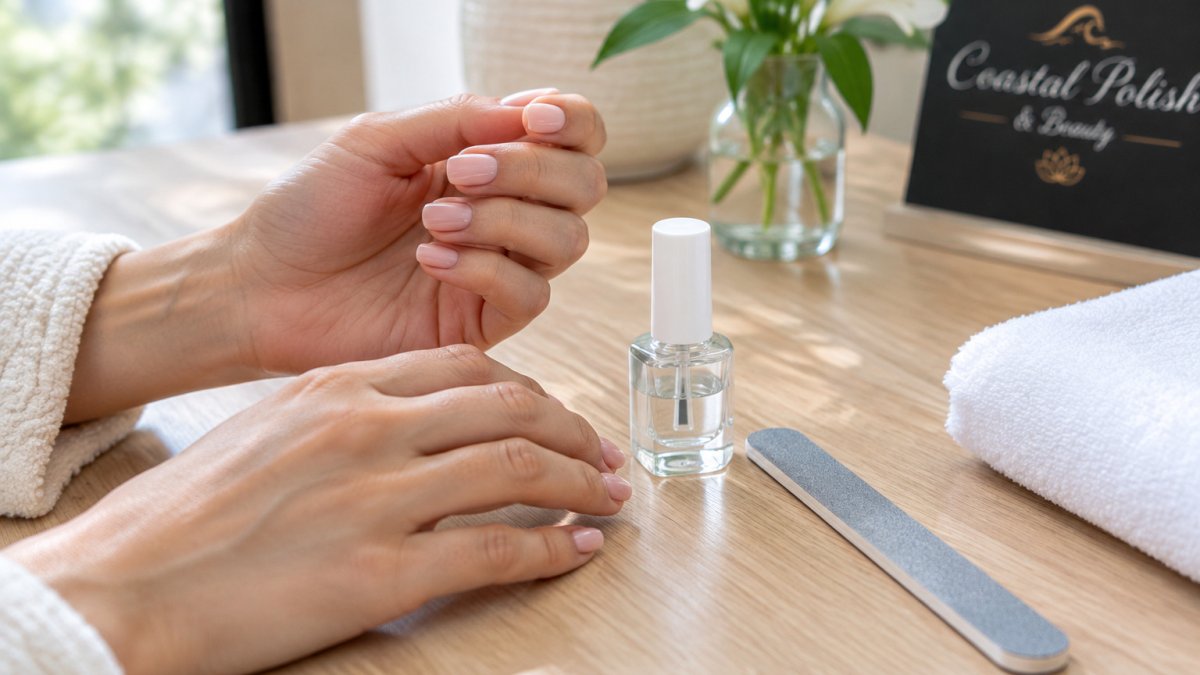
- Bending or flexing too much, tearing at the free edge: the nail lacks rigidity, so a film-forming hardener is the usual first move. Apply a thin coat, let it cure, and expect the effect to fade with handwashing and filing, reapply on the product's schedule rather than layering coat after coat.
- Peeling or layering at the surface: this is usually a sign of dryness and repeated water or polish-remover exposure, not a need for more stiffness. A conditioning strengthener used consistently for four to six weeks is the better fit, paired with shorter nails and less acetone.
- Splitting at the tip: support flexibility with a strengthener, keep the free edge filed smooth, and avoid using nails as tools; a hardener alone can make a splitting tip more likely to snap rather than flex.
- Brittle nails that crack with little pressure: dryness is the most common cause, so hydration and a conditioning strengthener come first. If nails are also soft and bendy, a hardener can be added after the strengthener dries.
- Soft, thin nails that dent easily: a hardener can add surface rigidity, but pair it with a strengthener and review what is causing the thinning, aggressive filing, frequent gel removal, or repeated wet-dry cycles.
Give it a fair trial. Nail plate grows out slowly, so changes from any treatment can take several weeks to appear.
Know when to stop. Discontinue a product and seek professional guidance if you see irritation, increased brittleness, worsening peeling, or a nail that becomes more fragile the longer you use the product. Nails that stay soft, bleed, change color, lift from the nail bed, or develop a dark streak may point to a medical issue, so consider seeing a clinician before adding another treatment.
The table below matches common nail symptoms to the approach the article recommends for each.
Schedule and Appointment today for 10% Off your service →
| Symptom | Likely approach | Key note |
|---|---|---|
| Bending, tearing at the edge | Film-forming hardener | Effect fades with handwashing and filing |
| Peeling or layering | Conditioning strengthener | Use consistently for four to six weeks |
| Splitting at the tip | Strengthener, smooth edge | A hardener alone may make tips snap |
| Brittle, cracks easily | Hydration and strengthener | Add hardener after strengthener if nails bend |
| Soft, thin, denting | Hardener plus strengthener | Review filing and gel removal habits |
| Changes take time | Give a fair trial | Nail growth is slow; allow several weeks |
Reading Ingredient Labels: Formula Differences That Matter
The front of the bottle is marketing; the ingredient list is the closest thing to a spec sheet. The problem is that "hardener" and "strengthener" are not standardized product categories, so two bottles with the same word on the front can work in completely different ways. A practical approach is to read the ingredient list and consider whether a formula forms a film on top of the nail or leaves conditioning ingredients in the nail plate.
Signs of a film-forming hardener. Look for solvents and film-formers near the top of the list, ingredients such as ethyl acetate, butyl acetate, and nitrocellulose are common in polish-like coatings that dry hard. If the first several ingredients are solvents and the formula dries glossy and slightly rigid, you are almost certainly looking at a coating.
Signs of a conditioning strengthener. These formulas more often lead with water or a light carrier and list proteins, vitamins, or humectants, hydrolyzed wheat protein, keratin, panthenol, biotin, glycerin, and similar ingredients, that are meant to remain on or in the nail rather than evaporate. A strengthener may still contain a small amount of film-former for wear, so the presence of one film-forming ingredient does not automatically make it a hardener; the balance of the list is what matters.
Where labels mislead. A product called a "strengthener" can be a coating in everything but name, and a "hardener" can include conditioning ingredients. Treat the category word as a hint, not a guarantee, and judge by the ingredient pattern plus how the product is meant to be used, worn alone as a shield, or reapplied as a treatment over days and weeks.
If you have reacted to nail products before, check ingredient labels carefully and consider a patch test before full use. Stop using any formula that causes burning, redness, itching, or swelling around the nail, and check with a clinician about reactions that persist.
The Best Nail Strengthener and Treatment for Damaged Nails at Home
For damaged nails at home, a conditioning strengthener used consistently for several weeks is a common starting point. Compare options in this curated list of strengthening treatments for weak, brittle nails. Apply a thin coat to clean, dry nails, allow it to dry fully, and repeat on the schedule the product recommends. Keep nails filed short and avoid using them as tools.
No single product fits every nail, and results can vary. If that shows no change, the cause may be something other than the product itself.
Booking Professional Nail Care at Coastal Polish & Beauty
If your nails stay weak despite home care, a professional assessment can help. Learn who runs Coastal Polish & Beauty and its standards of care before you book. At Coastal Polish & Beauty, you can book a professional nail appointment to discuss your nail care needs. Visit our website to see current service options and book an appointment.
Frequently Asked Questions
Which is better, nail strengthener or nail hardener?
Neither is better in every case. A nail hardener is generally a film-forming protective coating that stiffens the nail surface, which can help nails that bend or peel with everyday contact. A nail strengthener is usually a treatment formula meant to support nails that are weak, soft, or flexible in a way that makes them prone to breakage. Many formulas blend both approaches, so the label and your specific symptoms matter more than the category name. If your nails bend too easily, a hardener may suit you; if they split or feel thin, a strengthener is often the better starting point.
Do nail hardeners damage nails?
Most people tolerate nail hardeners without harm, but overuse or certain formulas can cause problems. Heavy, film-forming products can trap moisture and make nails feel dry or brittle over time. Stop using any product that causes stinging, redness, swelling, itching, or changes in nail color, and consult a dermatologist if symptoms persist. Taking breaks between applications and choosing formulas without harsh ingredients reduces these risks.
Should you apply nail strengthener or hardener first?
Apply a nail strengthener first when your nails are weak or thin, so the treatment can work on the nail plate before a protective layer is added. Follow it with a hardener if you need an extra protective barrier. Allow each layer to dry fully before applying the next, and do not stack several products at once. Check the product directions, since some formulas are designed to be used alone and layering may reduce their effect or cause buildup.
What is the best nail treatment for damaged nails at home?
For damaged nails at home, look for a nail strengthener with conditioning ingredients, applied as directed on the product label. Keep nails trimmed and filed in one direction, moisturize cuticles daily, and avoid using nails as tools. Expect gradual improvement over several weeks, since nails grow slowly. If splitting, discoloration, or thickening persists despite consistent care, have a professional evaluate the nails, as the cause may be medical rather than cosmetic.