 blog
Best Nail Strengtheners for Gel Manicure Prep
Table of Contents
- Why Nail Strengtheners Matter Before Gel Manicures
- How to Prep Nails for Gel Polish
- Key Ingredients to Look for in Nail Strengtheners
- How to Repair Damaged Nails from Gel
- Nail Hardeners vs. Strengtheners: What's the Difference?
- How to Apply Nail Strengtheners Correctly
- Frequently Asked Questions
Last Updated: October 3, 2026
Why Nail Strengtheners Matter Before Gel Manicures
Getting a gel manicure is a commitment. The polish lasts three to four weeks, but the prep work determines whether your nails emerge healthy or damaged. This is where the best nail strengtheners for gel manicure prep become essential. Proper pre-manicure nail care can transform the entire experience and the results.
Gel polish adheres aggressively to the nail plate. During application, your nails absorb chemicals and heat. During removal, acetone and soak-off processes strip moisture and weaken the keratin structure. Without preparation, even one gel manicure can leave nails brittle, peeling, and prone to breakage for weeks afterward.
Nail strengtheners create a protective buffer. They fortify the nail plate with hydration, protein, and essential nutrients before gel touches your nails. Think of them as insurance, an investment that prevents damage rather than just treating it afterward.
How to Prep Nails for Gel Polish
The Role of Nail Strengtheners in Prep
Nail strengtheners work by penetrating the nail plate and restoring flexibility. Healthy nails bend slightly; brittle nails snap. A strengthener rebuilds that resilience by infusing keratin, biotin, and hydration agents into the nail matrix, the living tissue beneath the surface where new nail growth originates.
The best nail strengtheners for gel manicure prep do three things simultaneously. First, they increase moisture retention in the nail bed, countering the dehydrating effect of gel chemicals. Second, they reinforce protein bonds within the nail plate, making it resistant to peeling.
Apply strengtheners for at least five to seven days before your appointment. This gives the formula time to penetrate and work. Most people see visible improvement in nail texture within three days, but deeper hydration takes longer. The longer you prep, the better your nails perform under gel.
Timing and Application Before Your Appointment
Start your prep routine one to two weeks before your gel appointment if your nails are already compromised, brittle, peeling, or recovering from a previous manicure. If your nails are healthy, five to seven days of strengthening is sufficient.
Apply your chosen nail strengthener once daily, preferably at night. This allows the formula to work while you sleep without interference from water, soap, or daily activity.
Skip other nail products during this prep period. Avoid regular polish, which creates a barrier that blocks strengthening ingredients from penetrating. Avoid cuticle oils with heavy silicone bases, they can prevent absorption. Stick to your strengthener and nothing else.
The night before your appointment, apply one final coat. This ensures maximum hydration and protein content right when your nails enter the gel process.
Key Ingredients to Look for in Nail Strengtheners
Keratin and Protein-Rich Formulas
Keratin is the structural protein that makes up your nails. When nails peel or break, keratin bonds have fractured. A strengthener containing hydrolyzed keratin, broken down into smaller molecules that penetrate easily, repairs these bonds from within.
Look for products that list keratin in the first three ingredients. Hydrolyzed keratin is the most effective form because it's small enough to enter the nail plate. Some formulas also include collagen and amino acids, which work alongside keratin to rebuild strength and flexibility.
Protein-rich formulas are especially valuable if you've had multiple gel manicures in succession. The cumulative effect of repeated gel applications depletes your nails' natural protein reserves. A strengthener that replenishes these reserves prevents the brittleness that develops over time.
Biotin, Vitamins, and Hydration Agents
Biotin is a B vitamin that supports nail growth and thickness. Research and dermatological practice have long associated biotin with nail health, though results vary by individual.
Vitamin E and vitamin B5 (panthenol) are hydration powerhouses. They lock moisture into the nail plate and prevent trans-epidermal water loss, the process by which nails dry out. Dehydration is the primary cause of peeling and brittleness, so hydration agents are non-negotiable.
Calcium and magnesium support nail hardness. While nails aren't bones, they do benefit from mineral support. Formulas that include these minerals tend to produce faster visible improvement in nail texture and resilience.
Glycerin and hyaluronic acid are humectants, they draw moisture from the air into the nail. A strengthener containing these ingredients will feel slightly tacky when wet, which is exactly what you want. That tackiness indicates active hydration.
How to Repair Damaged Nails from Gel
Recognizing Brittleness, Peeling, and Dehydration
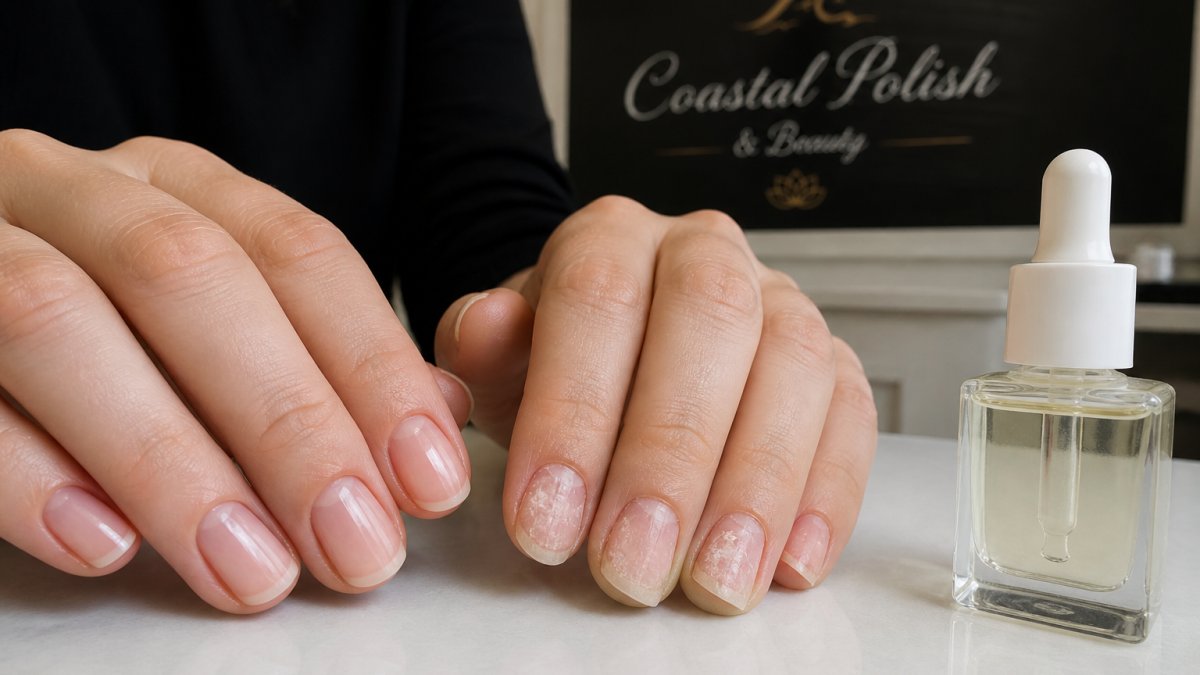
Damaged nails from gel show specific signs. Brittleness appears as nails that snap or break at the slightest pressure. Peeling manifests as thin layers separating from the nail plate, often starting at the free edge. Dehydration looks like a dull, papery texture, nails that have lost their natural shine and flexibility.
The damage typically worsens immediately after gel removal. The soak-off process uses acetone, which strips moisture aggressively. Your nails may feel softer and more fragile for days or weeks afterward. This is temporary, but without intervention, the damage compounds.
The Recovery Timeline and Product Selection
Recovery typically takes four to eight weeks, depending on damage severity. Nails grow slowly, roughly one millimeter per week, so new, undamaged nail must literally grow out. You can't repair damaged nail; you can only support it while new growth replaces it.
During recovery, use a strengthener designed for damaged nails. These formulas prioritize hydration and protein over other benefits. Apply daily, sometimes twice daily if damage is severe.
Avoid gel polish during recovery. The chemicals will re-damage nails before they've healed. Stick to regular polish if you want color, or go bare. Keep nails trimmed short to remove damaged free edges and reduce breakage.
After two to three weeks of consistent strengthening, you'll notice texture improvement. Nails become smoother and less brittle. After four weeks, new healthy growth appears at the base.
Nail Hardeners vs. Strengtheners: What's the Difference?
The terms are often used interchangeably in marketing, but they address fundamentally different problems and work through different mechanisms. Understanding the distinction is critical for gel manicure prep because using the wrong product can either waste your time or actively damage your nails.
Schedule and Appointment today for 10% Off your service →
How Hardeners Work
A nail hardener increases surface hardness by depositing a protective resin coating on the nail plate. Common hardening agents include formaldehyde-based resins, nylon fibers, and calcium compounds. These sit on top of the nail rather than penetrating it. Hardeners are ideal for nails that break easily but aren't necessarily damaged, they create a shield against mechanical stress.
The trade-off: hardeners don't address dehydration or protein loss. If your nails are peeling or brittle from gel damage, a hardener will make them feel temporarily stronger but won't heal the underlying problem. Additionally, the resin coating can interfere with gel adhesion, causing lifting or poor polish grip.
How Strengtheners Work
A nail strengthener penetrates the nail plate and fortifies it from within by restoring hydration, protein content, and flexibility. Strengthening ingredients include hydrolyzed keratin, biotin, panthenol, and humectants like glycerin. These work at the cellular level, rebuilding the nail matrix, the living tissue beneath the surface where new nail growth originates.
Strengtheners take longer to show results than hardeners (typically three to seven days), but the results are deeper and more lasting. They address the root cause of brittleness and peeling rather than masking it.
Ingredient-Specific Sensitivities: Formaldehyde and Toluene Concerns
Many traditional nail hardeners contain formaldehyde, a resin-forming agent that creates that hard, glossy finish. However, formaldehyde is a known contact sensitizer. If you have a history of contact dermatitis, nail bed sensitivity, or allergic reactions to nail products, formaldehyde-based hardeners can trigger inflammation, redness, or peeling around the cuticle and nail bed.
Similarly, some hardeners and even some strengtheners contain toluene, a solvent that improves formula spreadability. Toluene is neurotoxic at high concentrations and can cause headaches, dizziness, or respiratory irritation with prolonged exposure, especially in poorly ventilated spaces. It's also a known reproductive hazard.
If you have sensitivities or a history of dermatitis: Look for hardeners and strengtheners labeled "3-free" (formaldehyde, toluene, and dibutyl phthalate-free) or "5-free" (which adds formaldehyde resin and xylene). For gel manicure prep, choose a strengthener over a hardener, and verify the ingredient list doesn't include formaldehyde or toluene.
Why Strengtheners Are Better for Gel Prep
For gel manicure prep specifically, you want a strengthener, not a hardener. Here's why:
Adhesion compatibility: Gel base coats bond through micro-adhesion to the nail plate's texture and moisture. A hardener's resin coating creates a slick, impermeable surface that prevents gel from gripping properly. Strengtheners work beneath the surface and actually improve how gel adheres by optimizing nail hydration and texture.
Damage prevention: Gel chemicals are harsh. Nails prepped with a strengthener are more resilient and flexible, better able to withstand the dehydration and chemical stress of gel application and removal. Hardeners offer no such protection; they only make the surface temporarily harder.
Recovery support: If you're using a strengthener to recover from previous gel damage, a hardener won't help. Hardeners don't restore hydration or protein; they just mask brittleness. A strengthener actually repairs the damage.
Hybrid Products: When They Work
Some formulas blur the line by including both hardening agents and strengthening ingredients. These hybrid products can work well for maintenance, keeping healthy nails healthy while adding some protective hardness. However, for damaged nails or intensive gel prep, stick with pure strengtheners. Hybrid products often compromise on the concentration of strengthening ingredients to make room for hardening resins, reducing their effectiveness for repair.
The Bottom Line
If your nails are healthy and you want to prevent breakage, a hardener is acceptable. If your nails are already compromised, peeling, brittle, or recovering from gel, or if you're prepping for a gel manicure, choose a strengthener. The distinction matters because using the wrong product can undermine your entire prep strategy or delay recovery.
How to Apply Nail Strengtheners Correctly
Application technique determines whether a strengthener works. Paint it on like a base coat, starting at the cuticle and stroking toward the free edge.
Use thin, even coats. A thick glob of strengthener doesn't work better than a thin layer; it just takes longer to dry and feels sticky. One coat daily is standard.
Let each coat dry completely before touching your nails or applying anything else. Most strengtheners take five to ten minutes to dry.
Avoid getting strengthener on your cuticles or skin. While these products are generally safe, they're formulated for nails, not skin.
If you're using a strengthener as a base coat under regular polish, apply your regular polish while the strengthener is still slightly tacky, not fully dry.
Damaged nails from gel manicures don't have to be your norm. The right preparation changes everything.
Frequently Asked Questions
What is the best nail strengthener to use after a gel manicure?
The best nail strengthener after gel depends on your nail's condition. Look for products with keratin, biotin, and vitamin E to rebuild the nail plate and restore hydration. Apply strengtheners daily for 2-3 weeks after gel removal to repair acetone damage and brittleness. Hypoallergenic, dermatologist-tested formulas work well for sensitive nails. Starting recovery treatment immediately after soak-off can help minimize peeling and weakness.
Can I use nail strengthener under gel nails?
Yes, but choose a base coat-compatible strengthening serum. Some strengtheners contain oils or moisture that reduce gel adhesion, so look for products designed to work with gel systems. Apply strengthener 24 hours before your gel appointment, or use a fortifying base coat that acts as both primer and treatment. This approach protects the nail bed while prepping the nail surface for better gel application and longer-lasting manicures.
How do you repair damaged nails before a gel manicure?
Repair starts with a break from gel. Allow nails to grow out for 1-2 weeks while applying protein-rich strengtheners daily. Gently file the free edge to prevent splitting, and soak nails in warm water with cuticle oil to restore the moisture barrier. Avoid acetone-based removers during recovery. Once nails show flexibility and the nail matrix looks healthy, you can safely return to gel. This prep ensures better adhesion and reduces the risk of further damage.
Do nail strengtheners actually help with gel-induced brittleness?
Yes, when used consistently. Gel manicures cause dehydration and trans-epidermal water loss from the nail plate, leading to brittleness and peeling. Strengtheners with amino acids, calcium, and hydrating agents reverse this damage by restoring protein bonds and moisture. Results typically appear within 2-3 weeks of daily application. The key is choosing formulas without hardening agents that worsen brittleness, and pairing them with cuticle oil for complete nail health recovery.