 how-to
Preventing Cross Contamination in Nail Salons
Table of Contents
- Why Preventing Cross Contamination Matters in Nail Salons
- How to Disinfect Nail Tools Between Clients
- Single-Use Nail Salon Tools and When to Use Them
- Hand Hygiene, Gloves, and Workstation Cleaning
- Nail Salon Sanitation Checklist for Daily Operations
- How to Tell If a Nail Salon Is Sanitary
- Handling Blood, Open Wounds, and Exposure Incidents
- Frequently Asked Questions
Last Updated: October 15, 2026
Why Preventing Cross Contamination Matters in Nail Salons
Preventing cross contamination in nail salons is one of the most critical responsibilities of every technician and salon owner. When tools and surfaces aren't properly cleaned between clients, bacteria, fungi, and viruses can spread from one person to another. This isn't just uncomfortable, it can lead to serious infections that damage a client's health and your salon's reputation.
At Coastal Polish & Beauty, we understand that clients trust us with their hands and feet. That trust depends on consistent, visible hygiene practices. Cross-contamination happens when germs transfer from one client to the next through contaminated tools, work surfaces, or direct contact. The risk is real, but it's completely preventable with the right process.
Infection control in nail salons protects both clients and staff. Nail tools create small cuts and abrasions on skin. Those tiny breaks in the skin barrier allow bacteria and fungi to enter. Common infections from contaminated tools include bacterial infections, fungal nail infections, and skin conditions like staph. Some of these infections require medical treatment and can take months to clear.
The good news: preventing cross contamination isn't complicated. It requires discipline, the right products, and a clear workflow. When you follow these steps consistently, you eliminate the risk almost entirely.
How to Disinfect Nail Tools Between Clients
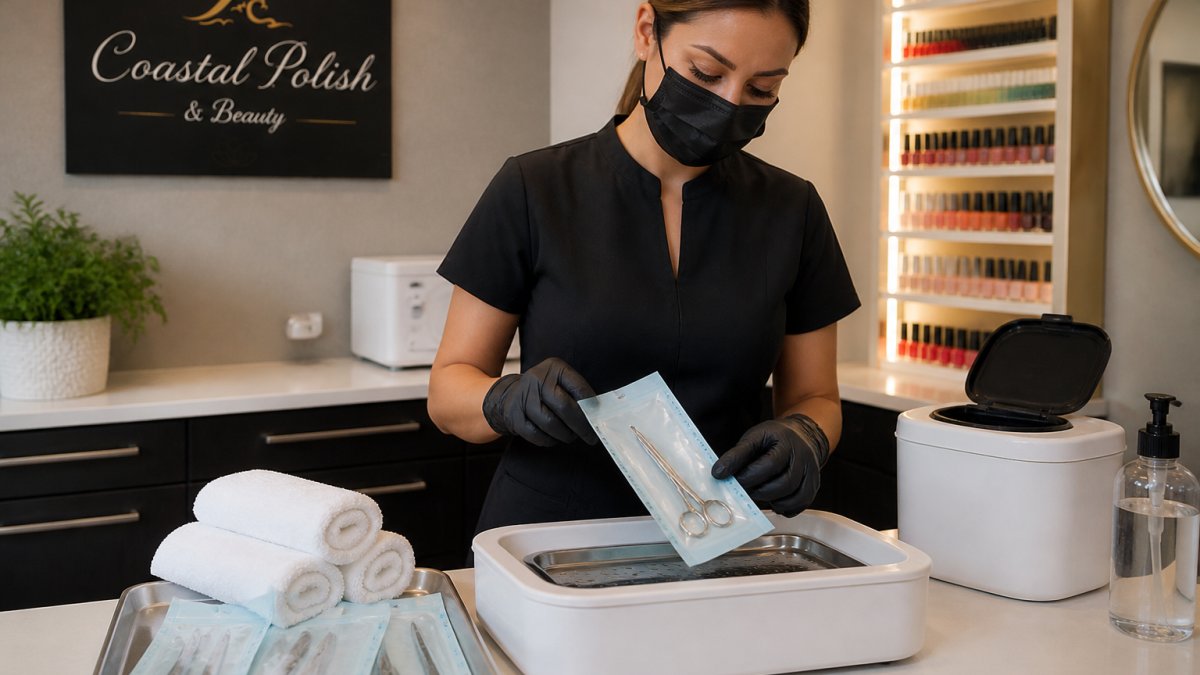
Disinfecting reusable implements between every client is the foundation of infection prevention. This process has three distinct steps: cleaning, disinfecting, and proper storage. Each step matters. Skip one, and contamination can still occur.
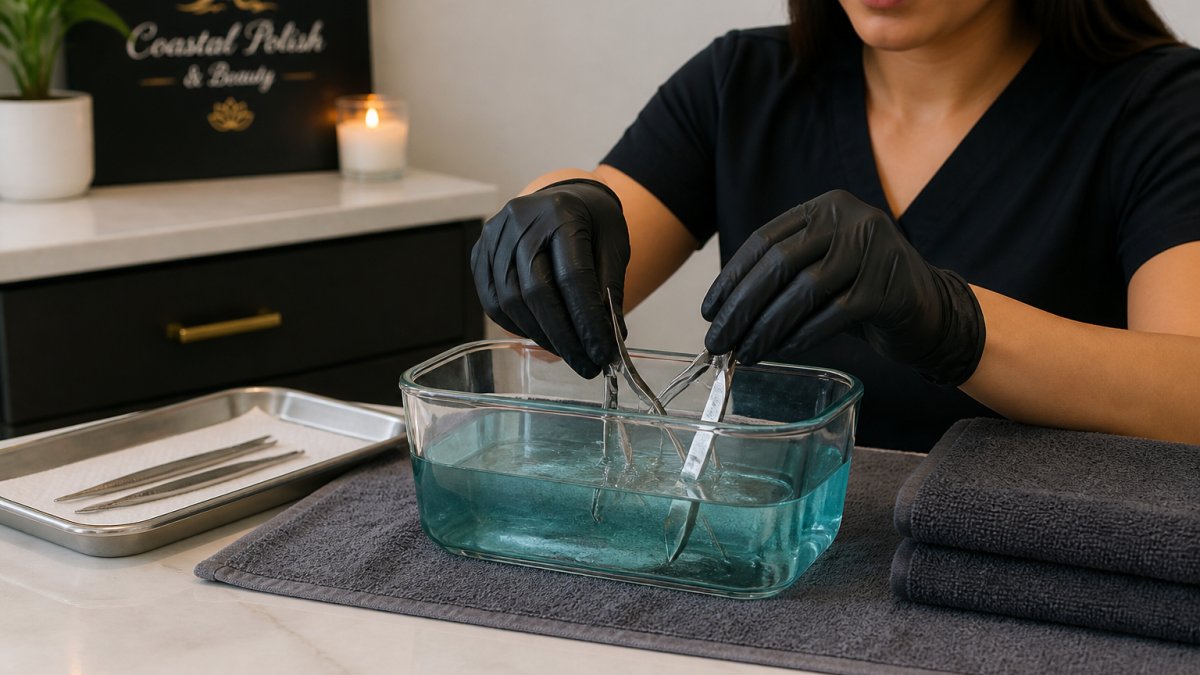
Step 1: Clean Tools Immediately After Each Client
Cleaning removes visible debris, gel residue, dust, and organic material. This is not disinfection, it's the preparation step. Disinfectants work best on clean surfaces.
Start right after the client leaves. Don't wait until the end of the day. Dried gel, nail dust, and skin cells are harder to remove once they've set.
Use hot water and a nail brush or scrub brush. Scrub each tool thoroughly for at least 20 seconds. Pay special attention to crevices and hinged areas where bacteria hide. Rinse completely under running water. Pat dry with a clean paper towel.
For tools with stubborn gel residue, soak them in warm soapy water for 2-3 minutes first. Then scrub. Dry completely before moving to the next step.
Why this matters: Organic material (blood, skin cells, gel) reduces the effectiveness of disinfectants. Clean tools first, then disinfect.
Step 2: Apply EPA-Approved Disinfectant
Once tools are clean and dry, submerge them in an EPA-approved disinfectant. This kills germs that cleaning alone cannot remove.
Choose a disinfectant specifically formulated for nail salon tools. Look for products labeled as effective against bacteria, fungi, and viruses. The EPA registration number on the label confirms it meets federal standards.
Submerge all metal tools completely. Make sure no air pockets trap germs underneath. Use a clean glass or plastic container, never reuse old disinfectant solution.
Follow the product instructions for dilution and contact time. This is critical. Many disinfectants require specific water temperature and concentration to work properly.
Step 3: Allow Proper Contact Time
Contact time is how long tools must stay in the disinfectant to kill germs. Most EPA-approved disinfectants require 10-15 minutes of contact time. Some require longer. Check your product's label.
Don't rush this step. Pulling tools out early leaves germs alive. Set a timer if needed. When the time is up, remove tools with clean tongs or a clean utensil. Never use your bare hands.
Rinse tools under clean running water. Pat dry with a fresh paper towel. Store in a clean, closed container until the next use.
Pro tip: Many salons keep two sets of metal tools. While one set soaks, you use the other. This keeps the workflow moving without rushing contact time.
Single-Use Nail Salon Tools and When to Use Them
Single-use and disposable tools eliminate cross-contamination risk entirely because there's no reuse. They're used once and discarded. This is the safest option for certain tools.
Emery boards and buffers should always be single-use. These tools are porous. Disinfectants don't penetrate porous materials effectively. Bacteria and fungi can hide inside the material even after soaking.
Nail files, pumice stones, and foot files fall into the same category. Once they're used, throw them away. Never reuse them.
Disposable items cost more per client, but they eliminate an entire category of infection risk. For salons serious about preventing cross contamination, this investment is worth it.
Metal tools like nail clippers, cuticle pushers, and nippers can be disinfected and reused. These tools are non-porous and respond well to proper disinfection protocols. Plastic tools are more problematic because they can crack and harbor bacteria in tiny crevices.
Use single-use items for every client. Stock them in bulk. The cost is minimal compared to the liability of an infection outbreak.
Hand Hygiene, Gloves, and Workstation Cleaning
Hand hygiene is your first line of defense. Wash your hands before putting on gloves. Wash them after removing gloves. Wash them between clients.
Use soap and warm water. Scrub for at least 20 seconds. Pay attention to under your nails and between your fingers. Dry with a clean paper towel.
Gloves protect both you and your clients. Change gloves between every client. Never touch your face, phone, or other surfaces while wearing contaminated gloves. If a glove tears, remove it immediately and put on a fresh pair.
Work surfaces must be cleaned and disinfected between clients. Wipe down your nail station with a clean cloth and disinfectant spray. Pay special attention to:
Schedule and Appointment today for 10% Off your service →
- The nail table or work surface
- Your lamp
- Any tools resting on the surface
- The client's armrest or foot basin
For pedicure work, clean and disinfect the footbath between every client. Empty the water completely. Scrub the basin with a brush. Refill with clean water and disinfectant if you're reusing the basin. Many salons use disposable plastic liners inside footbaths to eliminate this step entirely.
Warning: Never reuse footbath water from one client to the next. This is one of the most common sources of cross-contamination and infection spread in nail salons. Fungal infections and bacterial infections spread through contaminated water faster than almost any other route.
Nail Salon Sanitation Checklist for Daily Operations
Use this checklist every single day. Post it at each station. Train all staff to follow it. Review it weekly.
| Task | Frequency | Responsibility |
|---|---|---|
| Wash hands | Before each client | Technician |
| Change gloves | Between each client | Technician |
| Clean and disinfect tools | Between each client | Technician |
| Wipe down work surface | Between each client | Technician |
| Clean and disinfect footbath | Between each client (pedicure) | Technician |
| Restock clean tools | End of each shift | Technician |
| Deep clean all surfaces | End of day | All staff |
| Check disinfectant solution | Daily | Manager |
| Replace disinfectant solution | Per product instructions | Manager |
| Inspect tools for damage | Weekly | Manager |
| Review hygiene protocols | Monthly | Manager |
Morning setup: Before the first client arrives, wipe down all work surfaces. Check that all tools are clean and stored properly. Verify that disinfectant solutions are fresh and at the correct concentration.
Between clients: Change gloves. Clean and disinfect tools. Wipe down the work surface. This should take 3-5 minutes. Never skip it to save time.
End of day: Empty and clean all disinfectant containers. Wipe down all surfaces with disinfectant. Sweep and mop floors. Dispose of all single-use items. Close up the salon knowing that every surface is clean.
How to Tell If a Nail Salon Is Sanitary
When you're choosing a salon, look for visible signs of hygiene. These signals tell you whether the salon takes infection prevention seriously.
Watch the technician's hands. Do they wash their hands before putting on gloves? Do they change gloves between clients? Do they change gloves if they touch their face or phone? These are basic practices.
Look at the work surface. Is it clean? Does the technician wipe it down between clients? Or do they just start working on the next client without cleaning? A clean station is a sign of professional standards.
Check the tools. Are they visibly clean? Are they stored in a closed container? Or are they sitting out exposed? Tools sitting on an open shelf collect dust and contamination.
Ask about disinfection. A quality salon will explain their process. They'll tell you how long tools soak, what disinfectant they use, and how often they replace the solution.
Observe the footbath. For pedicure services, this is critical. Is the water clear? Is the basin visibly clean? Does the technician drain and refill it for each client? Or do multiple clients share the same water?
Look for single-use items. Do they use disposable files and buffers? Or do they reuse the same file for multiple clients? Single-use items show commitment to hygiene.
Ask about staff training. Do technicians receive regular training on infection control? Can they explain the difference between cleaning and disinfection? Professional salons invest in staff education.
At Coastal Polish & Beauty, we welcome questions about our hygiene practices. We use EPA-approved disinfectants, change gloves between every client, and use single-use files and buffers. Our technicians receive ongoing training on infection prevention.
Handling Blood, Open Wounds, and Exposure Incidents
Blood and bodily fluids require special handling. If a client has a cut, open wound, blister, or infected skin, that area needs extra precaution.
If a client has a bleeding wound: Stop the service immediately. Put on fresh gloves if yours are contaminated. Apply pressure with a clean paper towel to stop the bleeding. Once bleeding stops, wash the area gently with soap and water.
Do not continue the service on that area. Refer the client to a healthcare provider if the wound looks infected or deep.
If you have a cut or sore on your hand: Cover it with a bandage before your shift. Wear gloves during all client contact. Change gloves frequently. If the bandage gets wet or dirty, replace it immediately.
If you're exposed to blood or bodily fluids: Wash the area immediately with soap and warm water for at least 20 seconds. Apply an antiseptic. Cover any cuts or sores on your hands. Report the incident to your manager.
Most exposure incidents are minor and require only basic first aid.
Preventing contact with blood and bodily fluids in the first place is the best approach. Use proper technique. Avoid cutting skin. Inspect clients' feet and hands before starting.
Preventing cross contamination in nail salons protects everyone. It builds client trust and keeps your business safe from liability.
At Coastal Polish & Beauty, we've made infection prevention our standard. Our technicians follow these protocols consistently. We maintain a clean, safe environment where every client can relax with confidence.
Frequently Asked Questions
What are the main ways to prevent cross contamination in nail salons?
Preventing cross contamination requires disinfecting reusable tools between every client with EPA-approved disinfectant, using single-use items like nail files and buffers, maintaining strict hand hygiene and changing gloves between tasks, cleaning and disinfecting work surfaces regularly, and avoiding contact with blood and bodily fluids. Proper tool reprocessing, washing, disinfecting, and storing tools correctly, is the foundation of infection prevention in any salon.
How should nail tools be cleaned and disinfected between clients?
Start by removing visible debris and gel residue immediately after each client. Scrub metal tools with soap and water, then submerge them in an EPA-approved disinfectant for the contact time specified on the product label (typically 10-15 minutes). Remove tools, rinse thoroughly, and allow them to air dry completely before storing in a clean, covered container. Never reuse tools without completing this full process, as incomplete disinfection leaves infection risk.
Which nail salon items should be single-use only?
Nail files, emery boards, buffers, and pumice stones must always be single-use and discarded after each client. Nail brushes, cuticle pushers, and other items that contact skin or nail debris should be single-use or disinfected between clients. Pedicure basin liners should be replaced between clients, and footbaths should be drained, cleaned, and disinfected daily. Using disposable items for high-contact tools significantly reduces contamination and infection risk.
What are the key signs that a nail salon maintains proper sanitation?
A sanitary salon has visibly clean workstations, tools stored in covered containers, and staff changing gloves between clients. Observe whether technicians wash their hands or change gloves before serving you. Ask about their disinfection process. Clean pedicure basins with fresh water and liners, organized storage, and absence of visible dust or debris are all indicators of strong infection control practices.