 how-to
9 Reasons Your Nail Polish Peels Off So Fast
Last Updated: November 14, 2026
Quick Summary
Nail polish peels mostly because the nail surface was not clean and dry before application. Natural oils, lotion, and dust block the bond, so polish lifts at the edges first. Thin coats, sealing the free edge, and avoiding hot water and harsh cleaners all help it last longer.
- Remove oil, moisture and residue from the nail plate before applying base coat.
- Apply thin, even coats and let each dry fully before the next.
- Seal the free edge with base or top coat to reduce chipping.
- Wear gloves for dishes and cleaning, since degreasing soaps soften polish.
- Reapply top coat every two to three days to refresh the seal.
Table of Contents
- Why Nail Polish Peels Off Quickly in the First Place
- How to Prep Nails for Polish Before You Start
- Application Mistakes That Cause Peeling
- Why Gel Polish Peels Off Natural Nails
- Why Nail Polish Peels Off in the Shower and Daily Life
- How to Stop Nail Polish From Peeling
- Booking Your Next Manicure at Coastal Polish & Beauty
- Frequently Asked Questions
Why Nail Polish Peels Off Quickly in the First Place
If your nail polish peels off in a matter of days, you are not alone. Most cases come down to one thing: the polish never had a clean, dry surface to bond to. Nail polish sticks to the nail plate, and anything sitting on that plate, like oil, lotion, or dust, gets in the way.
The nail plate is naturally a little oily. Hand cream, cuticle oil, and everyday moisture all add more layers that polish has to fight through. When the bond is weak, the polish lifts at the edges first. That is usually where you see the first chip.
Peeling is often a sign that the prep step was skipped or rushed. It is rarely caused by the polish brand alone. Once you know where the problem starts, the fix becomes much easier.
How to Prep Nails for Polish Before You Start
Good prep is the single biggest factor in how long your manicure lasts. Think of it as the foundation. A rushed foundation will not hold, no matter how good the paint is.
A simple prep routine looks like this:
- Remove any old polish completely
- Trim and file nails to your shape
- Gently push back the cuticles
- Buff the surface lightly to remove shine
- Wipe each nail clean and let it dry fully
Work through each step before moving on. Skipping one often undoes the rest.
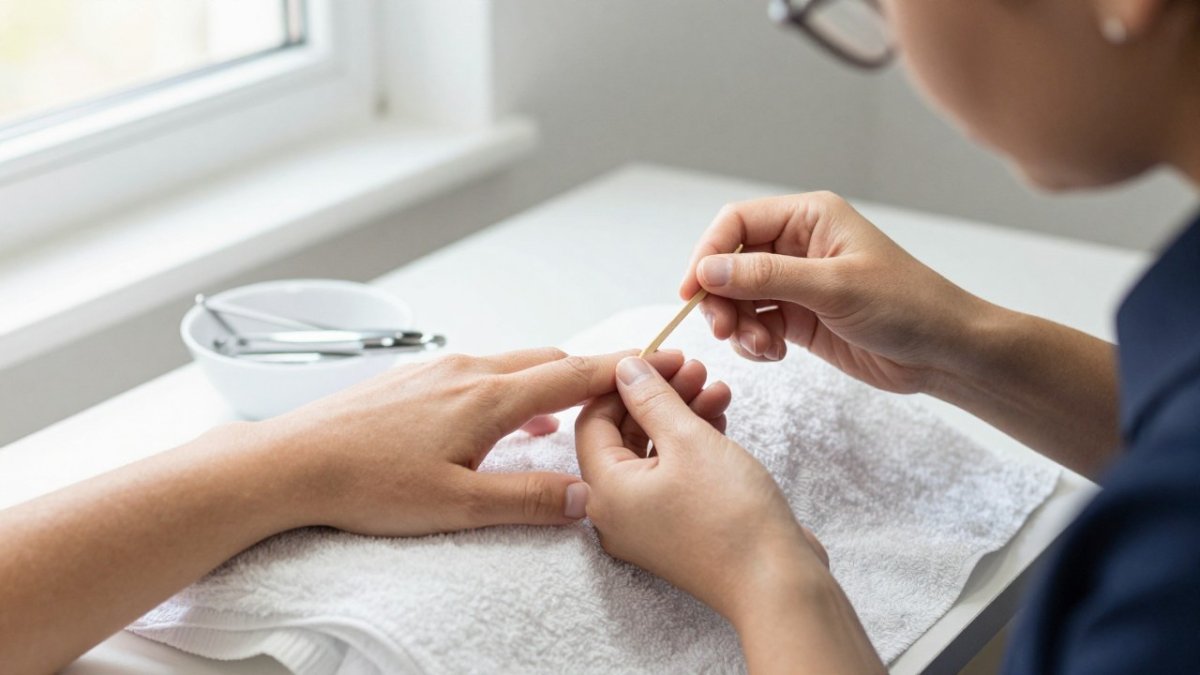
Removing oil, moisture and residue from the nail plate
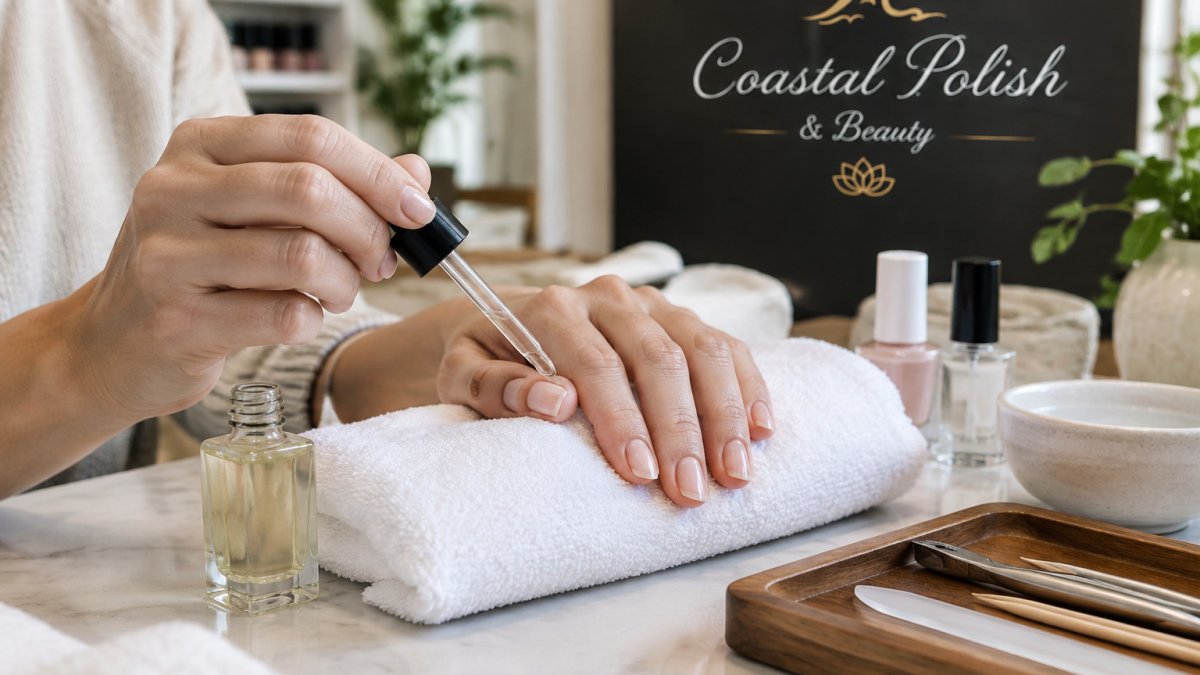
This step matters most. Oil from your hands, lotion, and cuticle products sits on the nail surface even after you wash. Removing that film before you apply base coat helps polish bond.
Watch out: wiping with a product that contains oil or cream can leave a new layer behind.
Cuticle work and buffing the natural nail
Push cuticles back gently. Cutting them is not necessary and can cause infection. Next, buff the nail surface lightly. You want to remove shine so the base coat can grip. Do not overdo it, because aggressive buffing thins the nail and weakens it.
Application Mistakes That Cause Peeling
Even a well-prepped nail can peel if the application goes wrong. These are the most common mistakes:
- Applying thick coats that never fully dry
- Skipping base coat, or using a top coat in its place
- Not sealing the free edge, the tip of the nail
- Letting polish touch the skin around the nail
- Rushing between coats before each layer sets
Thin, even coats hold better than thick ones. Each coat should dry fully before the next. Painting the free edge, the very tip of the nail, with base coat or top coat helps seal out water and reduces chipping.
Why Gel Polish Peels Off Natural Nails
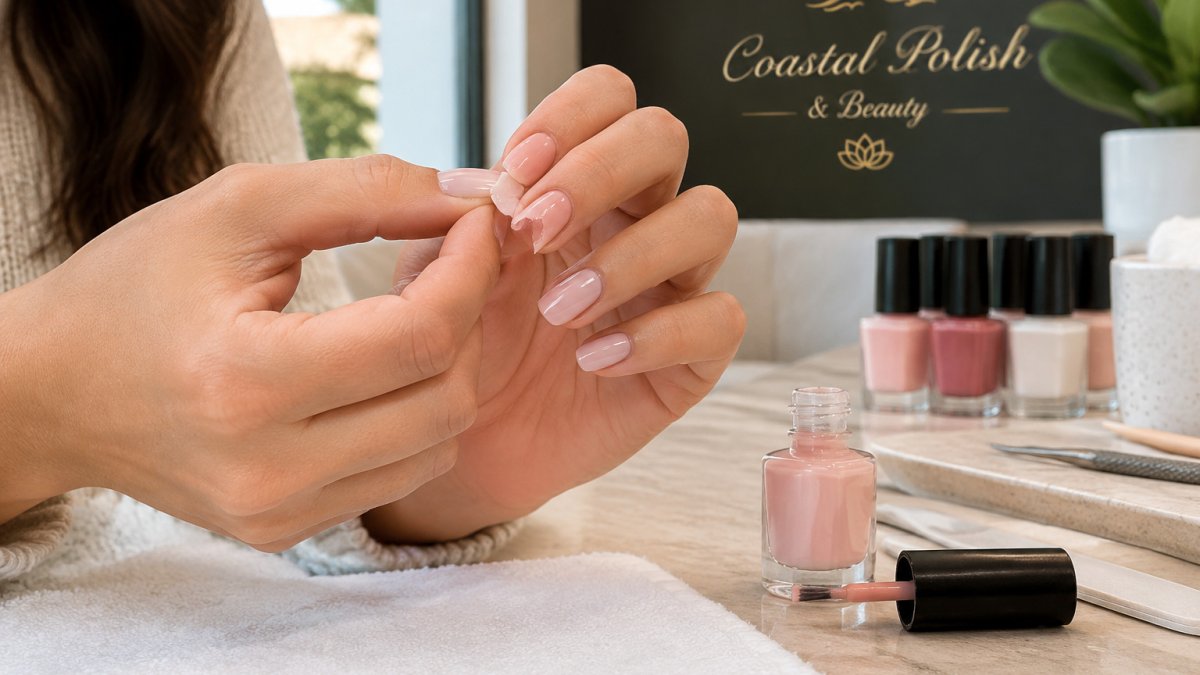
Gel polish is designed to last longer than regular polish, so peeling can be more frustrating. When gel lifts, it often peels off in a sheet. That usually means the bond to the nail plate failed, but the reason is different from regular polish. Gel cures hard under a lamp, so the failure is almost always in prep, curing, or removal rather than in drying time.
Work through these causes in order, because they account for most gel lifting:
- The nail plate was not fully dehydrated. Gel needs a bone-dry surface. Lotion, cuticle oil, or even a moisturizing soap leaves a film that the base coat cannot grip. Wipe with a prep product or rubbing alcohol and let it flash off completely before base coat.
- The base coat was applied too thick or too thin. A thick base coat cures unevenly and lifts at the edges; a base coat that is too thin leaves high spots that cure hard and pull away. One thin, even layer is the target.
- The lamp did not cure every layer fully. Under-cured gel stays tacky underneath and peels in a sheet. Match the cure time to the lamp and product (most gels specify 30 to 60 seconds per coat under a UV or LED lamp), keep the hand flat and fully inside the lamp, and replace lamps that are past their rated hours.
- The gel was filed or buffed after curing. Filing the shiny surface of a cured gel layer breaks the seal and gives water a path under the edge. Only file the free edge, and only to shape.
- The gel was peeled or pried off instead of soaked off. Picking at lifting gel takes layers of the natural nail with it, which leaves a thinner, more flexible plate that holds the next gel manicure even less well.
Gel also needs to be removed properly. If gel is lifting, avoid picking at it and have it removed professionally. A common pattern is that one bad removal turns into a cycle of shorter and shorter wear times, because each peel thins the nail plate.
Watch out: picking at lifting gel damages the nail plate. Keep your hands off it and book a removal if it is loose.
Peel-off base coats are a third case. These are designed to release in one piece, so peeling off in a sheet is the intended result, not a failure. If you use a peel-off base coat under regular polish, expect a wear time of a few days at most, and do not treat that as a bonding problem. The troubleshooting above applies to gel and to regular polish over a standard base coat, not to peel-off systems.
Why Nail Polish Peels Off in the Shower and Daily Life
Daily habits take a toll, and the pattern is predictable. Hot water, harsh dish soap, cleaning products, and long soaks all soften the bond between polish and nail. Repeated water exposure makes the edges lift faster, and once water gets under a lifted edge, the peel spreads.
Here is what each exposure actually does, and what to do about it:
- Hot water and long soaks. Nails absorb water and swell slightly, then shrink as they dry. Polish does not swell with them, so the edge lifts. Keep showers short and lukewarm where you can, and dry hands thoroughly after washing rather than letting them air-dry.
- Dish soap and cleaning products. Degreasing soaps strip oils from the nail plate and soften polish at the same time. Wear rubber gloves for dishes and for cleaning, and put them on before your hands get wet, not after.
- Household cleaners and solvents. Bleach, ammonia, and alcohol-based cleaners attack the top coat directly. Gloves are the simplest fix, and a top coat refresh every few days helps.
- Using nails as tools. Opening cans, scraping labels, and prying lids puts leverage on the free edge, which is exactly where peeling starts. Keep a small tool within reach instead.
- Picking and fiddling. Scraping at a chip with a fingernail starts a peel that can quickly take off the whole layer. If a chip bothers you, smooth it with a file and add a dot of top coat rather than picking.
A simple prevention plan for the week:
- Gloves for dishes, cleaning, and any task that keeps your hands wet for more than a few minutes.
- Dry hands well after washing, especially around the free edge.
- Reapply top coat every two to three days to refresh the seal.
- Keep nails short enough that the free edge does not catch on things.
- Moisturize cuticles at night, not right before polishing.
Wear time varies with daily habits, nail growth and product choices. If you are seeing less than a few days with regular polish, the cause is usually prep or application rather than daily life, so fix those first before blaming your routine. If wear time improves after the changes above, you have found your main exposure; if it does not, go back to the prep and application sections.
How to Stop Nail Polish From Peeling
Putting it all together, this routine gives polish the best chance to last:
| Step | What to do | Why it matters |
|---|---|---|
| Prep | Clean and dehydrate the nail | Removes oil that blocks bonding |
| Base coat | Apply one thin layer | Helps polish grip the nail |
| Color | Apply two thin coats | Thick coats trap moisture and peel |
| Top coat | Seal the color and the free edge | Protects against water and chipping |
| Aftercare | Wear gloves, moisturize cuticles | Reduces daily damage |
If peeling keeps happening even with careful prep, the nail itself may be the issue. Brittle or very thin nails hold polish less well. A few weeks of gentle care and a stronger base coat can help.
Booking Your Next Manicure at Coastal Polish & Beauty
At Coastal Polish & Beauty in Newport Beach, we know that a manicure should feel relaxing and last. If you want help with long-lasting polish, you can book a manicure appointment with our team.
If you are unsure which base coat fits your nails, our team can help you choose. Read more about choosing the right gel base coat before your visit.
Frequently Asked Questions
Why does my nail polish peel off in one piece?
Peeling in one large sheet usually means the polish never bonded well to the nail plate. The most common causes are oil, moisture or residue left on the nail, skipping a base coat, or applying polish over a surface that was not buffed lightly. When the surface is clean and slightly roughened, the polish grips evenly and lifts as a single film only when it is removed at the edge. Thin, even coats also help, because thick layers shrink as they dry and pull away from the nail. Cleaning the nail with a degreaser before each application is the simplest fix.
Why does gel polish peel off natural nails so quickly?
Gel polish needs a clean, dry, lightly buffed nail to adhere properly. If oils from lotion or cuticle products remain, or if the nail was not dehydrated before application, the gel can lift within days. Gel that is applied too thickly or cured incompletely also tends to separate. Capping the free edge with gel helps prevent lifting from the tip, which is where most wear begins. Avoid prying at lifted areas, since that can take off layers of the natural nail. Gel removal that is forced rather than soaked off is a common cause of damage.
Why does nail polish peel off in the shower?
Repeated water exposure softens the bond between the polish and the nail, especially when the nail was not fully dry or degreased before application. Hot water, harsh detergents and shampoos that contain strong surfactants accelerate lifting at the edges. Wearing gloves while washing dishes or cleaning, and drying your hands thoroughly after washing, reduces the amount of time the nail stays wet. Applying a top coat every few days refreshes the seal over the free edge and slows lifting in daily routines.
How long should regular nail polish last?
Regular polish often looks its best for about three to five days, depending on how active your hands are and how well the nails were prepared. Chips at the tip usually appear first, followed by lifting at the sides. Gel polish typically lasts two to three weeks when properly applied. Wear time varies with daily habits, nail growth and product choices, so these are general expectations rather than guarantees. Booking a professional service and following a good home routine gives the longest wear.