 how-to
How to Strengthen Weak Nails Before Gel Application
Last Updated: November 10, 2026
Quick Summary
To strengthen weak nails before gel application, start two to three weeks ahead with consistent habits: apply cuticle oil once or twice a day, file gently in one direction with a fine grit file, and avoid aggressive removal. Gel itself rarely destroys a healthy nail; the damage usually comes from forceful removal and over-filing.
- Apply cuticle oil once or twice a day, especially after washing your hands.
- Use a 240 grit or finer file and file in one direction, from the side toward the center.
- Soak gel off fully instead of peeling or prying, since peeling can take layers of the nail plate.
- Build builder gel in two or three thin coats rather than one thick one to reduce heat and lifting.
- Give nails two to four weeks of bare nails with regular oil between sets.
Table of Contents
- Why Gel Polish Weakens Nails and What Happens to the Nail Plate
- How to Strengthen Weak Nails Naturally Before Your Next Appointment
- Soft Gel vs Builder Gel: Which Option Protects Natural Nails
- Using Builder Gel on Natural Nails Step by Step
- Does Builder Gel Make Your Nails Weak? Causes and Fixes
- Builder Gel to Strengthen Nails: Recovery Between Sets
- Booking Your Gel Prep Appointment at Coastal Polish & Beauty
- Frequently Asked Questions
Why Gel Polish Weakens Nails and What Happens to the Nail Plate
Gel polish itself rarely destroys a healthy nail. The damage usually comes from what happens during removal and from over-filing before the next set goes on. If your nails feel thin, peel, or split after a gel manicure, the nail plate has likely been stressed, not poisoned.
The nail plate is the hard layer you see. It is made of keratin and holds moisture the way a sponge does. Gel bonds tightly to its surface, and that bond has to be broken off each time you remove the polish. Every removal takes a thin layer of nail with it.
How soak-off removal thins the nail plate
Soak-off removal dissolves the gel with acetone, usually after a short time under a lamp. The problem is the next step. Filing or scraping the gel off instead of soaking it fully removes more of the nail plate with each pass.
Acetone also pulls oil out of the nail and dries it. Dry nails bend and crack more easily. A useful rule: if the gel does not lift cleanly after a proper soak, the nail is being damaged by force, not by time. Compare hardeners and strengtheners to see which one suits your nails.
How to Strengthen Weak Nails Naturally Before Your Next Appointment
Start strengthening at least two to three weeks before your next gel appointment. Short, consistent habits do more than one rushed treatment before you walk in the door.
Hydration with cuticle oil and biotin-rich habits
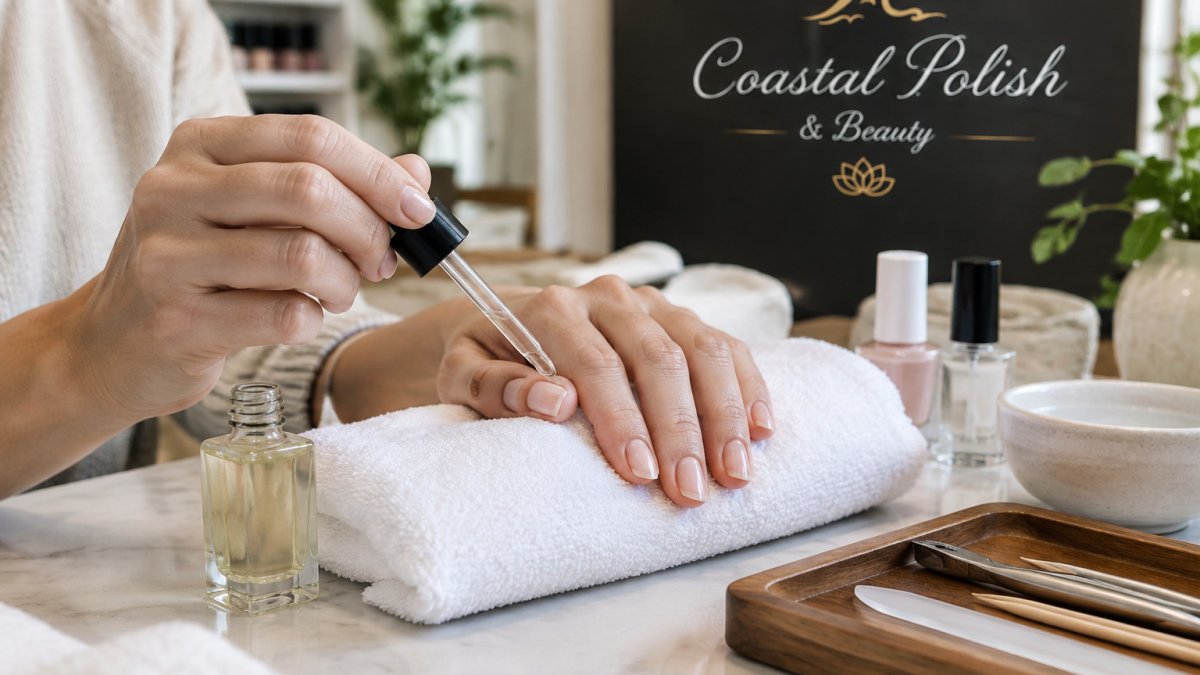
Apply cuticle oil once or twice a day, especially after washing your hands. Find an oil that lasts through long-wear manicures. Oil slows the moisture loss that makes nails brittle.
Many people also look at biotin and zinc through food or supplements. Talk with your doctor before starting a supplement, since they are not right for everyone. If you want to strengthen weak nails before gel prep, browse curated strengtheners. Eggs, nuts, and leafy greens are common food sources of both nutrients.
Safe filing and buffing to prevent splitting
Use a fine grit file and file in one direction, from the side toward the center. For more treatments beyond these habits, read the guide to brittle-nail treatments. Sawing back and forth creates tiny cracks that grow into splits.
- Use a 240 grit or finer file for natural nails
- Buff lightly, only to remove shine, not to thin the surface
- Stop when the nail feels smooth, not when it looks paper-thin
Soft Gel vs Builder Gel: Which Option Protects Natural Nails
The two categories differ less in marketing than in chemistry, and that chemistry decides how much stress a weak nail absorbs. Soft gel is generally a more flexible film that bends with the nail plate. Builder gel is generally more rigid, which adds structure but can transfer more force to the nail when it is pried, lifted, or filed off.
The ingredient question matters more than the label. Many older and lower-cost gels rely on methacrylate monomers, and methyl methacrylate (MMA) is the one associated with severe allergic sensitization and with nail plate damage when applied improperly. Many salons and brands now use ethyl methacrylate (EMA) or other acrylate systems, but EMA-based products can still cause sensitization in some clients. A product label that lists the monomer type is more useful than a product name that sounds strong.
For a weak, peeling nail, a practical comparison looks like this:
- Soft gel: lower risk of mechanical damage on removal, minimal added strength, suits nails that need flexibility and a short wear window
- Builder gel: meaningful added rigidity for nails that bend or split, higher removal risk, requires a thin-layer application and a full soak-off every time
If your nail bends easily or has already split at the free edge, a builder gel applied in thin layers can reduce further flexing, provided the removal is done by soaking rather than filing. If your nail thins or peels after each removal, soft gel or a gel-free break is usually the safer choice until the nail plate recovers.
Watch out: a gel that sounds stronger is not automatically better for a weak nail, because added rigidity without a clean removal transfers the stress to the nail plate.
The two gel types compare as follows for a weak, peeling nail.
| Option | Best for | Key difference |
|---|---|---|
| Soft gel | Nails that peel or thin after removal | Flexible film, lower removal risk, minimal added strength |
| Builder gel | Nails that bend or have split at the free edge | More rigid, adds structure, higher removal risk |
Using Builder Gel on Natural Nails Step by Step
The application stage is where most avoidable weakening happens, because the nail plate is exposed to heat from the curing lamp, to filing dust, and to any residue left on the surface. Working in a deliberate order reduces all three.
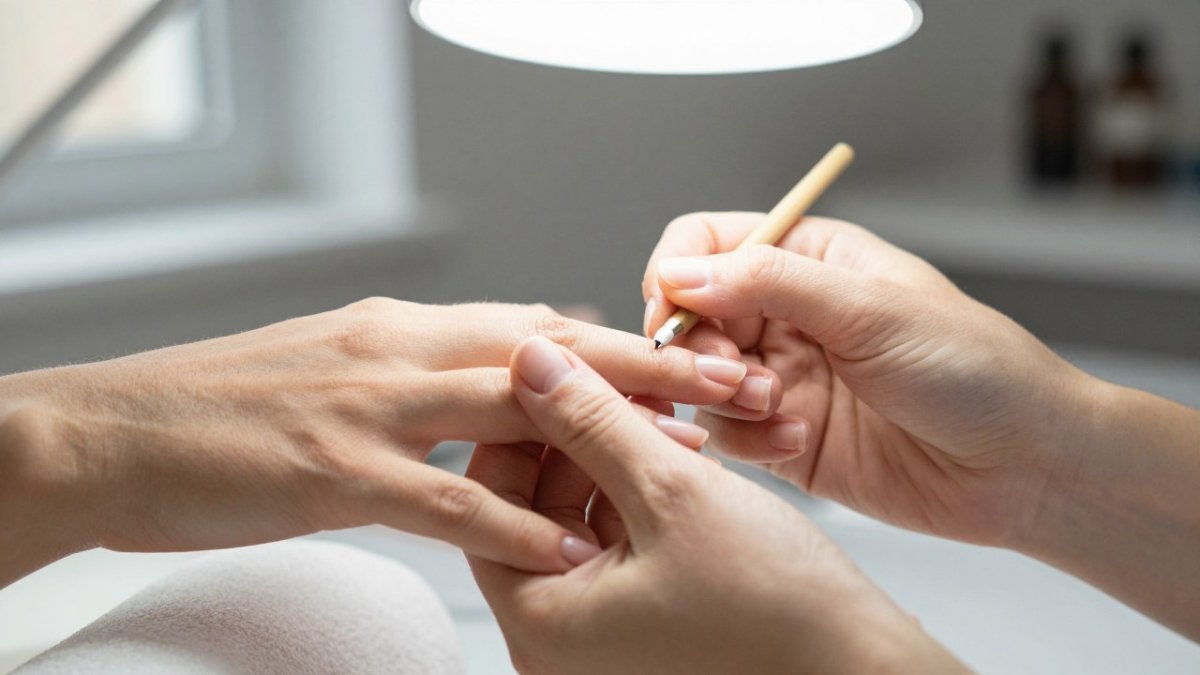
- Prepare the nail without thinning it. Push back the cuticle gently with a wooden stick, and remove only the shine with a fine buff. The goal is adhesion, not reduction in thickness.
- Dehydrate the surface. Wipe the nail with a lint-free pad and a dehydrating solution to remove oils that block bonding. Oil left on the plate is a common reason gel lifts early, and a lifted edge invites peeling on removal.
- Apply a thin base layer. Keep the product a few millimeters from the skin and avoid touching the cuticle, since gel that bonds to skin cannot be removed without tearing.
- Cure in the manufacturer's time range. Under-curing leaves the gel soft and prone to lifting, while over-curing can make the gel brittle and increase heat exposure to the nail bed.
Lamp type matters for safety. LED lamps generally cure faster and run cooler than older UV lamps, but a high-wattage lamp used for a long session can still produce noticeable heat. A common pattern in weak nails is discomfort or a warm, pulsing sensation during curing, which suggests the layer is too thick or the lamp is too close. Stop the session, let the nail cool, and reduce the layer thickness next time.
Building builder gel in two or three thin coats rather than one thick one is a common approach to reduce heat and lifting. Each thin coat cures more fully and generates less heat per layer, which lowers the chance of trapped heat lifting the edges. Cap the free edge last, and avoid applying gel over a visibly damaged or split area without first sealing the split.
Watch out: a thick builder layer that feels warm and then lifts at the sidewalls is usually a sign of excess product, not a faulty lamp, and it is the setup most likely to cause a split on removal.
Does Builder Gel Make Your Nails Weak? Causes and Fixes
Builder gel does not weaken nails by itself. Weakness usually comes from repeated soaking, aggressive removal, or wearing the gel too long past its fill date.
If your nails feel thin after builder gel, take a break of a few weeks. Keep up with cuticle oil and gentle filing during the break.
Builder Gel to Strengthen Nails: Recovery Between Sets
Give your nails a rest between sets. Many people feel better after two to four weeks of bare nails with regular oil.
Watch out: removing gel by peeling or prying can take off layers of the nail plate. Always soak the gel off fully instead.
Booking Your Gel Prep Appointment at Coastal Polish & Beauty
At Coastal Polish & Beauty in Newport Beach, we prepare natural nails carefully before any gel service. Tell your technician if your nails feel weak or peel often, so they can adjust the service. Review the questions to ask before booking so you know what to expect from a salon.
Frequently Asked Questions
Can I get gel nails if my nails are weak?
Yes, but preparation matters most. Weak nails can handle gel when they are properly filed, buffed lightly, and kept hydrated before application. Avoid heavy buffing, skip removing gel by peeling or prying, and ask your technician to use a thin layer of builder gel for added support. If nails split, bend, or feel painful, take a break from gel for a few weeks so the nail plate can recover.
What is the fastest way to strengthen weak nails before gel application?
The fastest approach combines hydration, gentle filing, and a structured base. Massage cuticle oil into the nail and surrounding skin daily for several days, file in one direction with a fine grit file, and avoid acetone exposure in the days before your appointment. A thin builder gel base is one option some people use to add structure to the nail before color.
Does builder gel make your nails weak?
Builder gel does not weaken nails on its own, but damage can happen during application or removal. Over-filing the nail surface, applying thick layers, and forcing off the product can thin the nail plate. Choosing a skilled technician, keeping the layer thin, and removing gel through proper soak-off techniques helps protect the nail matrix and keeps nails healthier between sets.
What vitamin should I take to harden my nails?
Biotin is the supplement most often discussed for nail strength, and zinc is also linked to nail health. Results take months because nails grow slowly, roughly three millimeters per month for fingernails. Check with a doctor before starting supplements, especially if you take other medications, and focus first on hydration and gentle nail care, which produce faster visible changes.