 comparison
Gel vs Acrylic Manicures: Which Is Better for Beginners
Last Updated: November 8, 2026
Quick Summary
For beginners weighing gel vs acrylic, gel suits most first-timers who want a natural look and gentler soak-off removal, while acrylic suits anyone who needs serious strength or extra length. Gel polish wears about 2-3 weeks and acrylic about 3-4 weeks with fills every 2-3 weeks.
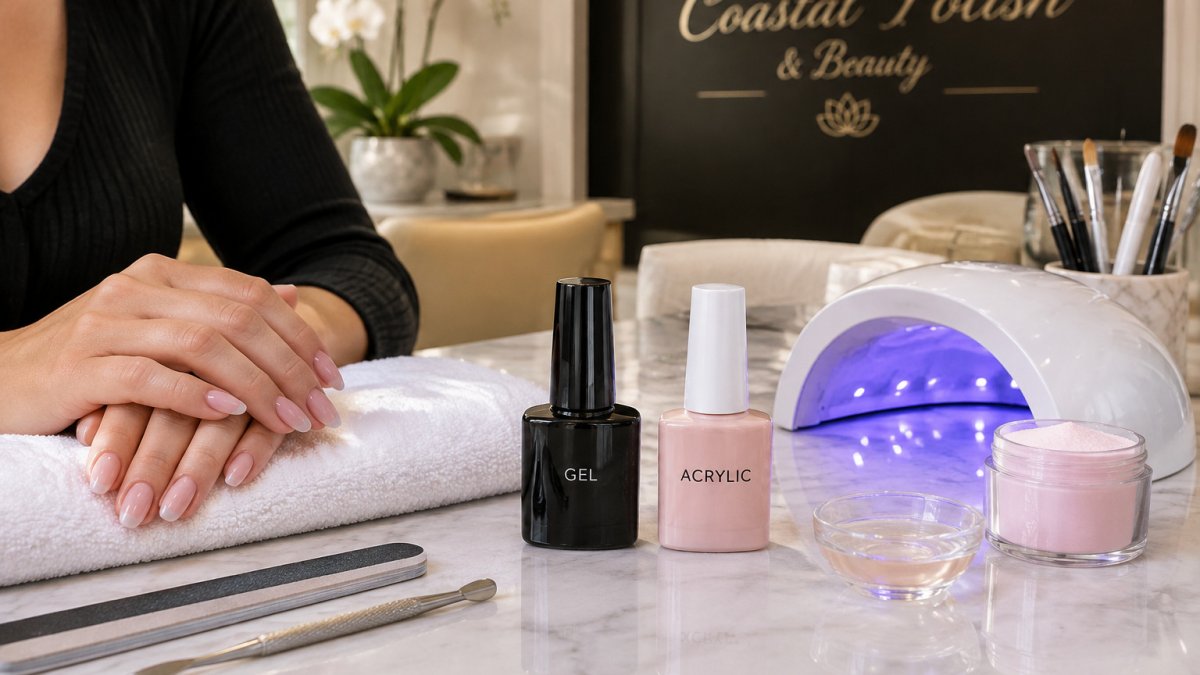
- Gel cures under a UV or LED lamp, while acrylic hardens in air from powder and liquid monomer.
- Acrylic generally lasts longer than gel polish, but prep, nail growth and daily habits matter more.
- For weak or brittle nails, gel is often considered a gentler first step than acrylic.
- Shellac is a brand-name gel polish system, not a nail extension.
- Skipping acrylic fills lets moisture trap under a lifted edge, inviting breakage.
Table of Contents
- Gel vs Acrylic Nails: What Beginners Need to Know First
- How Gel and Acrylic Nails Are Applied
- Gel vs Acrylic Nails Pros and Cons Side by Side
- Which Lasts Longer, Gel or Acrylic Nails?
- Is Gel or Acrylic Better for Weak Nails?
- The Difference Between Gel and Acrylic Nails and Shellac
- Removal, Maintenance, and Protecting Nail Health
- Choosing Your First Manicure at Coastal Polish & Beauty
- Frequently Asked Questions
Gel vs Acrylic Nails: What Beginners Need to Know First
If you are weighing the benefits of gel vs acrylic manicures for beginners, the short answer is this: gel suits most first-timers who want a natural look and gentler removal, while acrylic suits anyone who needs serious strength or extra length. When choosing between the two, it usually comes down to three things: your natural nails, your daily routine, and how much time you want to spend on upkeep. Below, we break down application, wear time, cost, and removal so you can book with confidence.
The terminology that trips people up
Gel nails are a broad category covering gel polish cured under a lamp and thicker hard gel used to build length. Acrylic nails are a powder-and-liquid system that hardens in air. Both are nail enhancements, and both sit on top of your natural nails. A common mistake is assuming "gel" always means extensions. Often it just means a long-wear polish finish.
How Gel and Acrylic Nails Are Applied
Gel and acrylic take different paths to the same goal. Gel relies on a UV or LED lamp to cure each layer, while acrylic hardens through a chemical reaction between powder and liquid monomer. The application method shapes everything that follows: how the manicure feels, how long it lasts, and how it comes off.
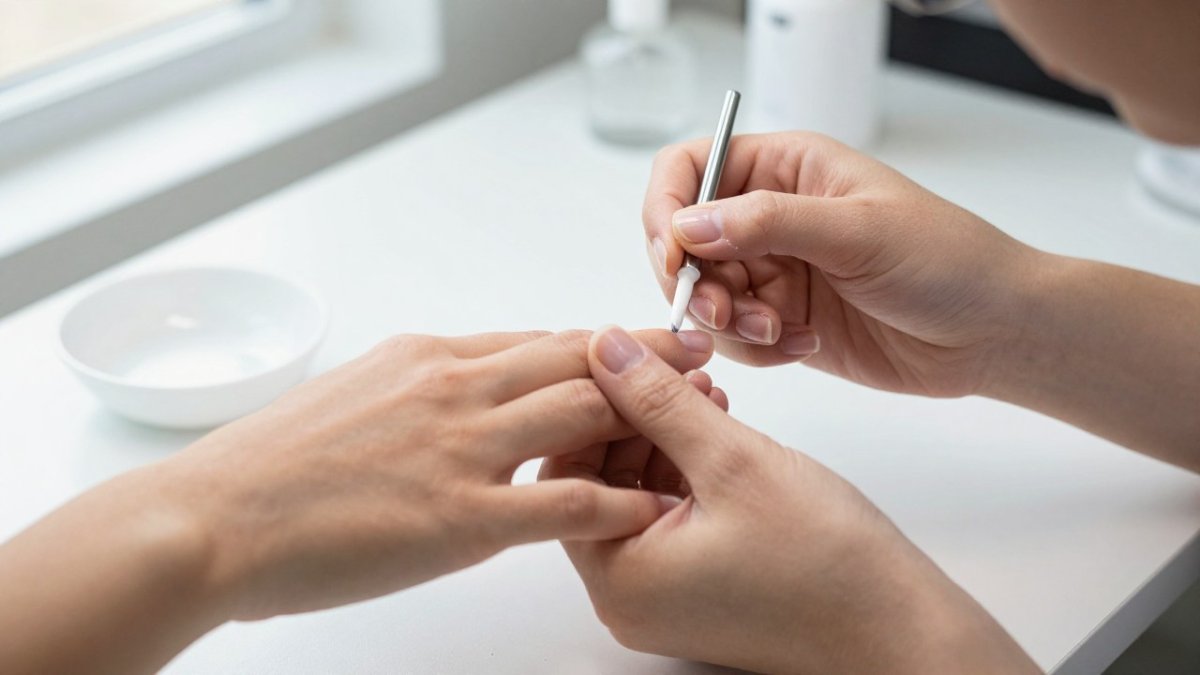
Gel application: curing under a lamp
A typical gel application involves prepping and shaping the natural nail, applying a base coat, then building color or structure in thin layers. Each layer cures under a lamp for a set time, which produces a glossy, lightweight finish.
Acrylic application: powder and liquid monomer
Acrylic is applied by dipping a brush into liquid monomer, picking up acrylic powder, and sculpting the mixture onto the nail, where it air-dries hard. Acrylic offers more control over length and shape, though it has a heavier feel and a smell many beginners notice.
Gel vs Acrylic Nails Pros and Cons Side by Side
The gel vs acrylic nails pros and cons come down to a simple trade: gel looks and feels lighter, acrylic holds up harder. But for a beginner, the useful version of that trade is not a feature list, it is a set of scenarios. Here is the honest comparison we give every new client, with the mechanism behind each row so you can predict how it will behave on your hands.
| Feature | Gel | Acrylic |
|---|---|---|
| Feel | Light, flexible; moves with the natural nail | Stronger, heavier; a rigid shell over the nail |
| Finish | High shine straight out of the lamp, natural-looking | Slightly thicker look; shine comes from a top coat or buffing |
| Wear time | About 2-3 weeks for gel polish; hard gel can go longer with fills | About 3-4 weeks, with fills every 2-3 weeks to keep the apex balanced |
| Removal | Soak-off for soft gel and gel polish; hard gel is filed down | Filed or soaked, more labor, and more dust |
| Best for | Beginners, natural length, low-maintenance routines | Extra length, hard wear, clients who book fills reliably |
| Beginner risk | Lifting if prep or curing is rushed | Lifting and trapped moisture if fills are skipped |
Gel pros: the lighter feel comes from a thinner, more flexible layer, so it moves with your nail instead of fighting it; the gloss is built into the cure, so it does not dull the way air-dried polish does; and soft gel soaks off without aggressive filing. Gel cons: gel shrinks slightly as it cures, so a rushed prep or a thick first layer can pull away from the free edge and lift; on thin nails, a chip can take a visible bite out of the finish because there is less structure underneath to hide it.
Acrylic pros: the powder-and-monomer reaction creates a hard, sculptable shell, which is why acrylic holds length and shape that gel struggles to support; it also tolerates more daily abuse, keys, hot water, cleaning products, before it shows wear. Acrylic cons: the rigid shell does not flex with the natural nail, so it is heavier and can feel like a foreign object for the first day or two; it needs fills on a schedule, and skipping them lets moisture trap under a lifted edge, which is the most common path to breakage and nail damage.
A useful way to read the table: if your priority is a natural look and you will actually book removal, gel wins. If your priority is length or hard wear and you will keep a fill appointment, acrylic wins. If you want both, ask about a hard gel overlay, it borrows acrylic's structure with gel's removal path, and it is the option most beginners do not know to ask for.
Watch out: the biggest beginner mistake is choosing based on the look in a photo rather than on your fill-and-removal habits. A manicure you cannot maintain on schedule will look worse in three weeks than a humbler one you keep up with.
Which Lasts Longer, Gel or Acrylic Nails?
Acrylic generally lasts longer than gel polish. But wear time depends more on prep, your nail growth, and daily habits than on the product alone. Typing, hot water, and cleaning products all shorten any manicure's life.
The habits that make gel last longer apply to acrylic too. Pushing back cuticles, keeping hands moisturized, wearing gloves for dishes, and getting a fill before lifting starts are generally helpful. If you are leaning toward gel, our guide on habits that make your gel manicure last longer covers the routine in detail.
Is Gel or Acrylic Better for Weak Nails?
For weak, brittle, or peeling nails, gel is often considered a gentler first step than acrylic. It adds a protective layer without the weight of acrylic, and soak-off removal can place less stress on a fragile nail plate. Acrylic can also protect weak nails when proper fills and careful removal are maintained.
If your nails are already damaged, strengthen before you book. Our roundup of the best nail strengthening treatments for weak brittle nails covers what actually helps. A common mistake is layering enhancements over damaged nails and hoping for the best. It rarely ends well.
The Difference Between Gel and Acrylic Nails and Shellac
The difference between gel and acrylic nails and shellac is mostly about strength and removal. Shellac is a brand-name gel polish system, so it behaves like gel polish: thin, glossy, cured under a lamp, and soaked off. It is not a nail extension.
Think of it in tiers. Shellac and gel polish are long-wear color. Hard gel and acrylic build length and structure, with acrylic generally the strongest and most sculptable option.
Removal, Maintenance, and Protecting Nail Health
Safe removal protects your natural nails more than any product choice, and it is the step beginners most often get wrong. The reason is mechanical: gel and acrylic both bond to the top layers of the nail plate, so peeling or picking them off takes keratin with them. That is what causes the thin, flaky, sensitive nails people blame on "the product", it is usually the removal, not the manicure.
Gel removal, step by step. Generally, soft gel and gel polish are removed by lightly filing the shine off the top coat, soaking each nail in acetone remover, and gently pushing away the softened gel. Hard gel is typically not designed to soak off, so it is filed down thin and only fully removed when a break is needed. Improper removal, such as scraping gel that has not softened, can damage the natural nail.
Acrylic removal, step by step. Acrylic can be soaked off in acetone, which takes longer than gel, and filing the bulk down first can shorten the soak. Some providers file acrylic off entirely instead of soaking. Either method should stop before the natural nail plate is thinned.
Maintenance schedules. Gel polish typically needs a fresh set every few weeks; hard gel and acrylic typically need fills as your nails grow out, with a full removal and reset every few months. Watch out: skipping fills on acrylic lets moisture trap under a lifted edge, which invites lifting, breakage, and in some cases a bacterial issue under the enhancement. A lifted edge is not a cosmetic problem, it is an opening.
Protecting the natural nail between sets. Keep hands moisturized, wear gloves for dishes and cleaning, and avoid using your nails as tools to open cans or peel labels. If your nails feel weak after a removal, a short break with a strengthener is reasonable, but a break is not mandatory for everyone, many clients move straight into a new set when removal was done properly.
If you are deciding whether monthly gel is sustainable, read whether it is safe to get gel manicures every month. And if acrylics have already left your nails thin, our guide on how to repair damaged nails after acrylics at home walks through recovery step by step.
Choosing Your First Manicure at Coastal Polish & Beauty
Your first manicure should feel calm, not clinical. At Coastal Polish & Beauty, we offer personalized care in a clean, safe environment, and our expert technicians are dedicated to a beautifully cared-for experience.
Expect personalized care, premium products, and a clean, safe environment. If you are ready to book, you can book a professional manicure in Newport Beach and let us handle the rest.
The gel vs acrylic decision gets easier once someone looks at your actual nails and your daily habits. That is exactly what we do at Coastal Polish & Beauty: personalized care, a newly renovated space, and a clean, safe environment built for a peaceful pause. Get started with Coastal Polish & Beauty and book a manicure that fits your nails and your schedule.
Frequently Asked Questions
Which is better, gel or acrylic nails for beginners?
For most beginners, gel is the easier starting point. Gel polish cures in seconds under a UV or LED lamp, feels lighter on the natural nail, and has a glossy finish that hides minor application flaws. Acrylic offers more strength and length, but the powder-and-monomer mix sets fast, so it rewards practice. If you want a low-commitment first appointment, start with a gel manicure and move to acrylic enhancements once you know how your nails respond.
Which lasts longer, gel or acrylic nails?
Acrylic typically holds up longer than gel and resists chipping and cracking well on long or heavily used nails. Gel manicures generally wear for a shorter period. The gap narrows when gel is applied over a structured hard gel base rather than polish alone. Either way, wear time depends more on nail prep, your daily habits, and how quickly your natural nails grow out.
Is gel or acrylic better for weak nails?
Acrylic adds the most structural strength, which helps if your nails bend, peel, or break easily. The tradeoff is that acrylic removal involves filing and acetone soaking, which can thin already fragile nails if done roughly. A hard gel overlay is one option some people consider for weak nails, as it can reinforce nails with more flexibility.
What is the difference between gel, acrylic, and shellac?
Gel and acrylic are both nail enhancements that can extend length and add strength. Shellac is a brand-name gel polish system applied in thin coats and cured under a lamp, so it adds shine and color but no structure. In practice, gel polish and gel enhancements generally last a few weeks, and acrylic often lasts somewhat longer. If you only want color, gel polish is enough; if you need strength or length, choose gel or acrylic.