 Comparison
How to Choose the Best Gel Base Coat for Peeling Nails
Last Updated: November 18, 2026
Quick Summary
Choose a gel base coat by matching the formula to your nail condition: a peel-off base coat for actively peeling or fragile nails, and an adhesion or strengthening base coat for thin but intact nails. Peel-off bases remove without acetone or filing but last days, while adhesion bases hold for weeks with proper prep.
- Peel-off base coats trade wear time for gentleness, typically lasting days rather than weeks.
- Adhesion base coats demand clean, dry, well-prepped nails or the peeling cycle restarts.
- Flooding base coat near the cuticle leaves a lip that lifts first once water gets under it.
- Never peel cured gel off dry, since tearing it takes surface nail layers with it.
- Picking at a lifted edge is the most damaging habit for fragile nails.
Table of Contents
- Why Nails Peel After Gel Polish and What a Base Coat Can Do
- The Best Base Coat for Peeling Nails: Adhesion vs. Peel-Off Formulas
- How to Stop Gel Nails From Peeling: Prep and Application Habits That Matter
- Gel Polish Application and Removal Tips for Peeling Nails
- How to Choose the Right Formula for Damaged Nails
- Troubleshooting Peeling by Location and Timing
- Booking a Professional Assessment for Peeling Nails
- Frequently Asked Questions
Why Nails Peel After Gel Polish and What a Base Coat Can Do
Peeling nails after gel polish almost always trace back to the bond between polish and nail plate, not to weak nails.
Gel polish is a cured coating, not a paint. It hardens under UV or LED light and locks onto the nail plate through adhesion. When that bond fails at an edge, water sneaks underneath, and the coating lifts in sheets.
That cycle is why so many people feel stuck. The fix starts with understanding what a base coat actually does.
A base coat has one job: control the interface. Either it grabs hard and holds, or it releases cleanly on purpose. Everything else, wear time, removal ease, nail condition afterward, follows from that choice.
The Best Base Coat for Peeling Nails: Adhesion vs. Peel-Off Formulas
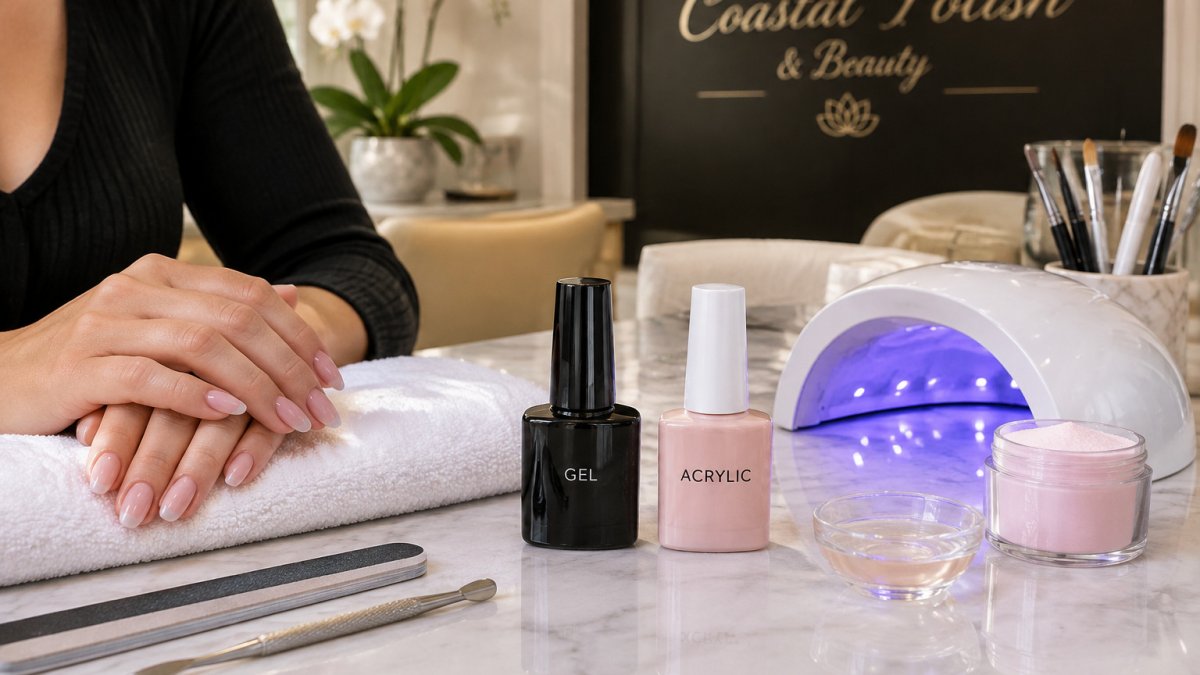
The best base coat for peeling nails splits into two families, and picking the wrong one is the most common mistake we see. Adhesion base coats grip the nail plate and hold gel polish for weeks. Peel-off base coats are designed to release the whole coating in one piece, sparing the nail surface.
These are opposite tools for opposite goals. A peel-off base under a long-wear gel system pops off in days; a strong adhesion base on flaking nails traps damage under a hard shell. Match the formula to the nail, not the polish color.
Gel Adhesion Base Coats for Fragile Nails
Adhesion formulas work best when the nail plate is intact but the surface is uneven or slightly worn. They bond to the keratin and create a stable platform for color. Look for a base coat labeled for weak or damaged nails, often described as a strengthening or ridge-filling base.
The catch: adhesion base coats demand clean, dry, well-prepped nails. Any oil, moisture or dust weakens the bond and restarts the peeling cycle. If your nails are thin, pair an adhesion base with a strengthening routine. Our guide on how to strengthen weak nails before gel application walks through that prep in detail.
Peel-Off Base Coats for Easy, Damage-Free Removal
Peel-off base coats trade wear time for gentleness. You paint a thin layer, cure it, then apply color on top. When you are ready to remove, the whole sandwich lifts from one edge with no acetone soak and no filing.
This is the safer pick for nails that are actively peeling, splitting or recovering from a bad removal. The trade-off is real: peel-off manicures typically last days rather than weeks, and water exposure shortens that further. For a deeper comparison, our article on how to choose the right gel base coat breaks down the decision point by point.
| Formula Type | Typical Wear | Removal Method | Best For |
|---|---|---|---|
| Adhesion base coat | Weeks with proper prep | Acetone soak or file | Intact but uneven nails |
| Peel-off base coat | Days | Lift from one edge | Actively peeling, fragile nails |
| Strengthening base | Weeks | Acetone soak | Thin, weak nails in recovery |
How to Stop Gel Nails From Peeling: Prep and Application Habits That Matter
Knowing how to stop gel nails from peeling comes down to four habits: dehydrate the plate, keep coats thin, cap the free edge, and keep water off the manicure for the first few hours. Most lifting we correct in the salon traces to one of these being skipped.
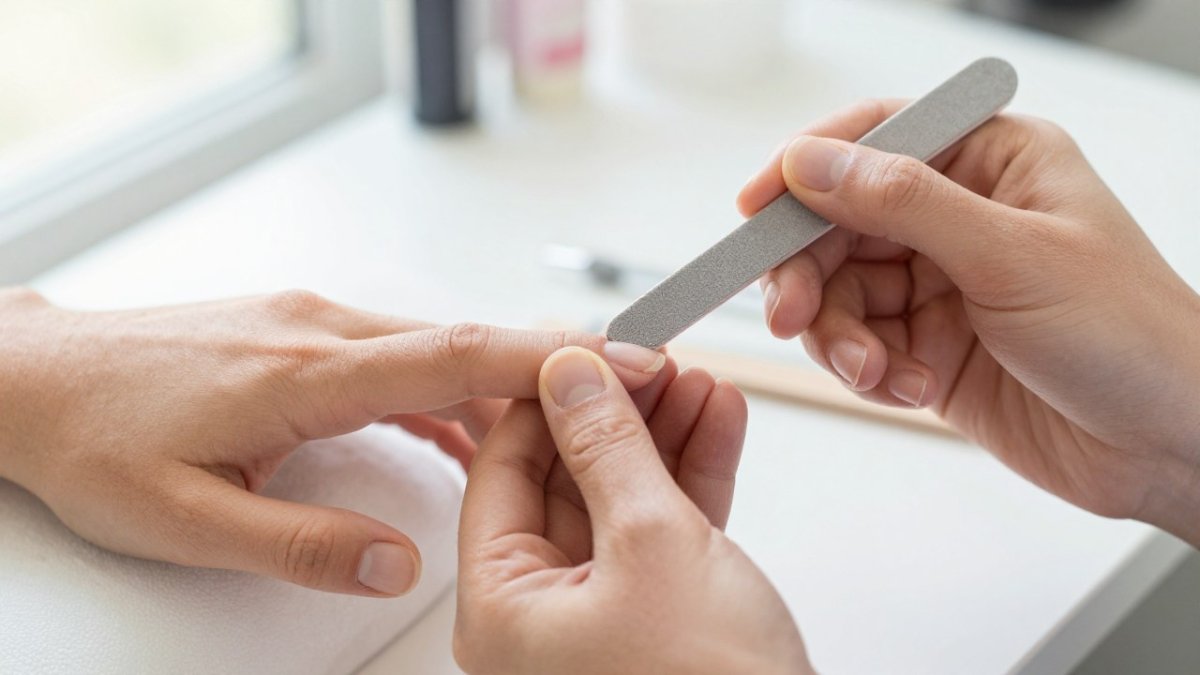
The prep routine matters more than the bottle. Work through it in this order:
- Wipe each nail with alcohol to remove oils
- Lightly buff the surface, never dig into the plate
- Push back cuticles without cutting live tissue
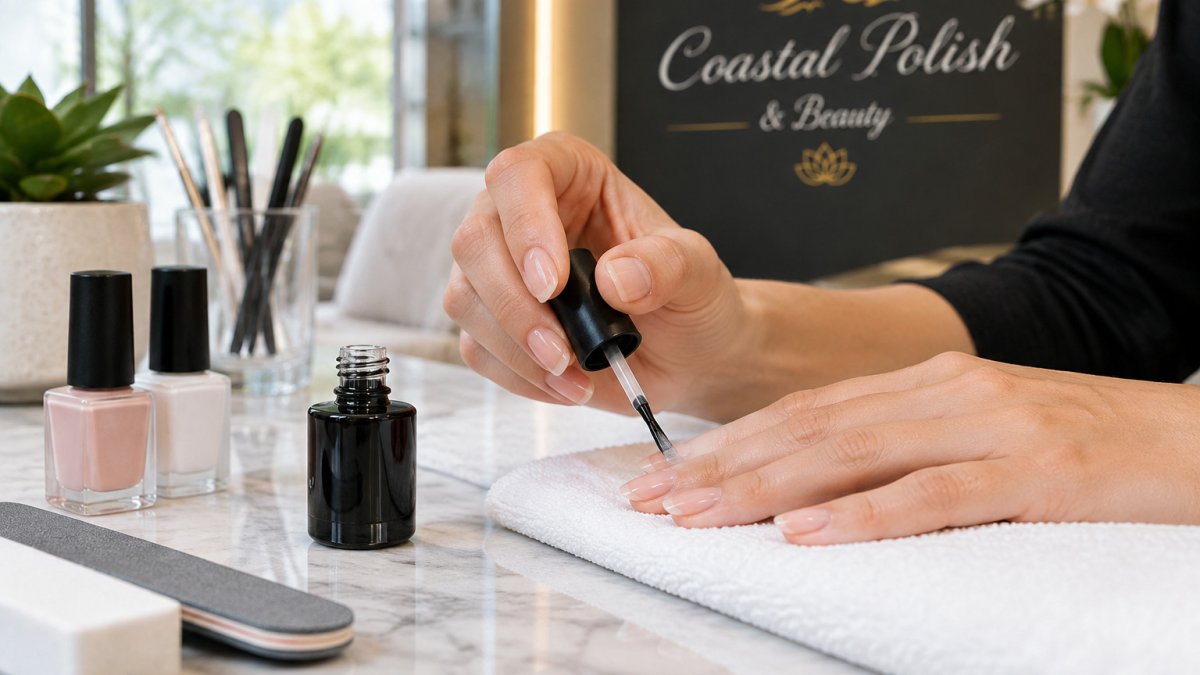
- Apply base coat in a thin layer, then cure fully
- Cap the free edge with every coat
- Keep hands dry for several hours after curing
Watch out: flooding the base coat near the cuticle or sidewalls leaves a lip of product that lifts first. Once water gets under that edge, the whole manicure follows within days.
A common mistake is applying two thick coats instead of two thin ones. Thick product cures unevenly, and the uncured layer underneath becomes the weak point. If you are doing this at home, our list of common at-home gel polish mistakes covers the ones that cause the most lifting.
Gel Polish Application and Removal Tips for Peeling Nails
Gel polish application and removal tips for peeling nails start with one rule: never peel the coating off dry. Tearing cured gel off takes surface layers with it, and those layers do not grow back quickly.
Removal done right is slow and boring, which is the point:
- File the top coat until the shine is gone.
- Soak cotton in acetone and wrap each nail in foil.
- Wait the full soak time, then check one nail before unwrapping the rest.
- Gently push softened product off with a wooden stick.
- Never scrape hard product. Re-wrap and soak longer instead.
If a nail chips or lifts between appointments, resist the urge to pick at it. Our guide on how to repair a chipped gel nail at home shows how to stabilize the edge safely until you can get it fixed properly.
Water is the quiet enemy of any gel manicure. Dishes, hot showers and long swims soften the bond over time. Gloves for cleaning and patience after application go a long way.
How to Choose the Right Formula for Damaged Nails
Choosing the right formula for damaged nails is a matching exercise, not a shopping spree.
Work through three questions before you buy:
- How damaged is the nail right now? Active peeling, splitting, or white spots mean treat the nail as fragile, a peel-off base is the lower-risk choice because removal needs no acetone soak or filing. If the nail is thin but intact, an adhesion or strengthening base is the better long-term investment.
- How long does the manicure need to last? Peel-off bases deliver days, not weeks, and water shortens that further. Adhesion bases can hold for weeks with proper prep. Daily swimming, dishes, or frequent sanitizer use will shorten wear no matter which formula you choose.
- How much removal stress can the nail take? Acetone soaks dehydrate the plate and can worsen peeling. If removal is what damages your nails, a peel-off base removes that stressor, at the cost of wear time.
A practical decision framework:
| Nail condition | Best formula type | Why |
|---|---|---|
| Actively peeling or splitting | Peel-off base | Removal without acetone or filing |
| Thin but intact | Strengthening adhesion base | Builds a stable platform while protecting the plate |
| Ridged or uneven surface | Ridge-filling adhesion base | Smooths the plate and improves grip |
| Recovering from a bad removal | Peel-off base for 2-4 weeks | Lets surface layers recover before returning to long-wear |
Ingredient and allergy considerations. Gel products can contain acrylate monomers and oligomers, and repeated skin contact with uncured product is a recognized cause of allergic sensitization. Keep uncured gel off the skin, cure fully, and do not use a product past its shelf life.
Watch out: A peel-off base is not a universal safety pass. If the nail plate is visibly damaged, discolored, or painful, no base coat is the right choice until a professional assesses it, covering a damaged nail with any gel product can trap moisture and worsen the problem.
Troubleshooting Peeling by Location and Timing
Peeling location and timing together tell you what went wrong. Use both signals before changing products, most people switch base coats when the real problem is prep, cure, or removal technique.
Peeling at the free edge (tip). The most common pattern, usually from insufficient capping. Every coat, base, color, and top coat, should wrap slightly over the tip.
Peeling at the cuticle line. Lifting at the base of the nail often traces to an oily or moist plate. Cuticle oil, hand cream, or water left on the nail weakens the bond.
Timing windows.
| When it lifts | Likely cause | What to change |
|---|---|---|
| Within hours of a fresh set | Formula mismatch or uncured product | Check lamp wattage and cure time; confirm base type suits the system |
| Within 1-2 days | Moisture or oil on the plate; skipped dehydration | Dehydrate, dry prep, thin coats |
| Around 1 week | Normal wear plus water exposure; weak free-edge capping | Cap every coat; gloves for dishes and cleaning |
| After 2-3 weeks | Expected wear; removal due | Remove properly before lifting starts |
Watch out: Picking at a lifted edge is the single most damaging habit for fragile nails. Each pick tears surface layers that take weeks to grow back.
Booking a Professional Assessment for Peeling Nails
Booking a professional assessment makes sense when peeling keeps returning despite good home habits, or when the nail itself looks damaged, discolored or painful.
At Coastal Polish & Beauty, our technicians work inside the Birdhouse wellness collective in a newly renovated space, and we tailor each service to the individual nail in front of us.
Before you book anywhere, ask a few direct questions. A good salon will welcome them.
- How do you sanitize tools between clients?
- Which base coat do you recommend for my nail condition, and why?
- How long will the appointment take, and will removal be included?
- What should I do if a nail lifts before my next visit?
Our article on questions to ask before booking a luxury manicure gives you a fuller list. If you want a calm, unhurried appointment, you can book with us.
Peeling gel is frustrating, but rarely a mystery once you know where to look.
Frequently Asked Questions
What is the best nail base coat for peeling nails?
There is no single best pick for every set of peeling nails. A strengthening gel base coat helps if your nail layers are splitting and need extra support, while a peel-off base coat suits anyone who wants short wear time and gentle removal. Match the formula to your goal: longer wear calls for an adhesion-focused base coat, and frequent polish changes call for a peel-off gel. A professional assessment can confirm which type fits your nail condition.
Can gel base coat protect peeling nails?
A gel base coat can shield a peeling nail plate from water and daily wear, but it cannot repair the peeling itself. If the nail is actively lifting in layers, applying gel over it can trap moisture and make lifting worse. Wait until the peeling edge has grown out or been gently filed smooth, then use a thin base coat and keep removal gentle. Ask a technician whether your nail plate is stable enough for gel before booking a full set.
How do I get my gel nails to stop peeling?
Most lifting starts at the edges, so prep and sealing matter more than the polish brand. Buff the nail plate lightly, dehydrate it, keep base coats thin, and cap the free edge with each layer. Avoid soaking your hands in water right after application, and wear gloves for cleaning. If lifting keeps happening within a week, the issue is usually prep or removal technique rather than the base coat itself, so review your routine with a technician.
How should you remove gel polish without worsening nail peeling?
Never pick or peel gel polish off, because that strips the top nail layers and makes peeling worse. File the top coat, soak in acetone for 10 to 15 minutes, and gently push away softened product with a cuticle stick. For peel-off base coats, use a cuticle oil around the edges and lift slowly. Follow with cuticle oil and a strengthening treatment, and give your nails a short break if they feel thin or sensitive.